

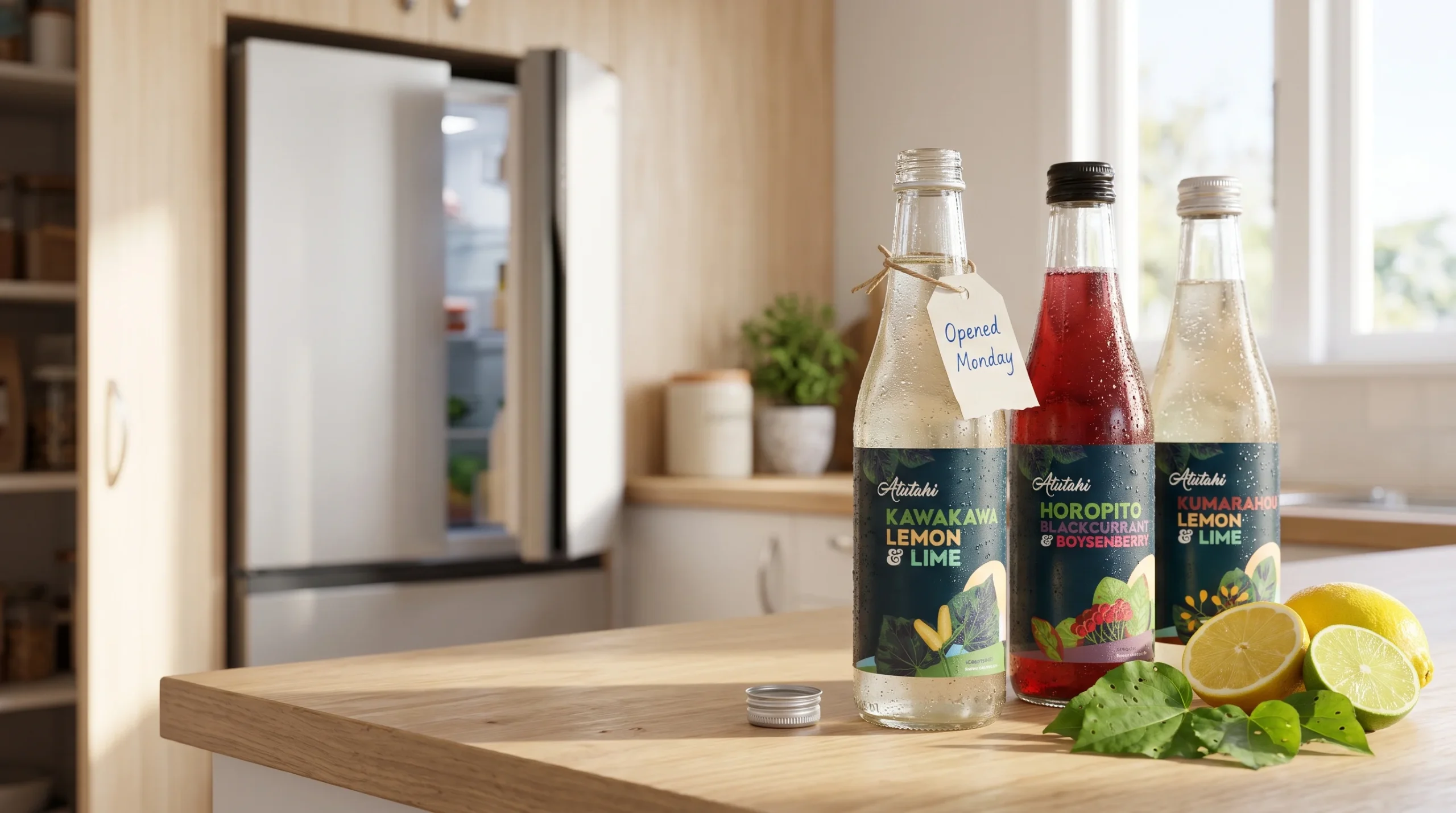
The Half-Finished Bottle Problem
You open a cold drink, take a few sips, and then life gets in the way. A phone call. The school run. A meeting that drags on. Now the bottle is sitting on the bench and you’re wondering whether it’s still okay to finish.
It’s a fair question, and it matters more with natural drinks. Drinks made without artificial preservatives have no chemical backup once the seal is broken. That’s part of what makes them good, but it also means a little care goes a long way.
So, do herbal drinks need to be refrigerated? Not before you open them, but yes, every time after. Below, you’ll get the full picture, using Atutahi’s native botanical drinks as the example.
Key Takeaways
- Unopened botanical drinks don’t need the fridge; a cool, dark cupboard is fine.
- Once opened, recap, refrigerate and finish within a few days.
- Don’t leave an open bottle out for more than about two hours.
- Best-before is about quality; use-by is about safety.
- Printed dates only apply until you break the seal.
- Store a 15-pack in the cupboard and chill a few bottles at a time.
- Sour smell, new cloudiness or an odd taste? Tip it out.
Botanical Drink Storage in 30 Seconds
Sealed bottles live in the cupboard; opened bottles live in the fridge. Keep unopened drinks somewhere cool, dry and out of the sun. Once you open one, put the cap back on, refrigerate it and drink it within a few days, which is exactly what Atutahi recommends. The best-before date tells you about quality, not safety. And if a drink smells sour, looks odd or tastes wrong, tip it out.
| Situation | Where to keep it | How long it’s good for |
| Unopened bottle or can | Cool, dry cupboard away from sunlight | Up to the best-before date on the label |
| Opened, cap back on | Fridge | Within a few days |
| Opened, left on the bench | Room temperature | About two hours, then fridge it or pour it out |
| Homemade herbal infusion | Covered, in the fridge | A day or two |
What Storing a Botanical Drink Really Involves
A botanical drink is a drink made with plants, such as leaves, roots, bark or flowers, usually blended with water and fruit. Atutahi’s range uses three native New Zealand plants, kawakawa, kūmarahou and horopito, paired with real lemon, lime, blackcurrant and boysenberry. Each one is made in small batches in Nelson with no artificial colours, flavours or preservatives.
Storing one well comes down to three things: heat, light and air. Heat speeds up change. Strong sunlight can dull flavour and colour. Air, once you open the bottle, lets in tiny microbes from your kitchen and lets the bubbles escape.
If you’ve already read why more Kiwis are choosing preservative-free drinks, you know why these drinks skip synthetic additives. This guide picks up where that one stops: what to do with the bottles once they’re home.
Do Herbal Drinks Need to Be Refrigerated Before Opening?
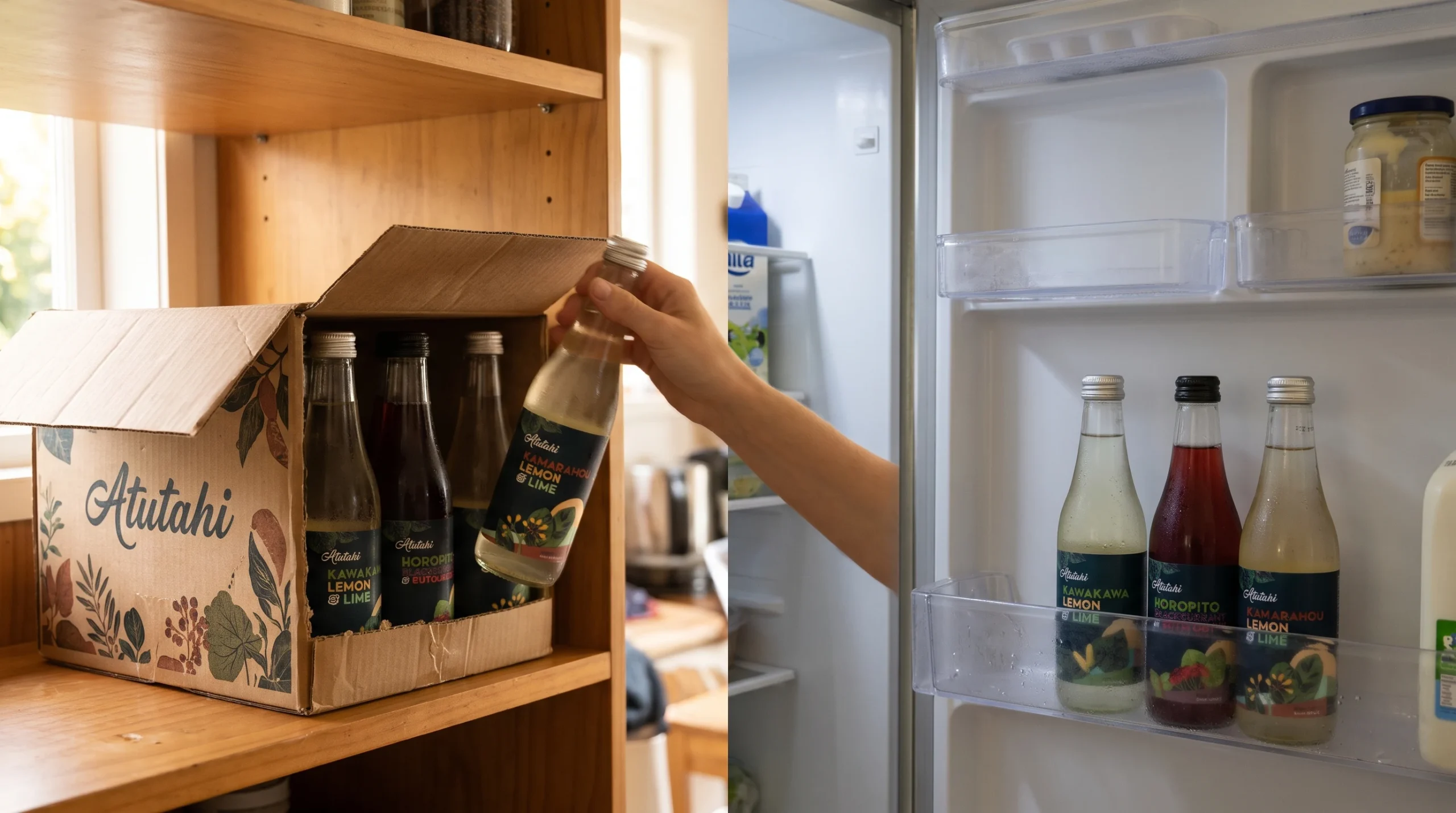
No, a sealed bottle doesn’t need the fridge. Commercial botanical drinks like Atutahi are bottled and sealed so they stay stable on the shelf until you open them. A pantry, a cupboard or a cool shelf in the laundry all work well.
Pick the Right Spot
The best home for your drinks is cool, dry and dark. Think of the cupboard furthest from your oven, not the shelf above the kettle. Skip windowsills, car boots and garden sheds that heat up in summer. A Nelson January can turn a parked car into an oven in minutes, and heat is the enemy of fresh flavour.
Why Light and Heat Matter
Native plant flavours are delicate. They give kawakawa its peppery warmth and kūmarahou its earthy depth. Long spells of heat or direct sun can dull those notes and fade the colour, even when the drink is still perfectly safe. You won’t get sick, but you’ll miss the part that makes the drink special.
Should You Chill Them Anyway?
Yes, if you like them cold, and they really are best that way. Atutahi drinks taste brightest chilled, when the citrus sparkles and the herbal notes come through. Many people keep a few bottles in the fridge and the rest in the cupboard. Our guide to building a home wellness fridge has some easy ideas.
How Long Do Botanical Drinks Last After Opening?
Once opened, refrigerate your drink and finish it within a few days. That’s Atutahi’s own advice for its range, and it’s a sensible rule for most preservative-free drinks.
What Changes When You Break the Seal
Opening a bottle lets the outside world in. Air carries invisible yeasts and bacteria that live in every normal kitchen, and each sip straight from the bottle adds a few more. Cold slows them right down. Room temperature lets them grow much faster.
At the same time, the bubbles start to escape. Atutahi drinks are gently sparkling, so an open bottle will usually go flat well before it goes bad.
Fridge vs Bench: What Actually Happens
| Fridge, cap on | Bench, cap on | Bench, cap off | |
| Fizz | Holds best | Fades sooner | Goes flat fastest |
| Flavour | Stays bright | Starts to dull | Dulls quickly |
| How long to finish it | Within a few days | Same day, ideally within two hours | Within two hours |
The Two-Hour Rule
If you forget an open bottle on the bench, a short spell is fine. As a general food safety habit, perishable food and drink shouldn’t sit at room temperature for more than about two hours, and less on a hot day. After that, it’s safest to pour it away rather than take the chance.
Best-Before vs Use-By: Which Date Matters?
New Zealand food labels use two kinds of dates, and they mean very different things. One is about how good a product tastes. The other is about whether it’s safe.
Best-Before Dates
A best-before date is about quality. Up to that date, a sealed product should taste and look the way the maker intended, as long as you’ve stored it as directed. After it, the drink may still be fine, but the flavour or fizz might not be at its peak. Under the food standards shared by Australia and New Zealand, products past their best-before date can still be sold, provided they’re not damaged or unsafe.
Use-By Dates
A use-by date is about safety. Food with a use-by date shouldn’t be eaten or drunk after it, and shops can’t sell it. You’ll usually see these on highly perishable foods like fresh meat, milk and some chilled products.
The Catch: Dates Only Count Until You Open
Here’s the bit many people miss: printed dates only apply to unopened products. The moment you break the seal, the clock resets to “a few days in the fridge”, no matter how far away the printed date is. A bottle with a best-before date next year still needs drinking soon once it’s open.
| Best-before | Use-by | |
| What it tells you | When quality is at its peak | When it stops being safe |
| Can you have it after the date? | Often yes, if sealed and stored well | No |
| Where you’ll see it | Bottled drinks, pantry foods | Fresh meat, dairy, some chilled foods |
| Once opened | Follow the “once opened” advice | Follow the “once opened” advice |
Want to get better at decoding the small print? Our guide to reading wellness drink labels walks you through it step by step.
How to Keep a 15-Pack Fresh From First Bottle to Last
Buying in bulk makes sense, and sealed bottles need almost no looking after. A 15-pack lowers the cost per bottle and means you’re never caught short. The common worry before buying is simple: will I get through it all before it goes off? Because each bottle stays sealed until you open it, the answer is almost always yes.
Store the Case, Chill a Few
Keep the box in a cool cupboard and move three or four bottles into the fridge at a time. Each time you take one out, put another one in. Your next drink is always cold, and you’re not giving up a whole fridge shelf.
First In, First Out
If you have more than one pack, drink the oldest first. Check the best-before dates and put new stock behind the old. It’s the same trick cafés and shops use to keep their shelves fresh.
Keep It Interesting
Variety makes a case easy to finish. The Atutahi Mixed 15 Pack gives you five bottles each of Kawakawa Lemon & Lime, Kūmarahou Lemon & Lime and Horopito Blackcurrant & Boysenberry, so there’s always something to suit your mood. Already have a favourite? Single-flavour cases come in Kawakawa Lemon and Lime, Kūmarahou Lemon and Lime and Horopito, Blackcurrant and Boysenberry. Not sure which suits you? See which Atutahi drink fits your lifestyle.
Take Them With You
Sealed bottles travel well, so pack a couple for work, the gym or the beach. Pop them in a chilly bin on warm days and keep them out of hot car boots. Once you open one on the go, finish it that day. For more ideas, see how functional drinks fit into a busy lifestyle.
Does the Taste Change After Opening?
Yes, a little, and you’ll usually notice it well before anything goes wrong. Knowing what’s normal helps you enjoy every bottle at its best.
Fizz Fades First
The bubbles are the first thing to go. Each time you open the cap, some gas escapes. Screw the lid on firmly and keep the bottle upright in the fridge to hold the sparkle for longer.
Flavour Can Soften
Over a few days, bright citrus notes can mellow and the herbal edge can flatten. That’s why serving fresh and cold matters so much. Native botanicals naturally carry some earthy and bitter notes, and our post on bitterness and sweetness in herbal drinks explains why that’s a good thing.
Signs It’s Time to Tip It Out
Trust your nose, eyes and taste buds. If something seems off, it’s not worth the risk.
| What you notice | What it usually means |
| Sour, vinegary or yeasty smell | Fermentation has started |
| New cloudiness or floating bits | Microbes may be growing |
| Mould around the neck or cap | The drink has spoiled |
| A bulging cap or a much louder hiss than usual | Gas from fermentation |
| A sharp, fizzy-sour taste | Yeast is at work |
Some plant-based drinks can show a little natural settling. If you’re not sure whether something is normal, the Atutahi team is happy to help through the contact page.
Homemade Herbal Infusions vs Store-Bought Drinks
Homemade herbal brews need more care than bottled ones. A kawakawa tea you make in your own kitchen isn’t sealed or processed the way a commercial drink is, so it has no real shelf life.
Cool it quickly, cover it and keep it in the fridge, then drink it within a day or two. Small batches are your friend here, because you’ll finish them before they turn. If you’re curious how commercial drinks are made to stay stable on the shelf, our post from leaf to label takes you behind the scenes.
| Store-bought botanical drink | Homemade infusion | |
| Before opening | Cupboard, until best-before | Not applicable, drink it fresh |
| After opening or brewing | Fridge, within a few days | Fridge, within a day or two |
| Best for | Stocking up, travel, gifting | Making a small batch at home |
Why Getting Storage Right Pays Off
Better flavour in every bottle. A drink kept cool, dark and sealed until you want it tastes the way it was meant to, with bright citrus and the full character of the native plants.
Less waste and better value. When you know a sealed bottle can wait in the cupboard, buying a 15-pack stops feeling like a gamble. You pay less per bottle and pour nothing down the sink.
More confidence, less guesswork. Knowing the difference between best-before and use-by, and what an opened bottle needs, means you never have to wonder whether something is okay to drink.
Always ready when you are. With a few bottles chilling and the rest in the pantry, there’s a cold, low-sugar drink on hand for lunch, after the gym or when friends drop round.
Stock Up Without the Stress
Now you know the simple rules, a full case is easy to manage. Browse the Atutahi drinks range, or start with the Mixed 15 Pack so you can try all three native flavours at once. Prefer to buy in person? Find a shop near you on the stockists page or read where to buy Atutahi in New Zealand.
Got a question about storage, bulk orders or gifting for your team? Get in touch with Atutahi, and join the Atutahi community newsletter at the bottom of atutahi.nz for new blends, seasonal specials and wellness ideas.
Keeping Botanical Drinks Fresh
So, do herbal drinks need to be refrigerated? Before opening, no. After opening, yes, every time. Treat an opened bottle the way you’d treat fresh juice: lid on, into the fridge, and enjoyed within a few days.
Preservative-free drinks ask for a little more attention, but what you get back is honest flavour from real native plants. Keep your stash cool, chill a few at a time, and every bottle will taste as good as the first. When you’re ready to restock, the Atutahi range is waiting.
Frequently Asked Questions
Yes. Once you open a herbal drink, air and everyday kitchen microbes can get in, and without synthetic preservatives the cold is what slows them down. Put the cap back on firmly, keep the bottle upright in the fridge and drink it within a few days. Atutahi recommends exactly this for its native botanical drinks, and it keeps both the flavour and the gentle fizz at their best.
Most do, especially natural and preservative-free ones. Drinks with synthetic preservatives may keep a little longer once opened, but the safest habit is to refrigerate any opened drink unless the label clearly says otherwise. Storage advice can differ between brands, recipes and packaging, so always check the “once opened” or “refrigerate after opening” note printed on the bottle or can.
Many natural drink brands advise refrigerating after opening, especially those without artificial preservatives. Atutahi, for example, recommends storing unopened bottles in a cool, dry place away from sunlight, then refrigerating once opened and drinking within a few days. The quickest way to check any brand is its label, which normally carries a clear “refrigerate after opening” instruction.
Keep them sealed in a cool, dry, dark spot, away from sunlight, ovens and heaters, and enjoy them before the best-before date. Room-temperature storage only applies while the bottle is unopened. Once you break the seal, the drink needs to go in the fridge, and you should finish it within the time the label gives, which for natural botanical drinks is usually a few days.
Unopened, a commercial herbal drink can usually stay in the pantry until its best-before date, as long as it’s kept cool and out of direct sun. Opened, it’s a different story. A good food safety rule is no more than about two hours at room temperature, and less on hot days, before the drink goes back in the fridge or gets poured away. Without preservatives, warmth speeds up spoilage.
Not long. Aim for about two hours at most, and less on warm days or in a hot car. Without the cold to slow them down, yeasts and bacteria can multiply, and preservative-free tonics have no chemical barrier against them. If you forgot an open bottle on the bench overnight, it’s safest to pour it out rather than risk an upset stomach or a sour, fermented taste.
Yes. Many bottled botanical drinks, including the Atutahi range, are made and sealed to stay stable at room temperature until opened, so you can keep them in the pantry. “Shelf-stable” only describes sealed storage, though. Once you break the seal, even a shelf-stable drink needs refrigerating. Check the label for the best-before date and any “once opened” instructions to be sure.
Sealed bottled or canned botanical drinks travel best, because they don’t need a fridge until opened. Atutahi’s native drinks, made in Nelson, can be ordered online or picked up from stockists around New Zealand. For road trips, pack them in a chilly bin, keep them out of hot car boots and finish each bottle soon after opening, ideally within a couple of hours.
You can order Atutahi’s native botanical drinks directly from the Atutahi online shop, including single-flavour 15-packs and a mixed 15-pack with all three flavours. They’re also sold through stockists in different parts of New Zealand, listed on the Atutahi stockists page. Local health food stores, delis and specialty grocers often carry botanical drinks from other Kiwi makers too.
No, homemade infusions need more care. They aren’t sealed or processed like commercial drinks, so they don’t have a real shelf life. Cool a homemade brew quickly, cover it and keep it in the fridge, then drink it within a day or two. Make small batches you’ll finish fast, and pour away anything that smells sour, looks cloudy or tastes different from when you made it.