

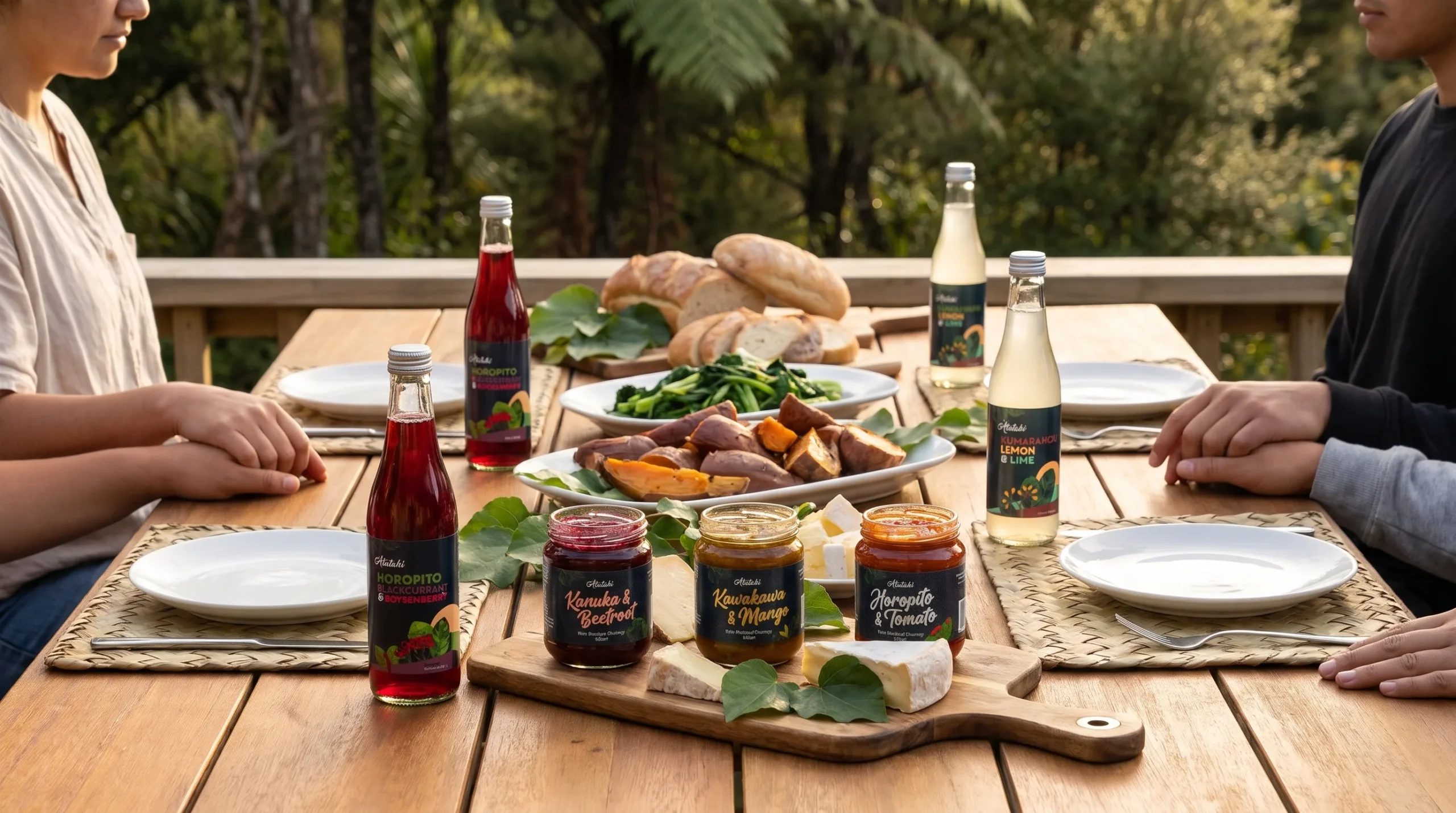
QUICK ANSWER
Karakia mō te kai is a short Māori karakia said before eating. It gives thanks for the food, acknowledges the atua (ancestral guardians) of the forest, gardens and sea it came from, and recognises the people who gathered and cooked it. It’s said once everyone is gathered and the food is ready, before anyone starts eating.
KEY TAKEAWAYS
- Karakia mō te kai means “karakia for food”. It’s the karakia said before a meal to give thanks and to mark the shift from preparing kai to sharing it.
- Traditional versions acknowledge atua such as Tāne (forest), Rongo (cultivated food), Haumia-tiketike (wild plant foods) and Tangaroa (the sea) as the sources of the kai.
- Many widely used versions, such as Whakapaingia ēnei kai, are Christian-influenced. Others, such as Nau mai e ngā hua, draw on older, pre-Christian forms.
- Karakia before eating is linked to tapu and noa. Food is noa (ordinary, unrestricted), and sharing kai after a karakia helps return people to an everyday state after a formal or tapu occasion.
- You’ll hear karakia mō te kai at marae, hui, schools, workplaces, whānau gatherings and community events across Aotearoa.
- At Atutahi, karakia isn’t only said at the table. It’s part of how the brand harvests native botanicals and makes its drinks and chutneys.
The kai is on the table, everyone has found a seat, and then someone says, “Kia inoi tātou” or “Let’s have a karakia.” If you’re new to it, you might wonder what to do with your hands, whether to close your eyes, or what the words actually mean.
Karakia mō te kai is one of the most common karakia you’ll come across in Aotearoa. It’s said at marae and kura, before workplace lunches and at whānau dinners. It’s short, and joining in is simple once you understand what it’s for. This guide explains what a karakia for food means, where it comes from, when it’s said, and how you can take part respectfully, whether you’re Māori, Pākehā, or new to New Zealand.
What is karakia mō te kai?
Karakia mō te kai is the karakia said before a meal to give thanks for the food and those who provided it. “Karakia” refers to ritual chants, prayers or incantations, “mō” means “for”, and “kai” means food. You’ll also see it written as karakia mo te kai (without the macron) or karakia kai.
Karakia themselves are much older than the arrival of Christianity in Aotearoa. Te Ara, the Encyclopedia of New Zealand, describes karakia as a way of communicating with the atua. They weren’t a form of worship. They were set formulas of words, chanted to gain benefit or avoid harm. Traditional karakia covered almost every part of life, from fishing and planting to healing, travel and gathering food.
Karakia mō te kai is one everyday expression of that wider tradition. It’s short, it’s said together, and it puts a moment of gratitude and focus between preparing a meal and eating it.
What does a karakia for food mean?
At its heart, the meaning of a karakia for food is acknowledgement. It recognises that food doesn’t just appear. It comes from Papatūānuku (the earth), from the domains of particular atua, and from the people who harvested, carried and cooked it.
Traditionally, Māori said a karakia of acknowledgement and thanks to the atua of the food that was about to be eaten. Food from the forest belongs to the domain of Tāne. Kūmara and other cultivated crops are linked to Rongo. Fernroot and other wild plant foods belong to Haumia-tiketike, and fish and kaimoana come from Tangaroa. Naming these sources is a way of honouring the whakapapa (genealogy) of the meal.
Many school and community versions also thank the kaimahi, the people who prepared the kai. This matches a wider tikanga value: manaakitanga, or caring for people through hospitality.
Traditional and Christian-influenced versions
You’ll hear two broad styles of karakia mō te kai. Neither is “wrong”. Which one is used usually depends on the iwi, the marae, the organisation or the whānau.
| Karakia (opening line) | Style | What it acknowledges | Where you’ll often hear it |
| Nau mai e ngā hua | Draws on traditional, pre-Christian form | Welcomes the produce of the forest, the cultivated gardens, the sea and fresh water, naming atua such as Tāne, Rongo and Tangaroa | Schools, kura, community groups, organisations wanting a non-religious karakia |
| Kua horahia te kai | Traditional-style | Says the food laid out has been given by the atua, naming Tāne Mahuta, Haumia-tiketike, Rongomātāne and Tangaroa | Workplaces, community hui, schools |
| E Rongo, e Rongo | Traditional-style | Calls on Rongo for the growing things that fill and sustain the body | Schools and early childhood centres |
| Whakapaingia ēnei kai | Christian-influenced | Asks for the food to be blessed so it nourishes the body and feeds the spirit, ending with “Āmine” | Marae, churches, whānau gatherings, many workplaces |
If you’re joining a group, simply follow whichever karakia they use. If you’re choosing one for your own household or team, it’s worth asking local iwi, your kura or a te reo Māori kaiako which version suits your area. Karakia are taonga, and the right one often depends on where you are.
Why is karakia said before eating?
Karakia is said before eating to give thanks and to mark a change of state, from the work of preparing food to the act of sharing it. That second purpose links to two core tikanga concepts: tapu and noa.
Tapu describes something sacred, restricted or set apart. Noa is its counterpart: ordinary, everyday and free from restriction. Food is noa, which is why kai plays such an important role in Māori ceremony. At the end of a pōwhiri, a tangihanga or another formal occasion, sharing food helps lift the tapu and return everyone to an everyday state. In traditional ritual, a karakia was often said as the food was eaten, as part of this “lightening”.
Day to day, karakia before eating also does something simpler. It stops everyone for a moment, brings the group together, and makes the meal a shared act instead of everyone reaching for a plate at once.
This tapu–noa relationship also explains some of the table tikanga you might have noticed. Many people avoid sitting on tables, putting hats on tables or passing food over someone’s head. These customs keep food (noa) apart from things considered tapu, such as the head.
When is karakia mō te kai said?
Karakia mō te kai is said once the food is ready and people are gathered, but before anyone starts eating. It’s usually said once for the whole group, not person by person.
Here are the settings where you’re most likely to hear it in New Zealand:
- On the marae: before kai in the wharekai after a pōwhiri, during hui, and at tangihanga.
- At hākari and celebrations: shared feasts for birthdays, weddings, kapa haka events and community occasions. If you’re hosting, our guide to sharing kai and connection the Māori way covers the wider spirit of Māori hospitality.
- At Matariki: many whānau and workplaces open Matariki meals with karakia. For menu ideas, see what food and drink are traditionally shared at Matariki.
- In schools and kura: many New Zealand schools say karakia mō te kai before lunch or shared morning tea.
- In workplaces: government agencies, health services, councils and many businesses now open shared lunches, morning teas and catered meetings with karakia.
- At home: some whānau say karakia before every evening meal. Others keep it for Sunday dinners, special occasions or when manuhiri (guests) visit.
What about a quick sandwich at your desk or a coffee at a café? Karakia is mostly a collective practice tied to shared meals. Some people quietly say a karakia to themselves before eating alone, but there’s no expectation that you will.
How do you take part in karakia before eating?
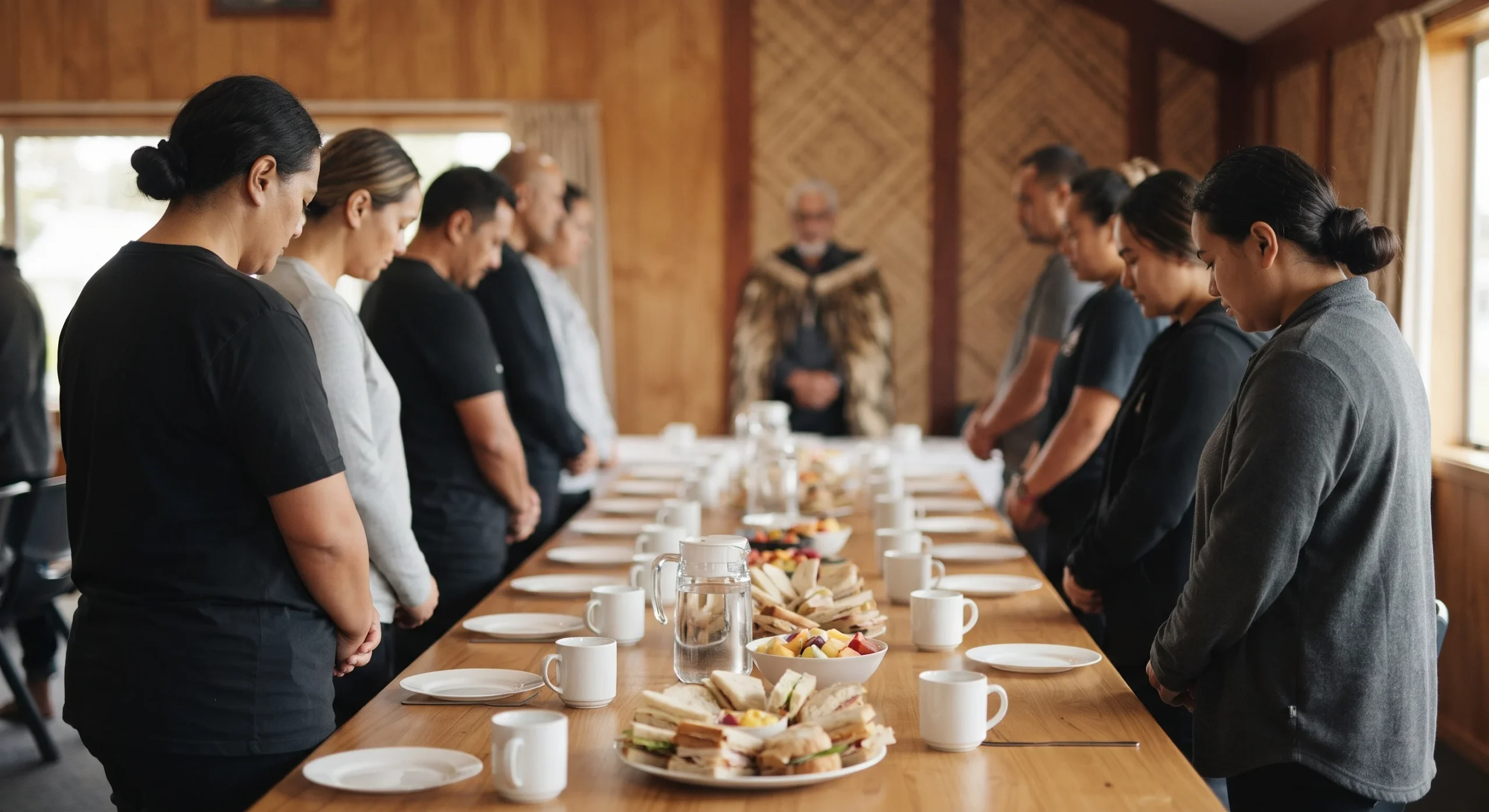
You don’t need to know the words to take part. Your main role is to be present, quiet and respectful. Here’s what usually happens:
- Wait for the call. The host, a kaumātua or a nominated person will let everyone know it’s time, often with “Kia inoi tātou” (let us pray) or “Me karakia tātou”.
- Stop eating and drinking. If you’ve already picked up food or a drink, put it down. Nobody starts before the karakia is finished.
- Stand or stay seated, as the group does. On a marae people often stand. At a workplace lunch, people usually stay where they are.
- Be still and quiet. Phones down, conversation paused. Many people bow their heads or close their eyes, but that’s optional.
- Listen or join in. If the group says the karakia together and you know it, join in. If you don’t, listen and follow along.
- Respond at the end. Depending on the karakia, the group may finish with “Āmine”, “Kia ora”, or “Haumi e, hui e, tāiki e”.
- Wait for the cue to eat. Often the host or kaumātua will invite everyone to start, sometimes with manuhiri or elders served first.
If you’re asked to lead karakia mō te kai and you don’t feel confident, it’s fine to say so. Offering a short version you know well is better than a longer one you can’t pronounce. Practising the five te reo vowel sounds beforehand makes a big difference.
Mistakes to avoid
- Starting to eat before the karakia. This is the most common slip at work events and buffets.
- Talking or scrolling through it. Even if you don’t understand the words, a minute of stillness shows respect.
- Treating it as a performance. Karakia isn’t decoration or a box to tick. Say it sincerely, or ask someone who is comfortable to lead.
- Changing words on a whim. If you’re unsure about a line, keep to the version you learned and check with a fluent speaker before adapting it.
Karakia beyond the table: how Atutahi brings karakia into harvest and making
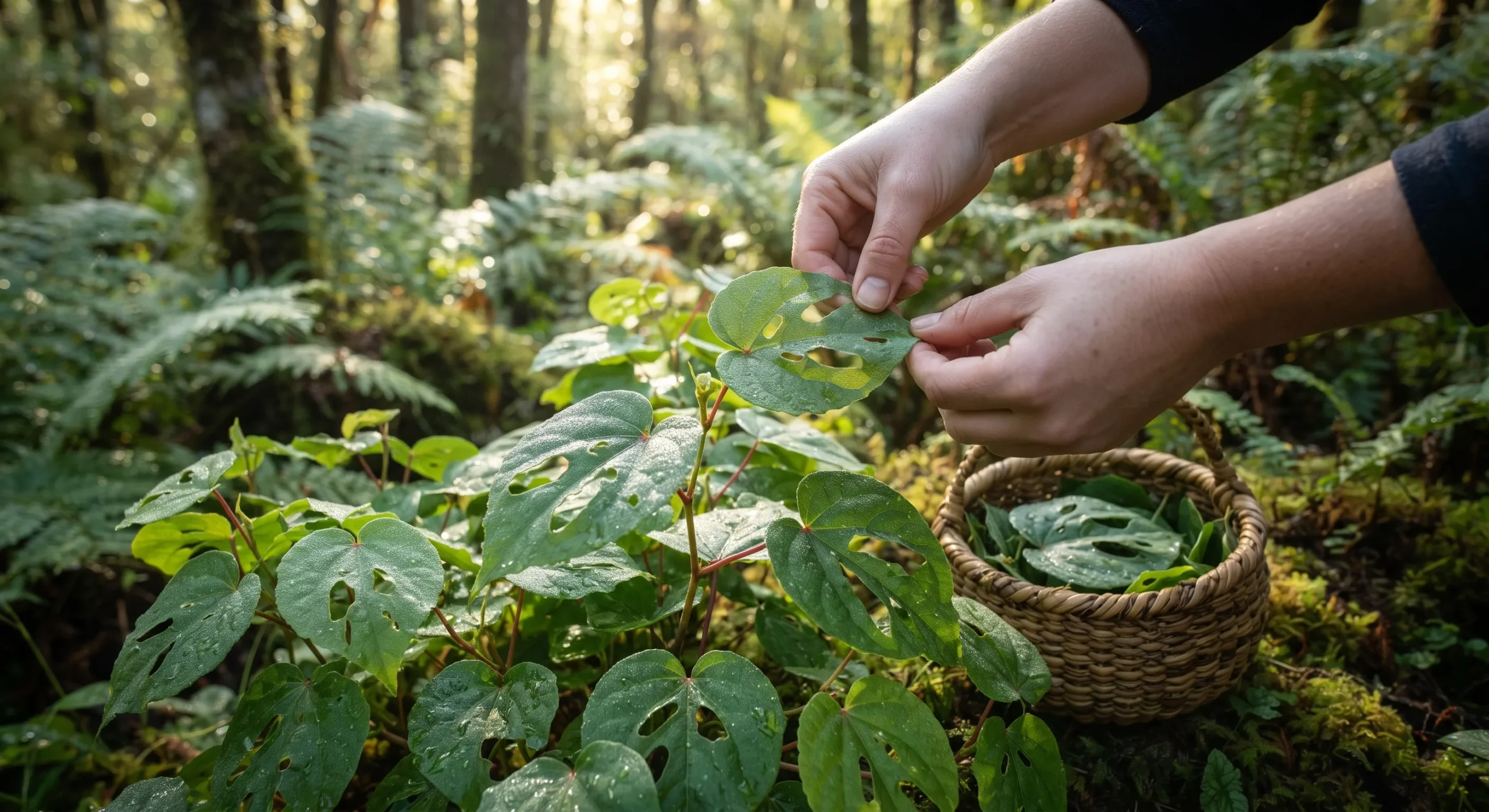
For most people, karakia mō te kai happens at the table. At Atutahi, gratitude for kai starts much earlier, out where the botanicals grow.
Atutahi’s drinks and chutneys are crafted with tikanga, karakia and respect for whakapapa, using hand-harvested native botanicals from across Te Waipounamu. In our experience, a karakia said before picking changes how harvesting feels. It turns gathering kawakawa, horopito or kānuka from a task into an act of acknowledgement. Tāne’s forest is giving something, and we’re responsible for taking only what we need.
That approach reflects tikanga that rongoā practitioners across Aotearoa still follow today:
- Ask before you take. Traditionally, permission was sought from Tāne Mahuta before removing plants. Karakia is one way of asking.
- Take a little from many plants. Harvest only where plants are plentiful, and never strip one plant bare.
- Read the conditions. Many harvesters avoid gathering in the rain or from unwell plants, and early morning is often preferred.
- Give back. Return unused plant material to the earth and leave the area as you found it.
Karakia doesn’t stop when the baskets come back to Nelson, either. The same intention carries through to preparation and bottling, before a batch of chutney goes on or a new run of drinks is made. To see what happens to the leaves after harvest, read our guide on how botanical ingredients are prepared for drinks, from leaf to label.
Put simply, a karakia mō te kai at your dinner table and a karakia said before harvesting share the same purpose. Both acknowledge where kai comes from, and both ask the people taking it to do so with care. That’s the thread running through Atutahi’s values of kaitiakitanga, kotahitanga and hauora, which you can read more about on our What We Value page.
If you’re curious about how other customs shape the way our drinks are enjoyed, our post on the Māori wellness rituals behind Atutahi drinks covers that side of the story. This article focuses on the kai blessing itself.
Bringing karakia mō te kai to your own table
Starting a meal with karakia mō te kai is one of the easiest ways to bring tikanga into everyday life. It takes less than a minute, it gathers everyone together, and it reminds you that every plate is connected to land, sea and people.
If you’d like to start, keep it simple. Learn one short karakia from a trusted local source, practise the pronunciation, and say it before a shared meal this week. When your table includes kai made with the same care, it feels even more complete. Explore Atutahi’s low-sugar native drinks and handmade chutneys, made in Nelson with tikanga, karakia and respect for whakapapa, and bring a taste of Te Waipounamu to your next kai.
Frequently Asked Questions
No. Anyone can take part in or say karakia mō te kai, and many non-Māori New Zealanders do so at school, work and community events. What matters is saying it sincerely, pronouncing it carefully and respecting the group’s tikanga. If you’re unsure which version to use, ask someone local who can guide you.
It depends on the version. Some karakia mō te kai, like Whakapaingia ēnei kai, are Christian-influenced and end with “Āmine”. Others draw on older Māori traditions and acknowledge atua such as Tāne and Rongo rather than a Christian God. Many schools and workplaces choose a non-denominational version so everyone feels comfortable joining in.
Some groups say a translation or a short English thanks, especially where people are just starting out. Even so, karakia are usually said in te reo Māori. If you’re learning, it’s often best to say it in te reo and understand the English meaning, rather than replacing it with an English version.
On a marae, it’s usually a kaumātua, the host or someone from the tangata whenua. At work or school, it might be a staff member, a student or whoever has been asked ahead of time. If you’re the host and unsure, it’s polite to ask someone confident in te reo before the meal starts.
Simply stand or sit quietly, put down any food or drink, and listen. Nobody expects visitors or newcomers to know the words. If the group responds at the end with “Āmine”, “Kia ora” or “Haumi e, hui e, tāiki e”, you can join in with that part.
Sometimes. A separate closing karakia (karakia whakamutunga or whakakapi) may be said to end a hui, a class or a working day. It’s less common to say one specifically after a meal at home, but some marae and whānau do. Follow the lead of your hosts.
Most karakia mō te kai take between 15 seconds and a minute. They’re usually only four to ten short lines. On formal occasions, a kaumātua may add a longer karakia or a few words of mihi before the meal, which can take a little longer.
Yes, and many do. Karakia mō te kai is taught in kōhanga reo, early childhood centres and primary schools around New Zealand. Short, rhythmic versions are easy for tamariki to memorise, and saying them at home helps reinforce what they’re learning at school.
No. It’s commonly said before shared morning teas, lunches and snacks as well as formal feasts. The size of the meal matters less than whether people are eating together. For a quick bite on your own, a karakia is a personal choice, not an expectation.
In tikanga Māori, food is noa (ordinary and unrestricted). Sharing kai after a formal or tapu event, such as a pōwhiri or tangihanga, helps return people to an everyday state. That’s why a meal almost always follows ceremonies on the marae, and why karakia and kai are so closely connected.