

Why These Four Little Words Trip People Up
You have probably heard tahi, rua, toru, whā at a school assembly, a kapa haka warm-up or a sports field. Lots of Kiwis can chant it. Far fewer feel sure about what each word means, how to say it properly, or why a brand would put these words on its products. That gap is a small thing, but it can make you hesitate when you want to use te reo in everyday life.
Here is the honest truth. The tahi rua toru wha meaning is simple: one, two, three, four. These are the first four numbers in te reo Māori, the Indigenous language of Aotearoa New Zealand. Once you know them, the rest of the count to ten is only a short step away. And once you can count, you will spot these words everywhere, including on the shelves at Atutahi, a Māori-owned, Nelson-based maker of native botanical drinks and chutneys.
- Tahi = 1, rua = 2, toru = 3, whā = 4.
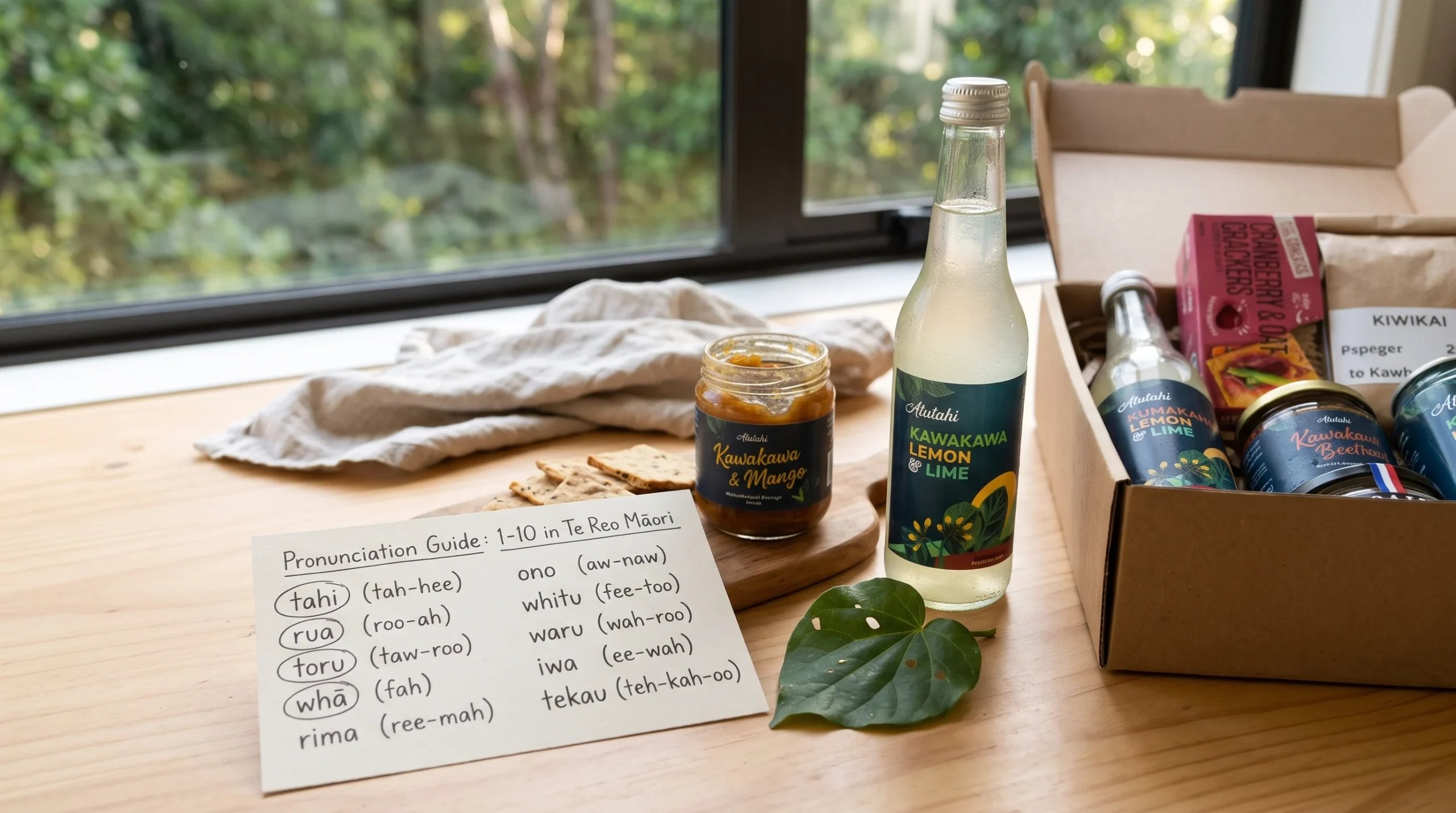
- Say them like TAH-hee, ROO-ah, TAW-roo and FAH.
- The “wh” in whā usually sounds close to an English “f”.
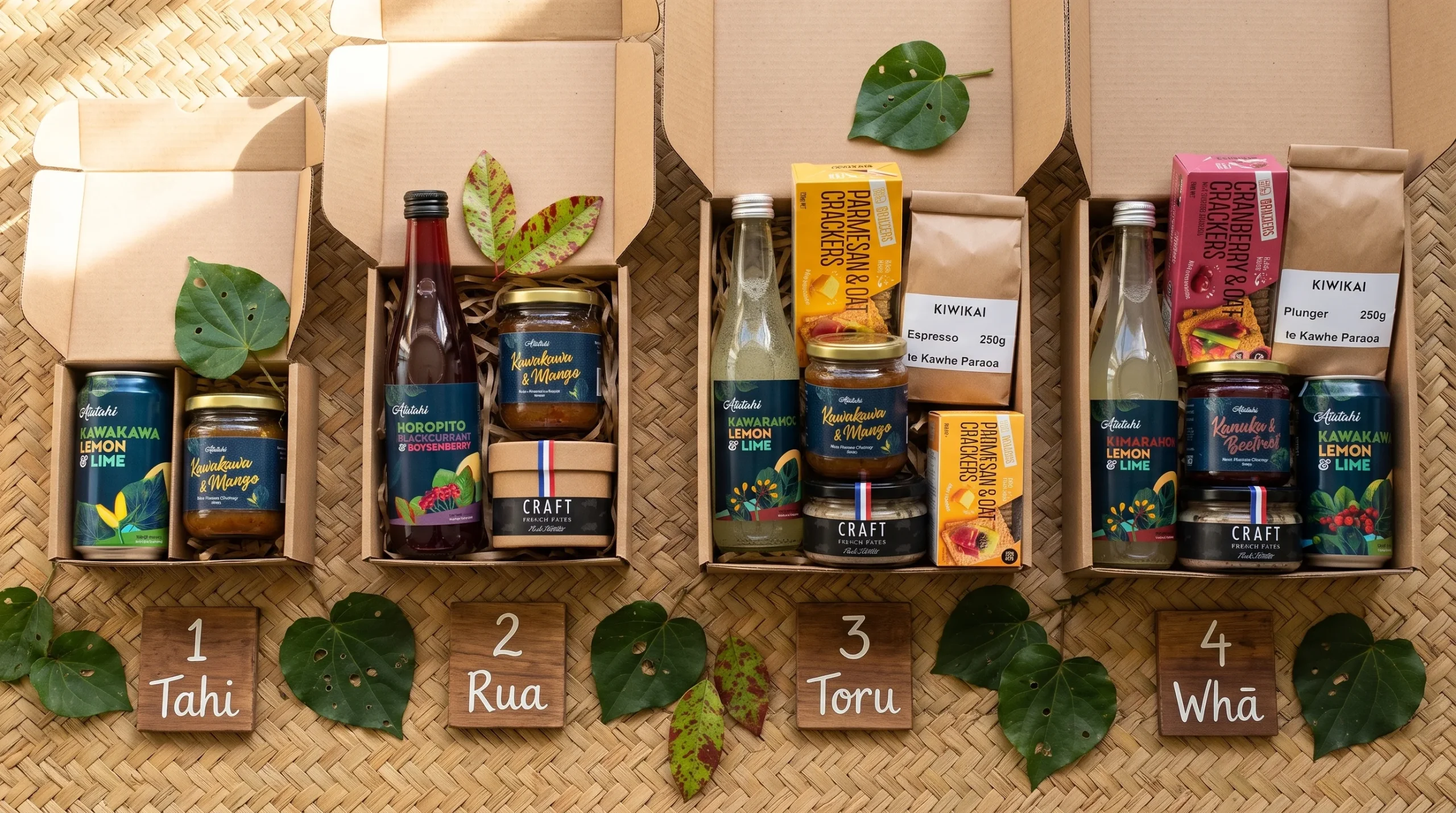
- Atutahi names its four gift packs Gift Tahi, Gift Rua, Gift Toru and Gift Whā.
- The numbers name the packs in the range. They do not tell you how many items sit inside each box.
Key Takeaways
- Tahi, rua, toru, whā means one, two, three, four in te reo Māori.
- Say them as TAH-hee, ROO-ah, TAW-roo, FAH.
- Keep vowels pure, tap the “r” lightly, and say “wh” like a soft “f”.
- Bigger numbers build from one to ten, like tekau mā tahi for 11.
- Tahi also links to unity and togetherness, and it lives inside the name Atutahi.
- The numbers name the four Atutahi gift packs; they do not count the items inside.
- Gift Tahi is the first taste, Gift Rua the big spread, Gift Toru the savoury pick and Gift Whā the full collection.
Counting in Te Reo Māori: What the Numbers Are and Why They Matter
Te reo Māori numbers are short, regular and easy to learn. Every number from one to ten is a single word, and most have only two syllables. That makes counting one of the best first steps for anyone starting out with the language.
Numbers also show up in daily Kiwi life more than you might think. Teachers use them to line up classes. Coaches use them on the sideline. Parents use them to count down bedtime. When a brand uses them too, it helps keep the language visible and normal, which is a big part of how te reo grows. It is the same idea behind Te Wiki o te Reo Māori, the Māori Language Week held each year: the more often you hear and see the words, the more natural they feel.
The Numbers One to Ten at a Glance
This table is the easiest way to learn the full count. Read across each row, say the word out loud, and repeat it twice.
| Number | Te reo Māori | Simple way to say it | Handy memory tip |
| 1 | tahi | TAH-hee | Think “one-and-only” |
| 2 | rua | ROO-ah | Rhymes with “brewer” without the b |
| 3 | toru | TAW-roo | Short “taw”, soft “roo” |
| 4 | whā | FAH | Long “ah” sound |
| 5 | rima | REE-mah | Also means “hand” (five fingers) |
| 6 | ono | AW-naw | Two short “aw” sounds |
| 7 | whitu | FEE-too | “wh” sounds like “f” again |
| 8 | waru | WAH-roo | Plain “w” this time |
| 9 | iwa | EE-wah | Two quick beats |
| 10 | tekau | TEH-ko | The “au” sounds like “oh” |
What Comes After Ten?
Once you know one to ten, bigger numbers are built like Lego. Eleven is tekau mā tahi (ten and one). Twelve is tekau mā rua. Twenty is rua tekau (two tens). So the four words in this blog’s title are the building blocks of almost every number you will ever need.
How to Pronounce Tahi, Rua, Toru and Whā Correctly
Good pronunciation comes down to vowels, the “r” and the “wh”. Get those three things right and you will sound confident, even as a beginner.
Keep Your Vowels Pure
Te reo Māori has five vowel sounds, and they never change. “A” is like the “a” in car. “E” is like the “e” in egg. “I” is like the “ee” in see. “O” is like the “or” in port, but shorter. “U” is like the “oo” in moon. Unlike English, a vowel keeps the same sound wherever it sits in a word. A macron, the little line over a letter like the ā in whā, simply means you hold that vowel for longer.
Soften the “R”
The Māori “r” is a light tap of the tongue, not a hard English “r”. Your tongue flicks the roof of your mouth just behind your top teeth. To English ears it can sound a little like a soft “d” or “l”. So rua is closer to “ddoo-ah” than to the English word “rue”.
Say “Wh” Like a Soft “F”
In most regions, “wh” sounds close to an English “f”. That is why whā sounds like “fah” and whitu like “fee-too”. Some iwi and regions say it a little differently, such as a softer “w” sound around Whanganui, so if you hear a local speaker say it another way, follow their lead.
A Quick Practice Routine
Try this today. Say “tahi, rua, toru, whā” slowly three times, then three times at normal speed. Next, count the items on your kitchen bench or the steps to your front door. Small, daily practice beats one long study session every time.
Tahi Means More Than “One”
The word tahi also carries ideas of togetherness and unity. In te reo, kotahi means one, and kotahitanga means unity, or being one people. You will also see tahi in phrases like ako tahi, which means learning together.
This is where the language gets lovely. Atutahi itself carries the word tahi. The brand’s name links to Atutahi, the bright star known in English as Canopus, which is often described as standing alone and shining clearly in the night sky. A name like that sets a tone: one clear light, made with care. You can read more about where the brand came from in the story behind Atutahi and on the About Us page.
How the Numbers Name Atutahi’s Gift Range
Atutahi uses tahi, rua, toru and whā to name its four gift packs in a simple, memorable order. Each pack is a curated mix of native-inspired treats made in Nelson, and each name gives you a small te reo lesson every time you say it.
One thing is worth knowing up front, because it often confuses people. The number is a name, not a count. Gift Tahi does not hold one item, and Gift Rua does not hold two. The packs also are not priced in number order. Think of the numbers like chapter titles: they help you tell the four packs apart and remember them.
Gift Tahi: Number One, the First Taste
Gift Tahi is the starting point of the range, and the name fits. At $45, it brings together three artisan treats: a Horopito Blackcurrant & Boysenberry drink, a jar of Kawakawa & Mango Chutney and a craft pâté. It is a gentle first step for someone who has never tried native flavours like horopito or kawakawa.
Gift Rua: Number Two, the Generous Spread
Gift Rua is the big, sharing-style pack, with seven items for $80. Inside you will find two Atutahi inu (drinks), Horopito Blackcurrant & Boysenberry and Kawakawa Lemon & Lime, plus three chutneys: Horopito & Tomato, Kawakawa & Mango and Kānuka & Beetroot. It is rounded off with artisan crackers and Kiwi Kai kawhe (coffee). It suits housewarmings and anyone who loves a grazing board.
Gift Toru: Number Three, the Savoury Favourite
Gift Toru is the compact, savoury choice at $55. It holds four artisan goodies: Kiwi Kai kawhe, Kānuka & Beetroot Chutney, craft pâté and artisan crackers. If your person loves a cheese-and-crackers moment more than a fizzy drink, Toru is the one. Curious about that earthy chutney? See why Kānuka Beetroot Chutney pairs so well.
Gift Whā: Number Four, the Full Collection
Gift Whā is the flagship pack and the most complete set, at $95. It includes all three Atutahi inu (Kawakawa Lemon & Lime, Horopito Blackcurrant & Boysenberry and Kūmarahou Lemon & Lime), all three chutneys, craft pâté, artisan crackers and Kiwi Kai kawhe. It is the pack to choose when you want to give someone the whole Atutahi experience in one box.
The Gift Range Side by Side
| Pack | Te reo meaning | Price | Items | Best for |
| Gift Tahi | One | $45 | 3 | A first taste of native flavours |
| Gift Rua | Two | $80 | 7 | Sharing, hosting and housewarmings |
| Gift Toru | Three | $55 | 4 | Savoury lovers and small thank-yous |
| Gift Whā | Four | $95 | 9 | The full experience and big occasions |
Prices and contents are taken from Atutahi’s product pages at the time of writing. Check each product page for the latest details.
Why Te Reo Names Make Gifts More Meaningful
A gift with a te reo name gives the person something to keep: a word. Every time they say “Gift Toru” or “Gift Whā”, they practise a little piece of the language without even trying. That quiet learning is one of the best things a brand can offer.
It also connects to manaakitanga, the Māori value of care, respect and generous hospitality. Giving kai (food) is a long-standing way of showing that care. If you want to go deeper, read about the meaning of manaakitanga in Māori gifting and how Māori gifting traditions can shape meaningful giving.
Respectful Use Matters
When a brand uses te reo, it should use it with care. That means correct spelling, macrons where they belong, and real meaning behind the words. As a Māori-owned business, Atutahi uses te reo as part of who it is, not as decoration. If you are naming your own products, the same rule applies: check meanings with a trusted source and, where you can, talk with Māori speakers or advisors first.
Key Benefits of Learning the Numbers and Choosing a Te Reo-Named Gift
Learning tahi to whā gives you more than a party trick. Here is what you gain, in plain terms.
You get an easy entry point into te reo, because numbers are short, regular and used every day. You build confidence with pronunciation, since these four words cover the tricky vowel, “r” and “wh” sounds. You gain a deeper connection to Aotearoa, as you start to notice the language in brand names, place names and signs. And when you give an Atutahi pack, you share a gift with a story, made in Nelson with native botanicals and a name that teaches as it delights.
Ready to Give the Gift of Tahi, Rua, Toru or Whā?
Now you know the words, it is time to put them to good use. Pick the pack that fits your person and your budget, and enjoy saying its name out loud.
Browse the full Atutahi gift pack range to compare all four. Buying for a team or clients? See these corporate gift ideas built around Māori wellness packs. Prefer to shop in person? Find a local seller on the Atutahi stockists page. Have a question about bulk orders, delivery or gift notes? Contact Atutahi directly, and join the Atutahi community through the newsletter sign-up at the bottom of any page for new products and specials.
Small Words, Big Meaning: Final Thoughts
Tahi, rua, toru and whā are some of the simplest words in te reo Māori, and some of the most useful. They open the door to counting, to clearer pronunciation and to noticing the language all around you in Aotearoa.
Atutahi turns those same four words into a gift range you can hold in your hands. Each pack shares native flavours, Nelson craftsmanship and a little lesson in language. So next time you count to four, you will know exactly what you are saying, and you might just know the perfect gift to go with it. To explore the native plants behind every pack, meet the Māori botanicals behind Atutahi.
Frequently Asked Questions
In everyday talk, tahi rua toru whā simply means one, two, three, four. Kiwis use it to count down, start a game, line up kids or kick off a waiata or haka. You will hear it at schools, marae, sports grounds and family events. It is often the first bit of te reo people learn, so it works as a friendly, inclusive way to bring the language into daily life without any fuss.
In English, tahi means one, rua means two, toru means three and whā means four. Together they are the first four numbers in te reo Māori. The macron over the ā in whā tells you to hold the vowel a little longer. Learn these four and you are well on your way to counting to ten, since the next numbers are rima, ono, whitu, waru, iwa and tekau. Say them out loud a few times to lock them in.
Use the numbers with care and real meaning. Spell them correctly, keep macrons such as whā, and make sure the name fits the product. Atutahi, a Māori-owned brand, uses them to name its Gift Tahi, Rua, Toru and Whā packs in a clear order. If you are not Māori, it is wise to check meanings with a trusted source and talk with Māori speakers or advisors first.
Say tahi as TAH-hee, rua as ROO-ah, toru as TAW-roo and whā as FAH. Keep each vowel pure: a as in car, u as in moon, o as in port but short. Tap the r lightly with your tongue, so it sounds a bit like a soft d. In most regions the wh sounds like an f. Practise slowly a few times, then say it at normal speed. Locals will appreciate the effort, even while you are still learning.
Yes. Te Aka Māori Dictionary has an app with audio for each word, which is great for checking meaning and sound. Ako Tahi is a free app with more than 2,500 everyday phrases. Māori – Ka Piki offers short daily lessons. Most beginner apps start with numbers, so you will learn tahi, rua, toru and whā early on. Try one and practise a few minutes each day.
Start with free tools like Te Aka Māori Dictionary online. Many wānanga, community education centres, libraries and local iwi run beginner te reo classes, often free or low cost. Te Wiki o te Reo Māori, held each year, brings lots of free events and resources. Schools and kōhanga reo also teach counting early, so whānau resources are easy to find in most towns.
Yes. You can find counting posters, books, puzzles, clothing and kitchenware featuring te reo numbers from many NZ makers, ideally Māori-owned ones. For a food gift with a te reo name, Atutahi offers Gift Tahi, Gift Rua, Gift Toru and Gift Whā. Each pack holds native-inspired drinks, chutneys or treats made in Nelson and comes ready to give, so it shares both flavour and language.
The numbers one to ten in te reo Māori are tahi (1), rua (2), toru (3), whā (4), rima (5), ono (6), whitu (7), waru (8), iwa (9) and tekau (10). Bigger numbers build on these. Eleven is tekau mā tahi, which means ten and one, and twenty is rua tekau, meaning two tens. Once you know the first ten, counting higher becomes simple and logical. Try counting everyday objects to practise.
No. The te reo numbers name the packs in the range; they do not count the contents. Gift Tahi has three items, Gift Toru has four, Gift Rua has seven and Gift Whā has nine. Prices are not in number order either, with Toru at $55 and Rua at $80. Check each product page on atutahi.nz for the latest contents and prices before you order. The names simply help you tell the four packs apart.
Atutahi is the te reo Māori name for the bright star known in English as Canopus. It is often described as standing alone and shining clearly in the night sky. The brand name also carries the word tahi, meaning one, which links to ideas of unity and togetherness. That fits Atutahi’s purpose: sharing native botanicals and Māori values through drinks, chutneys and gift packs.