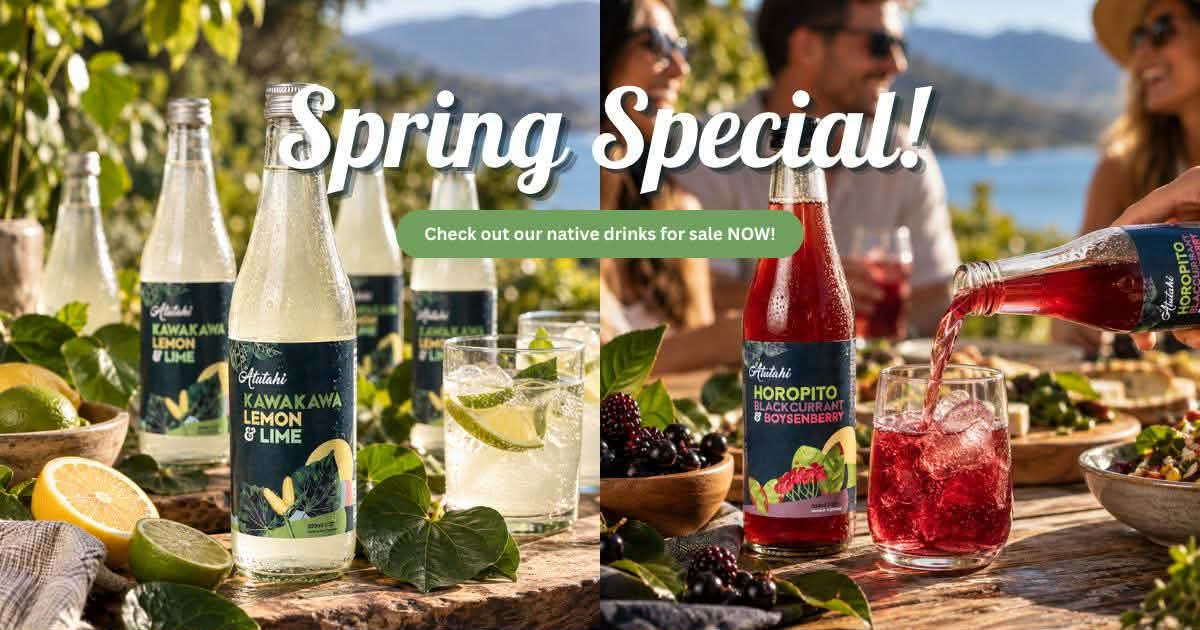

You pick up a sparkling drink, flip it over, and read two small words: natural flavour. It sounds good. It sounds like nature. But it doesn’t tell you which plant, fruit or spice made that taste, or how it got into the bottle.
That is the honest problem with natural flavours on a food label. The words are legal and common, yet they share very little. This guide explains what the term really means in New Zealand, what the food rules do and don’t say, how to read a label in under a minute, and exactly what goes into our own drinks made here in Nelson.
In New Zealand, “flavour” or “flavouring” on a label means a flavouring substance has been added. The Australia New Zealand Food Standards Code does not set a separate legal definition for “natural flavour”. It lets brands use the general word “flavouring” without naming the source. Whether “natural” is fair to say is judged under consumer law, which bans misleading claims. If you want to know exactly what you’re drinking, look for labels that name real ingredients, like “kawakawa leaf” or “lemon juice”, instead of a catch-all word.
Key Takeaways
- “Flavour” on an NZ label means a flavouring was added.
- The Food Standards Code does not define “natural flavour”.
- Brands don’t have to name the flavour’s source.
- Real ingredient names tell you far more than “flavour”.
- Atutahi drinks use brewed native leaves and fruit, with no added flavourings.
Why That Tiny Word on the Label Leaves You Guessing
You deserve to know what you’re drinking, and “flavour” doesn’t tell you. Most of us read labels because we care. We want drinks that taste great and feel good, not a mystery mix.
Here’s the catch. One word, flavour, can stand for a single fruit extract or a blend of dozens of compounds. Two drinks can both say “natural flavour” and be made in very different ways. So the label is legal, but it isn’t always helpful.
That gap is exactly why we wrote this guide. At Atutahi, we make drinks from native plants that Māori have used for generations. We think the leaf in the bottle should be named on the label, plain and simple.
Natural Flavours on Food Labels, Explained Simply
A natural flavour is a taste booster made from something that grew or lived, not built from scratch in a lab. That’s the everyday meaning most people and most flavour makers use.
What a “flavour” actually is
A flavour is a small amount of a substance added to food or drink to give it a taste or smell. It isn’t the food itself. Think of it like perfume for your drink. A little goes a long way, which is why flavours are so popular with big drink makers.
Where natural flavours come from
Natural flavours usually start with a plant, fruit, spice, bark, or sometimes an animal source. The flavour is then pulled out using steps like pressing, heating, steaming or soaking. The flavour industry in Australia and New Zealand follows international guidelines that say natural flavourings should come from these kinds of physical, enzyme or fermentation processes, not chemical building.
But remember, those are industry guidelines, not the label law itself. That difference matters, as you’ll see next.
What Does “Natural Flavours” Actually Mean on a Drink Label?
Under the rules in Aotearoa, “natural flavours” has no special legal definition of its own. The Food Standards Code covers flavourings in general. It does not require brands to say where a flavour came from, and it does not set a separate test for the word “natural”.
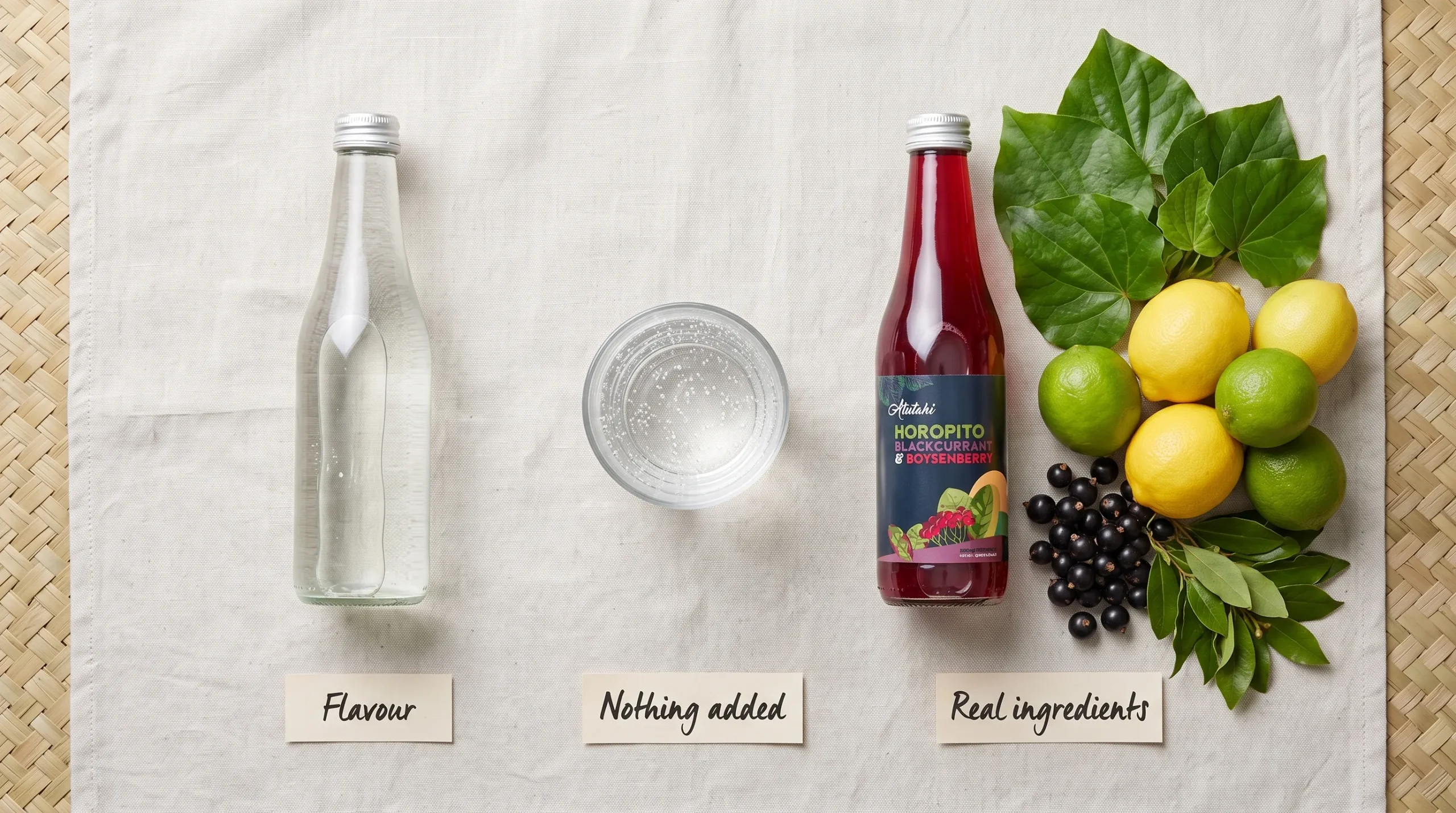
Atutahi takes a different path. Our drinks are made with brewed native leaves, fruit and a light syrup, and we don’t add flavourings at all. So you won’t find “natural flavours” doing the heavy lifting on our labels.
What the Food Standards Code says
The Australia New Zealand Food Standards Code applies in New Zealand through the Food Act 2014. Two parts are worth knowing:
- Standard 1.1.2, section 1.1.2—2 defines a flavouring substance as a substance “used as a food additive to perform the technological purpose of a flavouring”. In plain words, it’s something added to give taste.
- Standard 1.2.4, section 1.2.4—4 lets brands list ingredients by a generic name. Under Schedule 10, flavourings can simply be listed as “flavouring” or “flavour”.
What the Code doesn’t say
The Code doesn’t define “natural flavour”, and it doesn’t make brands name the source. So a label reading “natural flavour” is using a general allowed word plus a describing word. Whether that describing word is fair is checked under New Zealand’s Fair Trading Act 1986, which bans misleading claims, and by food regulators like the Ministry for Primary Industries.
| Question | What the rules say |
| Must added flavours be shown in the ingredient list? | Yes. They can be listed as “flavouring” or “flavour”. |
| Must the brand say which fruit, plant or spice it came from? | No. The generic name is allowed. |
| Does the Code define “natural flavour”? | No. It defines flavouring substance only. |
| Who stops a false “natural” claim? | Consumer law, through the Fair Trading Act and regulators. |
Natural vs Artificial Flavours vs Whole Ingredients
The real choice isn’t just natural or artificial; it’s flavouring versus the actual ingredient. Here’s the easiest way to picture it.
An artificial flavour is like a drawing of a strawberry. It looks the part, but it was made with pens and paper. A natural flavour is like a photo of a strawberry. It came from the real thing, but it’s still just a picture. A whole ingredient is the strawberry itself, sitting in your hand.
| Artificial flavour | Natural flavour | Whole ingredient | |
| Starts as | Chemicals built in a lab | A plant, fruit, spice or animal | The real food |
| How it’s made | Chemical building | Pressing, heating, steaming, fermenting | Brewing, juicing, chopping |
| How it shows on a label | Often “flavour” or “flavouring” | Often “flavour” or “natural flavour” | By name, e.g. “lemon juice” |
| Do you know the source? | Rarely | Not always | Yes |
Why so many brands use flavourings
Flavourings are cheap, strong and steady. A tiny drop can make a big batch taste the same every time, all year round. Real fruit and leaves cost more and change with the seasons. That isn’t always a bad thing, but it helps to know why a brand might choose a flavouring over the real deal.
How to Read Natural Flavours on a Food Label
You can check any label in under a minute once you know where to look. Grab a drink from your fridge and try this.
Start with the ingredient list, not the front
The front of the pack is there to sell. The back is where the facts live. Ingredients are listed from most to least by weight, so the first few words tell you what the drink is mostly made of.
Look for names you’d find in a kitchen
If you see “kawakawa leaf”, “lemon juice” or “blackcurrant”, you know exactly where the taste comes from. If you only see “flavour” or “natural flavour”, the source is hidden. It isn’t unsafe, it’s just less open.
Check the “flavoured” word in the product name
New Zealand rules say a food’s name should reflect what it really is. A drink called “lemon-flavoured” may have no lemon in it at all, while a drink with lemon in its name and “lemon juice” in the list is using the real fruit. That small word is a big clue.
Words worth a second look
A few words deserve a pause: “flavour”, “natural flavour”, “flavour enhancer”, and numbered additives like colours or preservatives. None of these are automatically bad. They’re just signs that you may want to ask the brand a question. Our guide to reading wellness drink labels walks through the rest of the panel, and our piece on why more Kiwis are choosing preservative-free drinks covers the extras.
What “Natural Flavours” Means in Atutahi’s Own Drinks
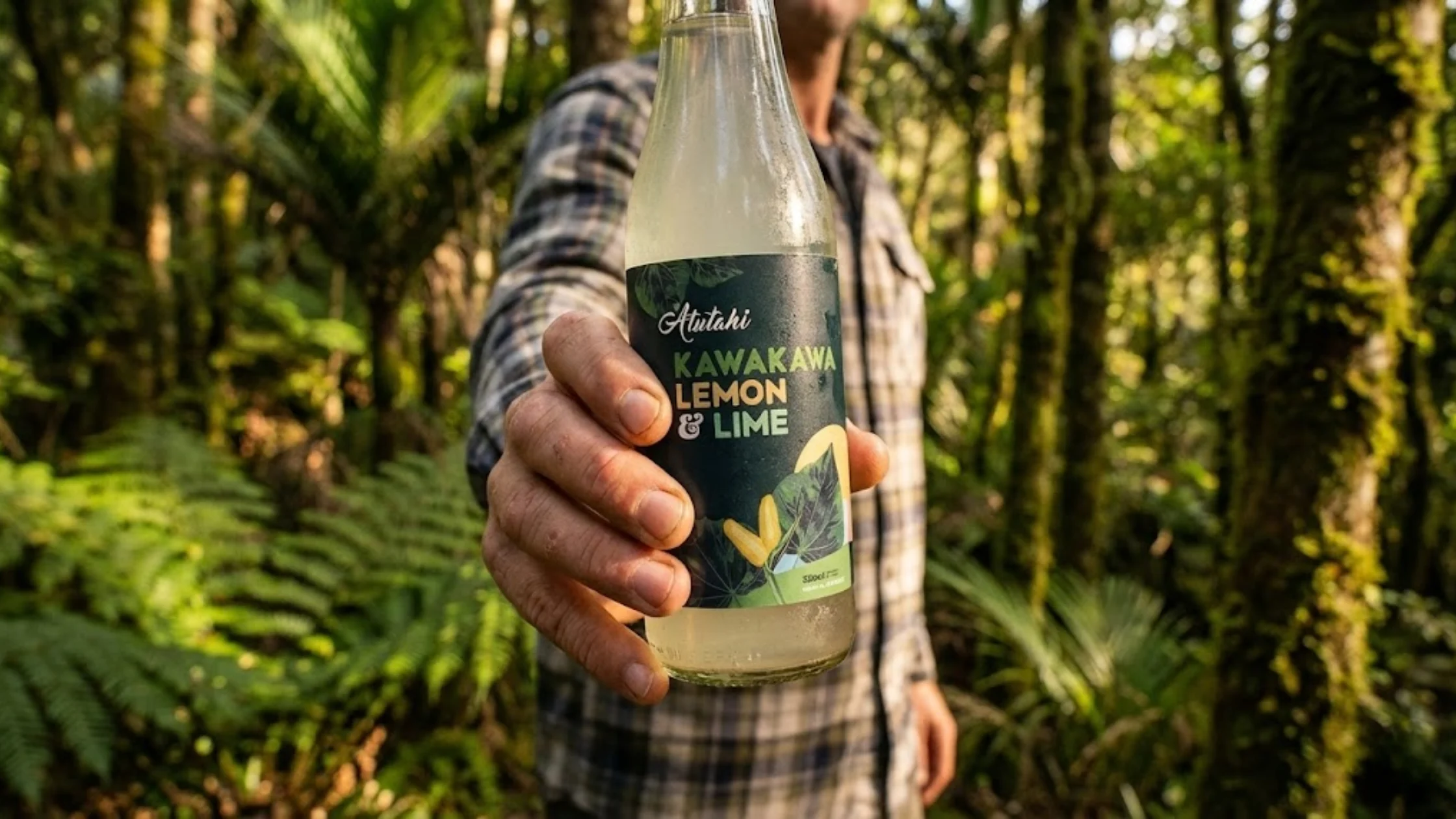
Short answer: in our drinks, the flavour is the ingredient. We don’t add flavourings, artificial colours or preservatives. The taste comes from what we brew and blend.
Every Atutahi drink is made in small batches in Nelson. Our native leaves are hand-picked, many from whānau land, and brewed like a strong tea before being blended with fruit and a light syrup. You can read more about that process in From Leaf to Label and how we choose suppliers in Values-Led Sourcing.
Kawakawa Lemon & Lime
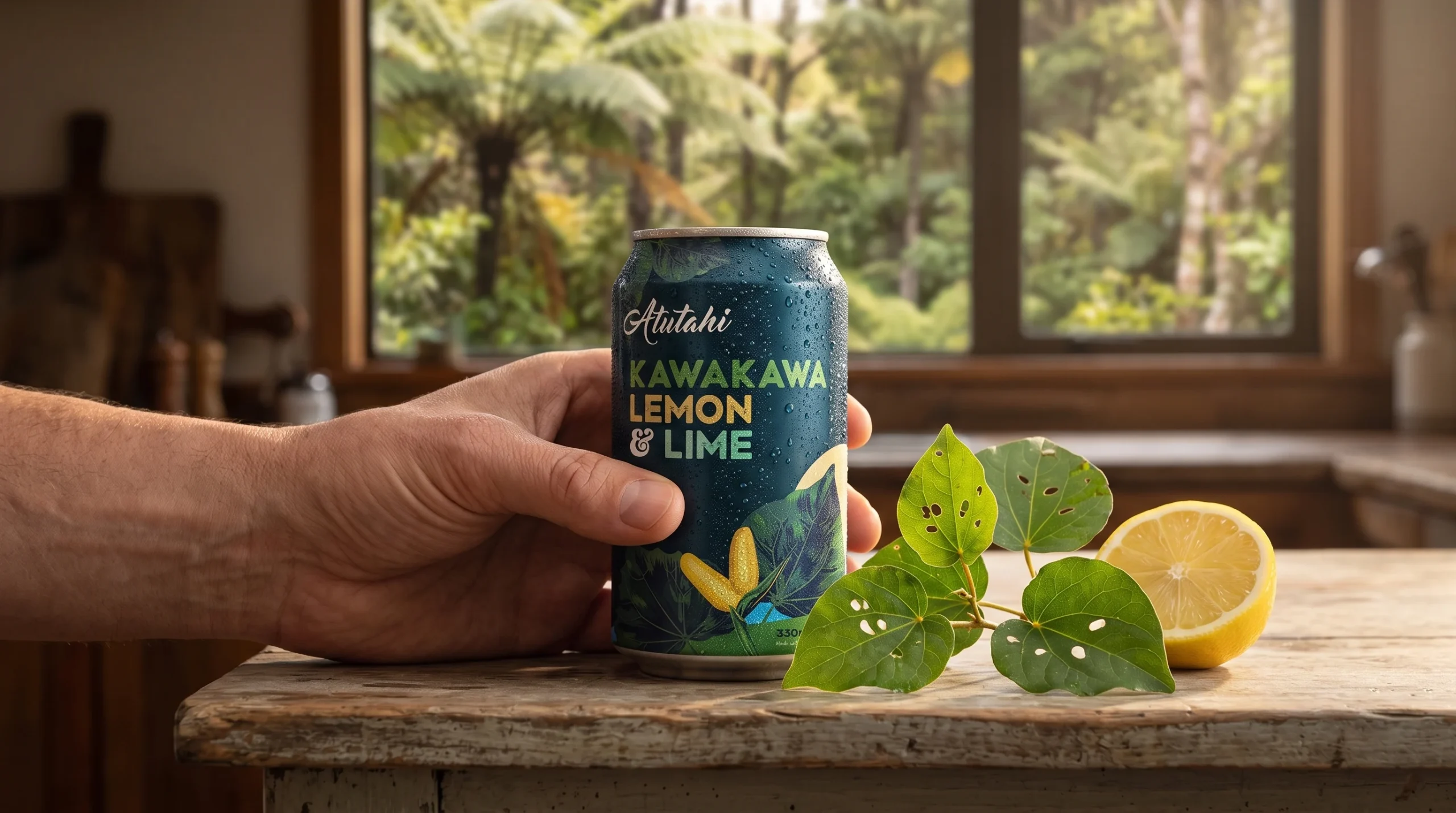
The warm, peppery note you taste comes from brewed kawakawa leaf, a heart-shaped native plant. The zing comes from lemon and lime. There’s no lemon “flavouring” hiding behind it. Try it in a Kawakawa Lemon & Lime 15-pack.
Kūmarahou Lemon & Lime
Kūmarahou has a gentle, earthy, slightly bitter taste. We pair the brewed leaf with citrus to balance it. That bitterness is real, and it’s a sign you’re tasting the plant, not a copy of it. Find it in the Kūmarahou Lemon & Lime 15-pack.
Horopito Blackcurrant & Boysenberry
Horopito, the native bush pepper, brings a soft tingle. The deep berry taste comes from blackcurrant and boysenberry. Pick up the Horopito Blackcurrant & Boysenberry 15-pack to taste it for yourself.
What’s on the can, word for word
| Drink | What gives it its taste | Added flavourings? |
| Kawakawa Lemon & Lime | Brewed kawakawa leaf, lemon, lime | None |
| Kūmarahou Lemon & Lime | Brewed kūmarahou leaf, lemon, lime | None |
| Horopito Blackcurrant & Boysenberry | Brewed horopito leaf, blackcurrant, boysenberry | None |
Full ingredient list, exactly as printed on each can.
Because we use real leaves and fruit, you may notice small taste changes between batches. That’s the season showing up in your glass, and we think it’s part of the charm.
Key Benefits of Choosing Clear-Label Drinks
Clear labels give you control, and control makes healthy choices easier. When you can name every ingredient, you can make choices that fit your body, your values and your budget.
You also know who you’re supporting. Buying from a small, Māori-owned maker in Nelson Tasman keeps money, jobs and plant knowledge in the region. And you get a taste that’s genuinely different: the real bite of native bush, not a copy built in a factory. You can see what guides us on our What We Value page and learn about the plants on Your Health.
Taste the Difference for Yourself
The easiest way to understand real ingredients is to taste them side by side. Start with the Atutahi Mixed 15-Pack, which gives you all three drinks so you can find your favourite.
Live around Nelson, Richmond, Motueka or further afield? Check our stockists to find us nearby, or shop the full range online. Got a question about an ingredient? Get in touch with us. We’re always happy to talk about what’s in the bottle. You can also join our newsletter at the bottom of any page for label tips and new releases.
Reading Labels With Confidence
Now you know the secret: “natural flavour” is a legal shortcut, not a full story. It’s allowed, it’s common, and it isn’t a red flag on its own. But it does leave you guessing.
The good news is you don’t have to guess. Read the ingredient list, look for real names, and choose brands that are happy to show you everything. When you’re ready to taste what that looks like, explore the Atutahi range and see the leaf behind every sip.
Frequently Asked Questions
It means a flavouring was added to give taste or smell, and the maker says it came from a natural source such as a fruit, plant or spice. In New Zealand the Food Standards Code lets brands list it simply as “flavour” or “flavouring” without naming the source. The word “natural” isn’t separately defined in the Code, so the claim is checked under consumer law against being misleading.
On NZ packaging, “natural flavour” tells you a flavouring was added and that the brand describes it as natural. The Food Standards Code, which applies here through the Food Act 2014, allows the generic word “flavour” and does not require the source to be named. The Fair Trading Act 1986 means the “natural” claim must not mislead you. For full detail, look for brands that list real ingredients.
Many NZ brands say they use natural flavours, but the most open ones skip added flavourings and name the real ingredient instead. Atutahi, made in Nelson, uses brewed kawakawa, kūmarahou and horopito leaves with fruit and no added flavourings, artificial colours or preservatives. For any other brand, check the ingredient list or ask the maker directly where each flavour comes from.
Not always in a way you can check. The Food Standards Code does not define “natural flavour” or require the source to be shown. Industry guidelines say natural flavourings should come from plant, animal or microbial material using physical, enzyme or fermentation steps. If a claim is false, it can breach the Fair Trading Act. Brands that name the actual ingredient remove the guesswork.
Yes, flavourings sold in NZ must be permitted under the Food Standards Code, which sets safety rules for food additives. “Natural” doesn’t mean safer, and “artificial” doesn’t mean unsafe; both are assessed. The real issue is clarity, not safety. If you have an allergy or sensitivity, contact the brand to ask what’s inside a flavouring, as its parts may not be listed separately.
Turn to the back and read the full ingredient list. Look for words like “flavour”, “flavouring”, “natural flavour” or “flavour enhancer”. Also check the product name: “lemon-flavoured” can mean no real lemon. If you see named ingredients like “lemon juice” or “kawakawa leaf” instead, the taste comes from real food. Ingredients are listed from most to least by weight.
You’ll find them in most supermarkets, organic stores, farmers’ markets and online shops. For drinks and pantry items that use real ingredients instead of added flavourings, Atutahi sells kawakawa, kūmarahou and horopito drinks plus native chutneys online and through local stockists in Nelson Tasman and beyond. Visit the Atutahi stockists page to find a shop near you or order straight to your door.
The fresh produce, chilled and health food aisles are good places to start, along with specialty or local-maker shelves. These often carry products with shorter ingredient lists. That said, the aisle is only a hint, so always read the label. In the drinks fridge, look for botanical or brewed drinks that name their leaves and fruit rather than listing “flavour”.
Pick the product up and skip the front. Read the ingredient list for “natural flavour” or “flavouring”, and check whether real ingredients appear high on the list. A drink that lists fruit juice or brewed leaves near the top gets its taste from the food itself. One that lists water, sugar and “natural flavour” relies more on added flavouring for its taste.
Look for NZ makers who list only named ingredients, often small local brands at farmers’ markets and specialty stores. Atutahi, a Māori-owned Nelson brand, makes drinks with no added flavourings, using brewed native leaves and fruit instead. For its kawakawa, horopito and kānuka chutneys, check each jar’s label, as recipes and ingredients can change over time.