

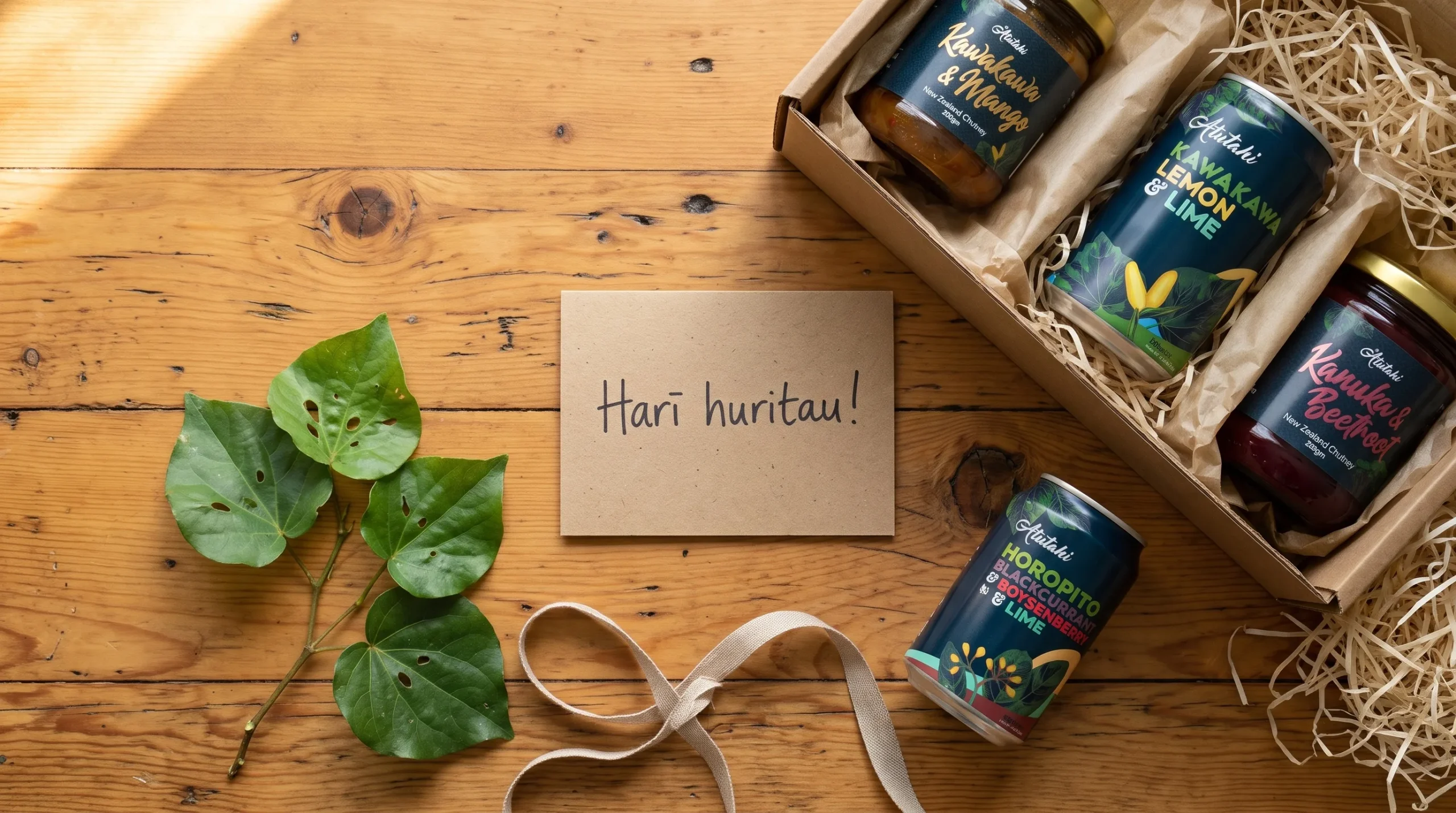
Quick answer: The most common way to say happy birthday in Māori is hari huritau (HAH-ree hoo-ree-toe), meaning “happy turning of the year”. You can also say rā whānau (RAH FAH-noe), meaning “birth day”. To wish someone directly, add ki a koe: “Hari huritau ki a koe!” means “Happy birthday to you!”
Key takeaways
- Hari huritau is the most widely used way to say happy birthday in te reo Māori; hari means happy and huritau means an annual turning, anniversary or birthday.
- Rā whānau literally means “birth day” (rā = day, whānau = to be born) and works as both “birthday” and a birthday greeting.
- “Hari huritau ki a koe” and “Rā whānau koa” are both sung to the standard Happy Birthday tune in Aotearoa.
- In te reo Māori, wh is usually pronounced like an English “f”, so whānau sounds close to “FAH-noe”.
- A te reo birthday card follows a simple pattern: Ki a [name] (to), your wish, then Nā [your name] (from).
- Macrons matter: rā (day) with a macron is a long vowel, and leaving it off changes how the word reads and sounds.
You’ve got the card, the gift is wrapped, and now you’re staring at a blank space wondering whether “Hari huritau” or “Rā whānau” is right, and whether you’ll say it wrong at the party. It’s a common moment for many Kiwis who want to use more te reo Māori in everyday life but don’t want to get it wrong.
The good news is that saying happy birthday in Māori is simple once you know the two core phrases and a few pronunciation basics. This guide gives you both, plus a sing-along version, wishes for different people, and card messages you can copy straight onto a kāri rā whānau (birthday card).
What is happy birthday in Māori?
Happy birthday in Māori is hari huritau or rā whānau. Both are correct, widely understood and used every day across Aotearoa, from kōhanga reo to workplace morning teas.
Hari huritau is a birthday greeting meaning “happy turning of the year”. Hari means happy or joyful, and huritau is defined in Te Aka Māori Dictionary as “recurring annually” or “anniversary, birthday”. Some speakers say or write hari huringa tau, which carries the same meaning.
Rā whānau means “birthday”, built from rā (day, sun) and whānau (to be born). The same word whānau also means family, which is a lovely double meaning for a day that usually brings people together. You’ll see rā whānau on cards, cakes and classroom birthday charts.
How do you pronounce hari huritau and rā whānau?
Say hari huritau as “HAH-ree hoo-ree-toe” and rā whānau as “RAH FAH-noe”. The r is a light tap, close to the “dd” in “ladder”, and the wh is usually an “f” sound.
The table below covers the core birthday phrases. Pronunciation guides are English approximations; the most reliable way to check is to listen to a native speaker or the audio on Te Aka Māori Dictionary.
| Te reo Māori | English meaning | Say it like |
| Hari huritau | Happy birthday | HAH-ree hoo-ree-toe |
| Rā whānau | Birthday / happy birthday | RAH FAH-noe |
| Hari huritau ki a koe | Happy birthday to you | HAH-ree hoo-ree-toe kee ah KOH-eh |
| Rā whānau ki a koe | Happy birthday to you | RAH FAH-noe kee ah KOH-eh |
| Rā whānau koa | Happy birthday (often sung) | RAH FAH-noe KOH-ah |
| Kia pai tō rā | Have a great day | kee-ah PIE taw RAH |
| Kia pai tō rā whānau | Have a great birthday | kee-ah PIE taw RAH FAH-noe |
| Ngā mihi nui | Warm wishes / best regards | ngaa MEE-hee NOO-ee |
| Arohanui | Much love | ah-raw-hah-NOO-ee |
| Āhea tō rā huritau? | When is your birthday? | AAH-heh-ah taw RAH hoo-ree-toe |
Three pronunciation rules that make the biggest difference
- Every vowel is pronounced, and a macron makes it long. The ā in rā is held slightly longer, like the “a” in “bar”. Short a sounds more like the “u” in “but”.
- The wh is usually an “f”. Most speakers today say whānau as “FAH-noe”. Some iwi and older speakers use a softer, breathier “wh”, so you may hear both.
- The ng is the sound in “singer”, not “finger”. So ngā starts with the same sound that ends “sing”.
If you’d like more practice with these sounds, our guide to pronouncing kawakawa, kūmarahou, horopito and kānuka walks through the same vowel and consonant rules using native plant names.
What’s the difference between hari huritau and rā whānau?
There’s no wrong choice: hari huritau emphasises celebrating another year, while rā whānau names the day itself. Most people use them interchangeably.
| Hari huritau | Rā whānau | |
| Literal meaning | Happy turning of the year | Birth day |
| Used as a greeting? | Yes, on its own or with ki a koe | Yes, on its own or with ki a koe |
| Used as a noun (“my birthday”)? | Yes: taku huritau, tō rā huritau | Yes: tōku rā whānau |
| Also means anniversary? | Yes, huritau covers other yearly anniversaries | No, it refers to a birth day |
| Common on cards? | Very common | Very common |
One handy detail: because huritau means any annual anniversary, “hari huritau” also works for a wedding anniversary or a business milestone. Rā whānau is specific to birthdays.
How do you sing Happy Birthday in te reo Māori?
You sing Happy Birthday in te reo Māori to the same tune as the English song, swapping in “Hari huritau ki a koe” or “Rā whānau ki a koe”. Te Ara, the Encyclopedia of New Zealand, notes that Māori often sing both “Hari huritau ki a koe” and “Rā whānau koa” to the familiar melody.
The simplest version follows the English pattern line for line:
- Hari huritau ki a koe
- Hari huritau ki a koe
- Hari huritau ki a [name]
- Hari huritau ki a koe
For the third line, put the person’s name after ki a. For family titles, you can sing ki a Māmā, ki a Pāpā or ki a Koro. If you’re singing to two people, such as twins, change koe to kōrua; for three or more, use koutou.
Māori birthday wishes for different people
The core phrase stays the same; what changes is who you’re addressing. Te reo Māori has different words for “you” depending on whether you’re talking to one, two or three-plus people.
Wishing one, two or a group
- One person: Hari huritau ki a koe.
- Two people (twins, or a couple’s shared celebration): Hari huritau ki a kōrua.
- Three or more: Hari huritau ki a koutou.
Wishing whānau and friends
Using a family title makes a message feel warm and personal:
- Mum: Hari huritau, Māmā
- Dad: Hari huritau, Pāpā
- Grandad: Hari huritau, Koro
- Grandma: Hari huritau, Kui (some whānau use Nana or Nan)
- Friend: Rā whānau, e hoa
- Son or boy: Hari huritau, e tama
- Daughter or girl: Hari huritau, e hine
E is a polite way of calling someone directly, a bit like “hey” or “dear” in English. Whānau naming customs vary, so if a grandparent is known by a particular title, use theirs.
A Te Waipounamu note
Here in the South Island, you may notice some words spelt differently. In the Kāi Tahu dialect, ng is often written and spoken as k, so “ngā mihi” can appear as “kā mihi”. Both are correct within their region, and using the local form is a thoughtful touch if you know the recipient’s iwi connections.
Ready-to-copy messages for a birthday card in te reo
A birthday card in te reo Māori follows a simple three-part structure: who it’s to, your wish, and who it’s from. Here’s how to build one, followed by messages you can copy.
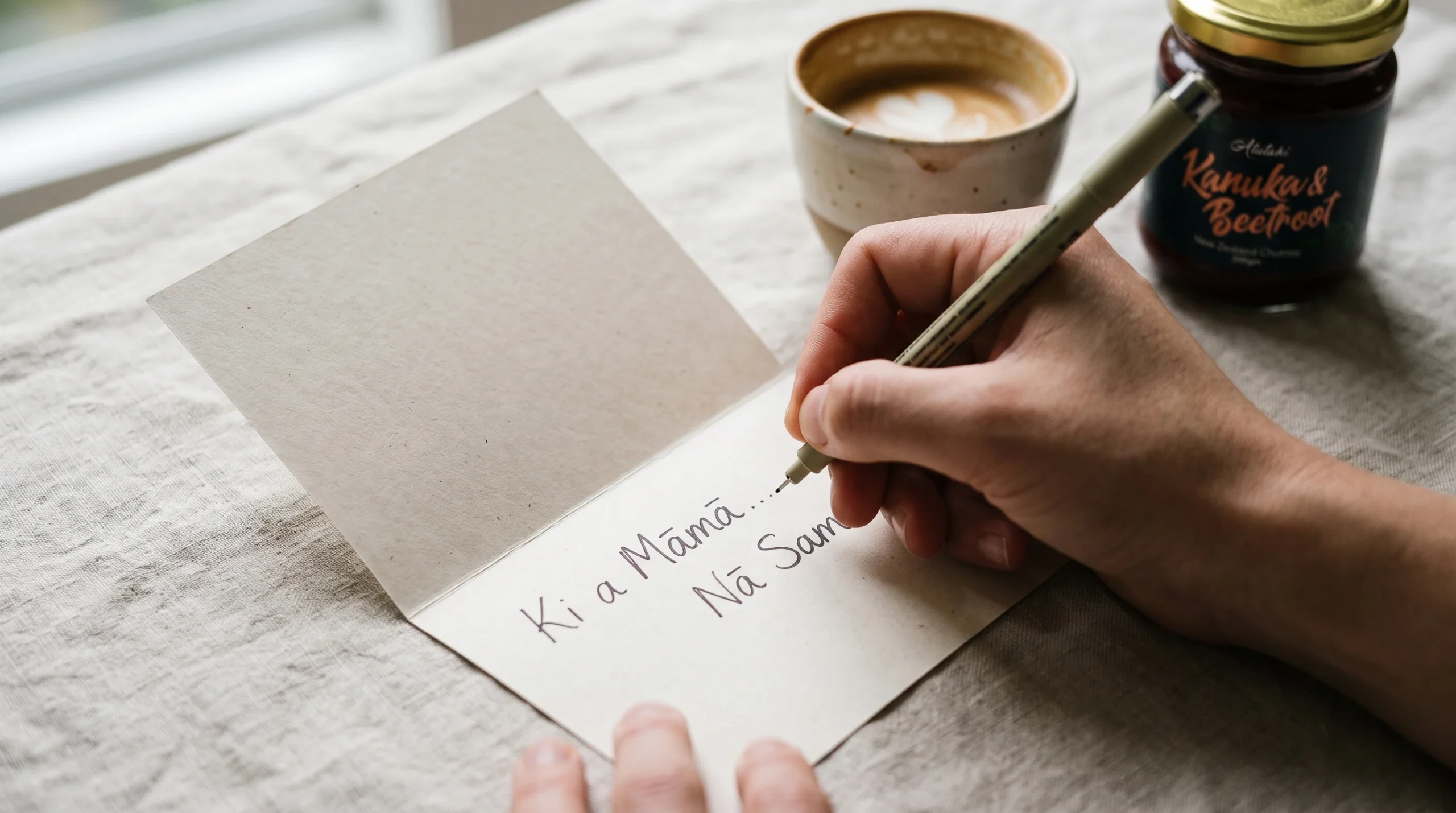
How to write a birthday card in te reo Māori
- Open with the recipient. Write Ki a followed by their name, for example Ki a Hana. For Mum or Dad, write Ki a Māmā or Ki taku Pāpā (to my Dad).
- Add your main greeting. Choose Hari huritau! or Rā whānau ki a koe!
- Add a wish. Kia pai tō rā (have a great day) is short and always works.
- Sign off with love. Arohanui (much love) or Me te aroha nui (with lots of love).
- Sign your name. Write Nā followed by your name, for example Nā Sam. For a group card, write Nā mātou katoa (from all of us).
Card messages to copy
These are written in everyday, beginner-friendly te reo with an English line underneath, so the recipient can enjoy both.
For a friend
Rā whānau, e hoa! Kia pai tō rā. Happy birthday, friend! Have a great day.
For Mum
Ki a Māmā, hari huritau! Me te aroha nui, nā [name]. To Mum, happy birthday! With lots of love, from [name].
For Dad
Ki taku Pāpā, hari huritau ki a koe. Arohanui. To my Dad, happy birthday to you. Much love.
For a grandparent
Hari huritau, Koro! Kia pai tō rā whānau. Arohanui, nā [name]. Happy birthday, Grandad! Have a great birthday. Much love, from [name].
For a colleague (office card)
Hari huritau ki a koe! Ngā mihi nui mō tō rā whānau. Nā mātou katoa. Happy birthday to you! Warm wishes for your birthday. From all of us.
For twins or two people
Hari huritau ki a kōrua! Kia pai tō kōrua rā. Happy birthday to you both! Have a great day, both of you.
For someone far away
Rā whānau ki a koe! He kai o te kāinga hei whakamaumahara ki a koe. Arohanui. Happy birthday! A taste of home to remind you of us. Much love.
Short and simple
Hari huritau! Arohanui, nā [name]. Happy birthday! Much love, from [name].
If you’re writing a longer or more personal message, it’s worth asking a fluent speaker to check it. Short, correct te reo is always better than long, uncertain te reo.
What about milestone birthdays like a 21st?
For milestone birthdays, you can keep it simple with “Hari huritau!” and the number, or use the ordinal form. Te reo forms ordinals with the prefix tua-, so a third birthday is te rā huritau tuatoru.
Using that pattern, a 21st would be huritau tuarua tekau mā tahi. Many people simply write “Hari huritau 21!” on a card or cake, which is clear and correct. Our explainer on what tahi, rua, toru and whā mean covers counting in te reo if you’d like to go further with numbers.
Twenty-firsts also carry their own traditions in Aotearoa. Te Ara records that a carved key or carved pare (door lintel) has long been a treasured 21st gift in Māori families, a symbol of stepping into adulthood.
Common mistakes to avoid with Māori birthday wishes
A few small slips come up often. Avoiding them shows care for the language, which matters more than perfect pronunciation.
- Writing “kia koe” instead of “ki a koe”. Ki a koe (to you) is three words. Kia is a different word that means “may” or “let”, as in kia ora.
- Dropping macrons. Write rā whānau, not ra whanau. Te Taura Whiri i te Reo Māori, the Māori Language Commission, encourages macrons to show long vowels because vowel length can change meaning.
- Doubling up the language. “Happy rā whānau” or “Hari birthday” mixes two greetings. Pick one language per phrase.
- Anglicising the vowels. “Hairy hurry-tow” is the classic slip. Keep vowels pure and short: HAH-ree hoo-ree-toe.
- Using te reo as decoration only. A greeting means more when you understand it, so it’s worth knowing what each phrase says before you write it.
Pairing your words with a meaningful gift
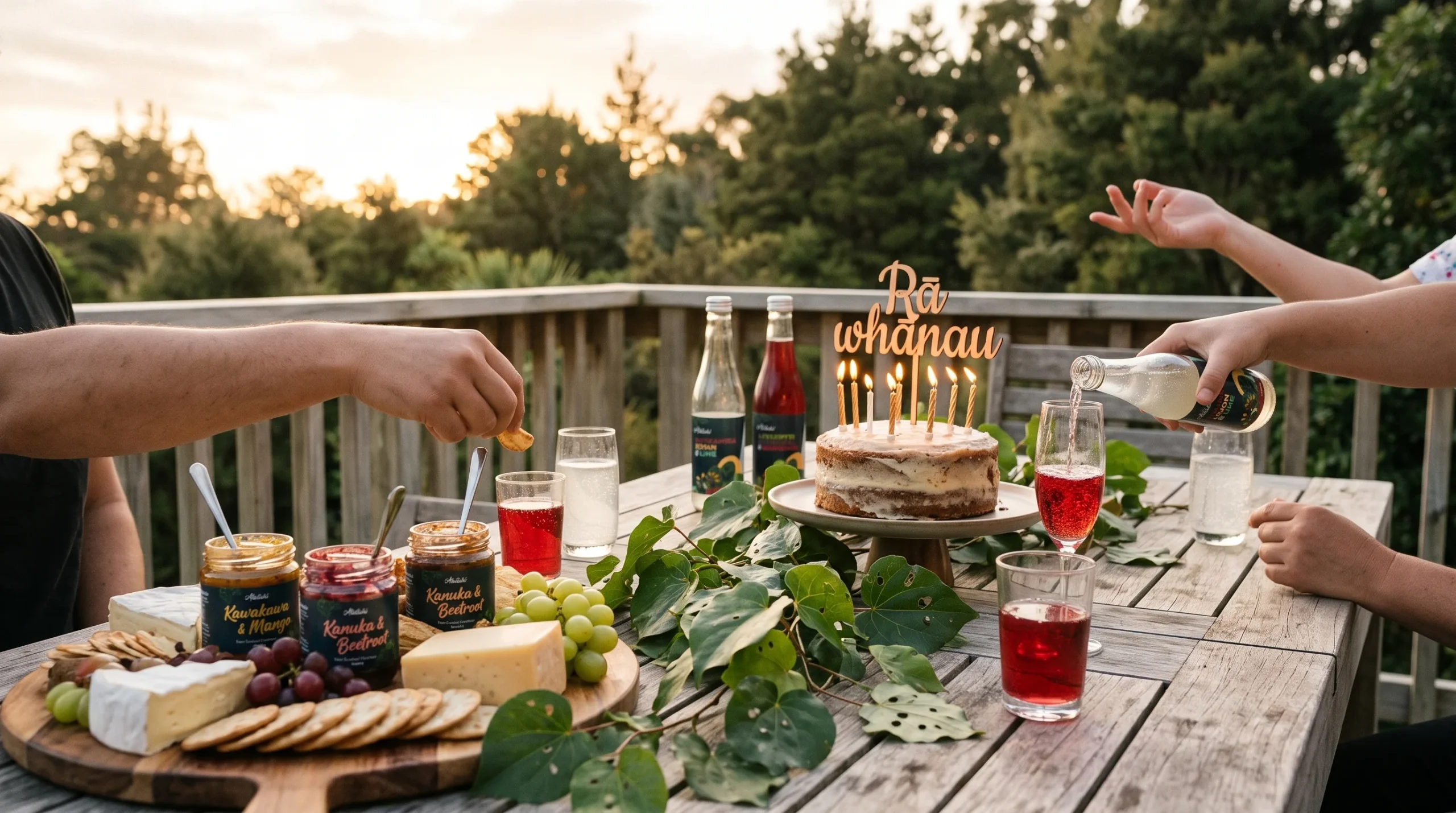
A birthday greeting in te reo becomes even more meaningful when the gift carries the same spirit. In te ao Māori, giving is tied to manaakitanga, caring for others and lifting their mana, which we explore in the meaning of manaakitanga in Māori gifting.
In our experience at Atutahi, people often choose a gift pack because it’s something to share at the birthday table rather than tuck away. Our native botanicals are hand-harvested across Te Waipounamu and crafted in Nelson with tikanga and karakia, and our drinks are low in sugar, so a pack suits a wide range of tastes and ages.
Our Māori-named gift packs also make a natural match for a te reo card. Each one is named with a te reo number:
- Gift Tahi (one): a Horopito Blackcurrant & Boysenberry drink, a Kawakawa & Mango chutney and a craft pâté
- Gift Toru (three): Kiwi Kai kawhe (coffee), Kānuka & Beetroot chutney, craft pâté and artisan crackers
- Gift Rua (two): two botanical drinks, three chutneys, artisan crackers and Kiwi Kai kawhe
- Gift Whā (four): three botanical drinks, three chutneys, craft pâté, artisan crackers and Kiwi Kai kawhe
The chutneys work well on a birthday cheese board, and the drinks give guests a low-sugar alternative to soft drinks.
Sending a birthday gift to someone in another part of the country? Our guide to sending food and drink gifts safely across New Zealand covers packing and timing so your pack arrives in good condition.
Say it with heart: final thoughts
Saying happy birthday in Māori comes down to two phrases: hari huritau and rā whānau. Add ki a koe to wish someone directly, sign your card with Nā and your name, and keep your macrons in place. You don’t need to be fluent; you just need to say it with care.
If you’d like your gift to carry the same meaning as your words, explore the Atutahi gift packs or browse the full range of native botanical drinks and chutneys from Atutahi. Hari huritau to whoever you’re celebrating, and kia pai tō rā.
Frequently Asked Questions
Both are correct ways to say happy birthday in Māori. Hari huritau means “happy turning of the year” and is slightly more common as a spoken greeting. Rā whānau means “birth day” and is also widely used on cards and in song. Choose whichever you find easier to say; native speakers use both interchangeably.
Huritau means recurring annually, or an anniversary or birthday, according to Te Aka Māori Dictionary. It combines the idea of turning (huri) with year (tau). That’s why hari huritau can also be used for wedding anniversaries and other yearly milestones, not only birthdays.
There’s no single fixed phrase, but a simple and natural option is “Hari huritau, ahakoa kua tōmuri” (happy birthday, even though it’s late). Many people just write “Hari huritau!” with an apology in English. Keeping it short and correct is better than an uncertain longer phrase.
You can write “Hari huritau, e taku aroha”, meaning “happy birthday, my love”. E taku aroha is a common affectionate address. For a card, finish with “Arohanui” (much love) and “Nā” plus your name to sign off.
A birthday card is a kāri rā whānau. Kāri is the te reo word for card, and rā whānau means birthday. The term appears in Ministry of Education te reo resources, so it’s a reliable word to use when shopping for or describing a card.
Ask “Āhea tō rā huritau?” Āhea means “when” for a future event, so the question asks when someone’s next birthday is. It’s a friendly conversation starter in a workplace or classroom.
Use kōrua, the word for “you two”: “Hari huritau ki a kōrua.” This works for twins, siblings who share a birthday or a joint celebration. For three or more people, use koutou: “Hari huritau ki a koutou.”
Yes. Using te reo Māori in everyday life, including birthday greetings, is widely encouraged in Aotearoa as part of normalising the language. The key is respect: learn what the phrase means, try to pronounce it correctly, and use macrons when writing.
Yes, ideally. Macrons show which vowels are long, and Te Taura Whiri i te Reo Māori encourages their use. Write rā whānau rather than ra whanau. If your phone or computer doesn’t show them easily, enable a Māori keyboard setting.
A gift with a local or cultural story complements a te reo card well. Food and drink packs made with native NZ botanicals, such as those from Māori-owned brands, are easy to share at a birthday gathering and suit a wide range of ages and tastes.