

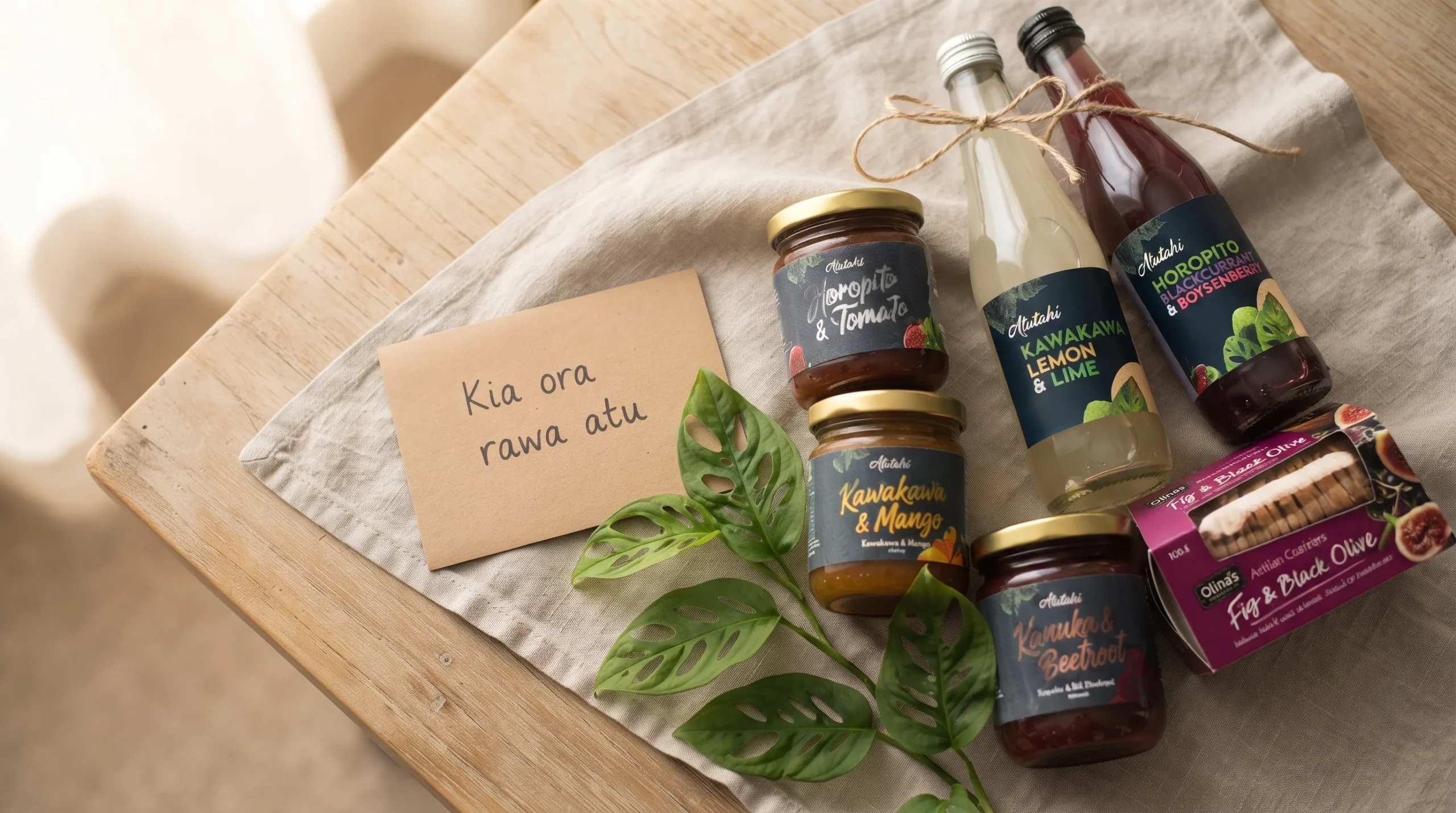
QUICK ANSWER
The most common way to say thank you in Māori is kia ora. It’s casual and works almost anywhere. Ngā mihi means thanks or acknowledgements and is a common way to sign off an email. Tēnā koe is more formal and changes with the number of people: tēnā kōrua for two people and tēnā koutou for three or more.
KEY TAKEAWAYS
- Kia ora literally means “be well” or “be healthy”. It works as hello, thank you, goodbye and cheers, and it’s the most informal of the three.
- Ngā mihi is the plural of mihi (greeting, acknowledgement, thanks). In written te reo it’s often used to sign off an email, much like “kind regards” or “thanks”.
- Tēnā koe is a formal greeting or thank-you for one person. It becomes tēnā kōrua for two people and tēnā koutou for three or more.
- To say “thank you very much”, use kia ora rawa atu (casual), ngā mihi nui (warm and written), or tēnā rawa atu koe (formal, to one person).
- Macrons change pronunciation and sometimes meaning. Ngā has a long “a”, and the “ng” sounds like the “ng” in “singer”.
You’ve written the card, wrapped the gift and found the perfect words in English. Then you think about saying thank you in Māori instead. Is it kia ora? Ngā mihi? And how is that different from the tēnā koe you heard at the start of a hui?
For plenty of Kiwis, the hesitation isn’t about whether to use te reo. It’s about using it properly. At Atutahi we’re a Māori-owned business in Nelson. We hand-harvest botanicals across Te Waipounamu and make every drink and chutney with tikanga and karakia. Our gift packs often go out as thank-yous, so customers regularly ask us which words belong on the card. This guide is our answer.
What does “thank you” mean in te reo Māori?
There’s no single word for “thank you” in te reo Māori. Instead, you have a few expressions, and the right one depends on who you’re thanking, how many people there are and how formal the moment is.
That’s because thanks in te reo is tied to acknowledgement. A mihi is a greeting, acknowledgement or expression of thanks. In a formal setting, mihi can also mean a speech of welcome that acknowledges the people present. When you say thank you in Māori, you’re recognising the person as well as what they did.
What does kia ora mean?
Kia ora literally means “be well” or “be healthy”. It’s the most flexible and informal way to say thank you in Māori.
Ora means life, health and wellbeing, and kia turns it into a wish. So every time you say kia ora, you’re wishing someone good health. That fits naturally with a brand built on wellness drinks, and it’s one reason the phrase means a lot to us.
In everyday use, kia ora can mean:
- hello or hi
- thank you or thanks
- goodbye
- cheers, as in a toast
- “I agree”, heard when someone nods along in a meeting
You can make it specific to your audience by adding a pronoun: kia ora koe (to one person), kia ora kōrua (to two people), kia ora koutou (to three or more) or kia ora tātou (to everyone, including yourself).
To make it stronger, say kia ora rawa atu, which means “thank you very much”.
What does ngā mihi mean?
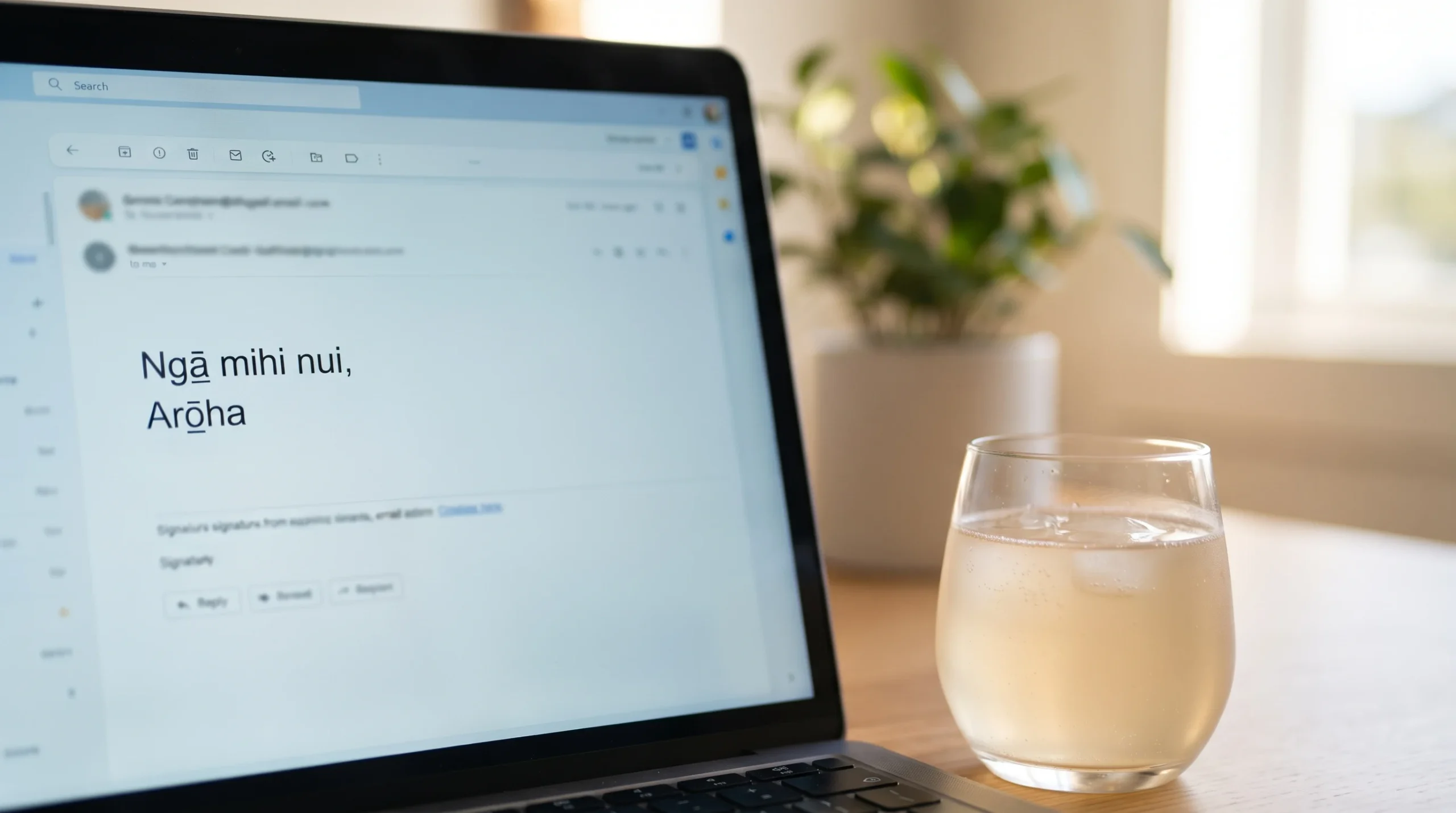
Ngā mihi means “thanks”, “greetings” or “acknowledgements”. Today it’s most often used to sign off emails and letters.
Ngā is the plural form of “the”, and mihi means greeting, acknowledgement or thanks. Put together, the phrase sends your thanks and acknowledgement to the reader, and that’s why it suits written sign-offs. In many New Zealand workplaces, ngā mihi has largely replaced “kind regards” at the bottom of an email.
Two common variations:
- Ngā mihi nui means “many thanks” or “warm regards”. Nui means big or many.
- Ngā mihi nui ki a koe means “many thanks to you” (to one person). For a group, change koe to kōrua (two) or koutou (three or more).
Ngā mihi can also open a greeting (“Ngā mihi, Susan”). Still, most people reading it in an inbox will take it as thanks and a sign-off, so place it to match.
What does tēnā koe mean, and when is it a thank-you?
Tēnā koe is a formal greeting or acknowledgement to one person. It also works as a respectful thank-you.
The phrase changes with how many people you’re speaking to:
| Phrase | Number of people | Typical use |
| Tēnā koe | One | Formal hello or thank-you; opens a formal email (“Dear …”) |
| Tēnā kōrua | Two | Thanking a couple or two hosts |
| Tēnā koutou | Three or more | Addressing or thanking a group |
| Tēnā koutou katoa | Everyone | Greeting a whole room; often heard at hui and on marae |
To say “thank you very much” formally, use tēnā rawa atu koe. Use tēnā koe when you want to show extra respect, such as when writing to kaumātua, a business contact you haven’t met, or anyone in a formal setting.
Kia ora vs ngā mihi vs tēnā koe: which should you use?
Use kia ora for everyday thanks, ngā mihi to sign off something in writing, and tēnā koe (or kōrua or koutou) when the moment calls for formality and respect.
This is the side-by-side comparison we share with customers:
| Kia ora | Ngā mihi | Tēnā koe / kōrua / koutou | |
| Literal sense | Be well / be healthy | The greetings, the acknowledgements | Acknowledgement to you (one, two, or three or more people) |
| Formality | Casual, friendly | Polite, neutral to warm | Formal, respectful |
| Best for | Spoken thanks, texts, quick notes | Email and letter sign-offs | Opening formal emails, speeches, thanking elders |
| Stronger version | Kia ora rawa atu | Ngā mihi nui | Tēnā rawa atu koe |
| Changes for group size? | Optional (kia ora koutou) | Optional (ngā mihi ki a koutou) | Yes, always |
How do you write a thank-you message in te reo?
For a thank-you message in te reo, pick a greeting, name what you’re thankful for, and sign off with your name. Here’s the process step by step:
- Choose your opening. Use kia ora for a friend and tēnā koe for someone you want to address formally. Change the pronoun if you’re writing to two people or a group.
- Say thanks for something specific. Mō means “for”. Kia ora rawa atu mō tō tautoko means “Thank you so much for your support”.
- Add a warm wish if you like. Noho ora mai (“look after yourself” or “stay well”) fits well alongside a wellness gift.
- Sign off. Casual sign-offs are ngā mihi or hei konā mai (“bye for now”). For a formal sign-off, nāku noa, nā [your name] means roughly “yours sincerely”. The word noa adds humility.
- Check the macrons. Write ngā, tēnā, kōrua. Leaving them out can change how a word is read.
Thank-you card phrases you can copy
These are short phrases suited to a gift tag or card. Please run them past a te reo speaker if the message is going somewhere important.
- To a friend: Kia ora e hoa, kia ora rawa atu! — Thanks, friend, thank you so much!
- For support: Ngā mihi nui ki a koe mō tō tautoko. — Many thanks to you for your support.
- For a couple’s housewarming: Tēnā kōrua, ngā mihi nui. — Greetings to you both, warm thanks.
- For a whole team: Tēnā koutou katoa, ngā mihi nui. — Thank you, everyone, many thanks.
- Signing off: Nāku noa, nā Mere — Yours sincerely, Mere.
Email sign-offs in te reo
In emails, the usual pattern is a formal or informal greeting at the top and ngā mihi or ngā mihi nui above your name. If you’re replying to someone who used te reo first, matching their level of formality is a good rule.
How do you pronounce kia ora, ngā mihi and tēnā koe?
The key sounds are a long “ā” in ngā and tēnā, and “ng” pronounced as in “singer”, never as “n-g”.
- Kia ora: kee-ah or-ah. Tap the “r” lightly, close to a soft “d”.
- Ngā mihi: ngaa mee-hee. Start with the “ng” sound from the middle of “singer”.
- Tēnā koe: teh-naa kweh or teh-naa koh-eh. Both vowels in tēnā are long.
If you’d like to practise vowel length and the rolled “r”, our simple te reo guide to pronouncing kawakawa, kūmarahou, horopito and kānuka uses the same rules and is a good next step.
What mistakes should you avoid?
Most mistakes come from treating these phrases as interchangeable. Watch for these:
- Using tēnā koe for a group. Because koe means one person, a team card should say tēnā koutou.
- Dropping macrons. Nga mihi without the macron is a common error in email signatures. Most devices can type ā, ē, ī, ō and ū once a Māori keyboard is turned on.
- Saying “n-ga”. Ngā is one sound, not two.
- Using kia ora everywhere. It’s welcome almost anywhere, but a formal letter of thanks to an elder or a condolence card calls for tēnā koe and a little more care.
- Treating te reo as decoration. A te reo thank-you means the most when it’s sincere and the rest of the message matches its spirit.
Why does saying thank you in te reo matter?
Using te reo for everyday courtesies is one of the simplest ways to keep the language part of daily life in Aotearoa. Te Wiki o te Reo Māori (Māori Language Week) is held every September, but kia ora and ngā mihi can be used all year.
You don’t need to be fluent to start
Many people hold back because they worry about getting it wrong. In practice, a carefully written kia ora or ngā mihi is almost always welcomed, especially when you’ve taken the time to add the macrons and say it properly. Begin with one phrase you’re confident with, use it often, and add another once it feels natural. Te Aka Māori Dictionary, school and university te reo pages, and NZHistory’s guide to email sign-offs are reliable places to check meanings before you write something important.
For us, gratitude is closely tied to manaakitanga: caring for people, showing hospitality and lifting others up. We’ve written more about how manaakitanga shapes Māori gifting, but the short version is that a thank-you is about the relationship as well as the moment.
Thank-you gifts that carry the same meaning

In our experience at Atutahi, customers who write their card in te reo usually want the gift to carry the same meaning. That’s part of why our gift packs have te reo names. Tahi, rua, toru and whā are the numbers one to four, and the story behind those gift pack names explains why we chose them.
Our customers send thank-you gifts in a few common situations:
- Thanking a host after a weekend away or a dinner party, where chutneys for the cheese board are well received.
- Thanking a colleague or client who went the extra mile, often with a low-sugar drink in place of the usual bottle of wine.
- Thanking whānau far away with a taste of home sent across the country.
Ready to say thank you with more than words?
When kia ora rawa atu doesn’t feel like quite enough, put it on a card with something good to eat and drink. Gift Tahi is our entry-level gift pack, made for birthdays, “just because” moments and thank-yous. It pairs a native botanical drink with our kawakawa and mango chutney. Every product is made in Nelson with botanicals hand-harvested across Te Waipounamu.
You can also browse the full Atutahi range of native drinks and chutneys to put together your own thank-you.
Final thoughts: kia ora, ngā mihi or tēnā koe?
To say thank you in Māori, use kia ora for everyday warmth, ngā mihi to sign off in writing, and tēnā koe, kōrua or koutou when the moment calls for respect. Get the macrons and group size right, keep the message sincere, and your thanks will come across well in any language.
Ngā mihi nui, from all of us at Atutahi.
Frequently Asked Questions
Both. Kia ora literally means “be well” and is used as hello, thank you, goodbye and cheers. Context tells you which. Said when someone holds a door open, it’s thanks. Said as you walk into a room, it’s hello. That flexibility is why it’s the first te reo phrase most New Zealanders learn and use every day.
Ngā mihi means thanks, greetings or acknowledgements. Adding nui (“big” or “many”) makes it warmer and stronger, like “many thanks” or “warm regards”. In emails, ngā mihi is a polite everyday sign-off. Save ngā mihi nui for when you’re genuinely grateful or want a friendlier tone.
You can, since ngā mihi also means greetings. In practice, though, most New Zealand readers expect it as a sign-off. To open an email, kia ora (informal) or tēnā koe (formal) is clearer. Then close with ngā mihi above your name.
There are three common options. Kia ora rawa atu is casual and warm. Ngā mihi nui suits written messages and sign-offs. Tēnā rawa atu koe is formal and said to one person. Ka nui te mihi is another way to express deep thanks. Choose based on how formal the situation is and how many people you’re thanking.
Use the plural pronoun koutou (three or more people): kia ora koutou (casual), tēnā koutou (formal) or ngā mihi nui ki a koutou (many thanks to you all). For a whole room or everyone at an event, tēnā koutou katoa acknowledges every person present.
Yes. Using everyday te reo is widely encouraged in Aotearoa, and kia ora is used by people from all backgrounds. Respect comes from pronouncing the words carefully, using macrons and meaning what you say. If you’re unsure about a phrase in a formal context, ask a te reo speaker or check Te Aka Māori Dictionary.
Nāku noa, nā followed by your name is a formal sign-off, roughly “yours sincerely”. Nāku means “from me”, and noa adds humility, like “it’s just me”. Two people signing together use nā māua, and a group uses nā mātou.
Use tēnā koe for a first email to someone you don’t know, a senior person, or any formal message. Once there’s a relationship, kia ora is friendly and suits most workplaces. If the other person writes to you in te reo, matching their style is a safe guide.
Keep it short and specific. Kia ora rawa atu mō tō tautoko (“Thank you so much for your support”) works for most situations. For a couple, try Tēnā kōrua, ngā mihi nui. End with your name. If the card is for an important occasion, ask a te reo speaker to check the wording.
Turn on the Māori keyboard on your phone or computer. Most iOS, Android, Windows and Mac devices have one. Then hold down a vowel (on mobile) or use the keyboard shortcut to add a macron. Macrons show long vowels, and leaving them out can change how a word is read or what it means.