

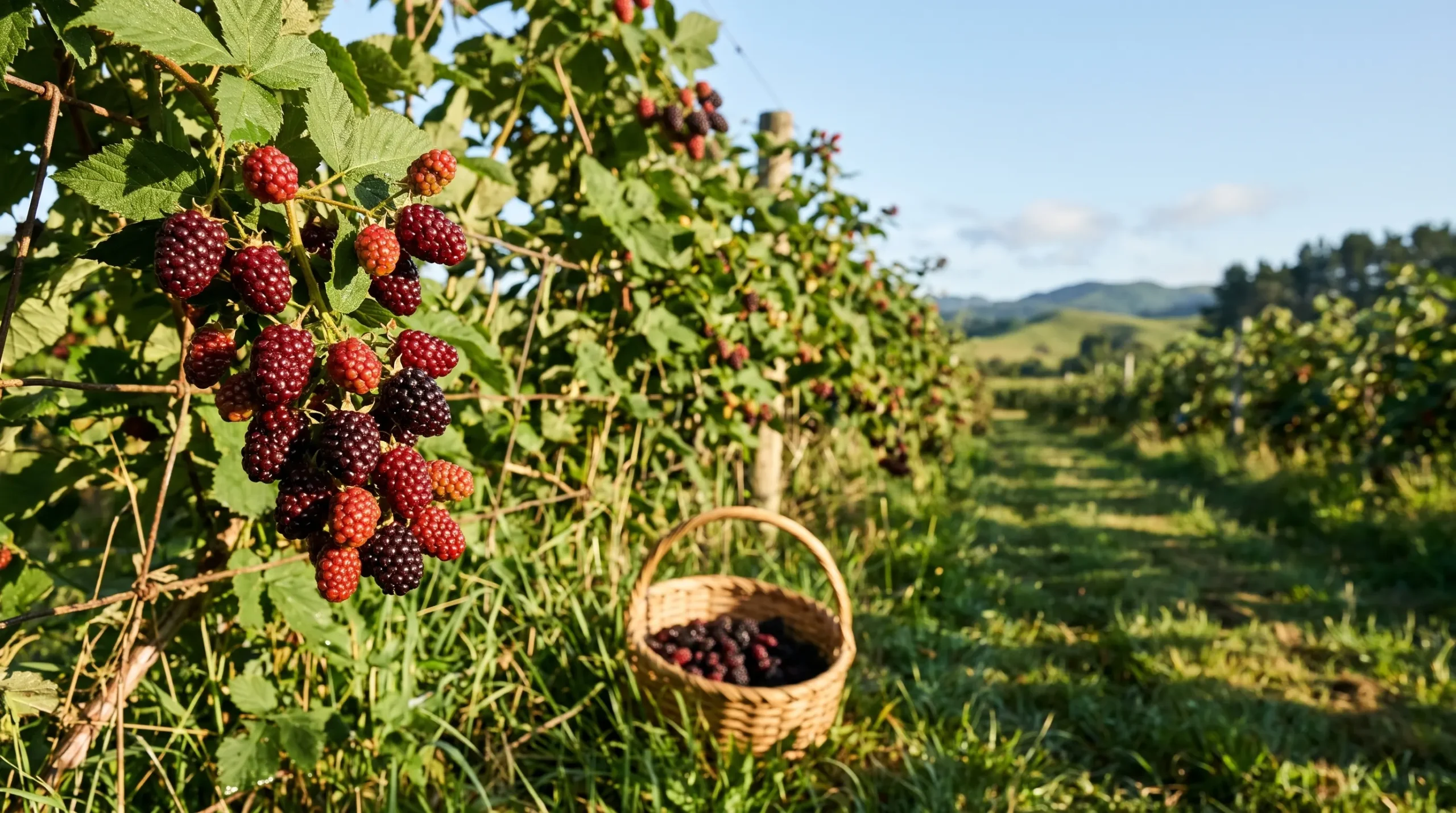
The Great Boysenberry Mix-Up
Ask most Kiwis where boysenberries come from, and you’ll probably hear “here, of course”. It’s an easy guess. Boysenberry ripple ice cream, Christmas punnets and Nan’s homemade jam make the berry feel as Kiwi as jandals and pōhutukawa.
But the honest answer is a little more surprising. Boysenberries weren’t born in New Zealand at all. They began life in California in the 1920s, nearly vanished, and were saved almost by accident. Yet today, the boysenberry New Zealand story is the one the whole world knows best, because Aotearoa grows more of them than any other country.
No, boysenberries are not native to New Zealand. They were bred in California by a grower named Rudolph Boysen in the 1920s and made famous by Walter Knott. The plants reached New Zealand in the late 1930s. Today, New Zealand is the world’s biggest grower and exporter, and the Nelson region alone produces more than half of the world’s boysenberries. That’s why Atutahi uses Nelson-grown boysenberry in its Horopito Blackcurrant & Boysenberry drink.
Key Takeaways
- Boysenberries are not native to New Zealand. They were bred in 1920s California.
- Rudolph Boysen bred the berry, and Walter Knott made it famous from 1932.
- The first NZ plants were grown at Masterton in 1938.
- New Zealand is now the world’s largest boysenberry producer and exporter.
- Nelson grows more than half of the world’s boysenberries.
- NZ boysenberries are rich in fibre and anthocyanins.
- Taste Nelson boysenberry in Atutahi’s Horopito Blackcurrant & Boysenberry.
What Exactly Is a Boysenberry? A Quick Overview
A boysenberry is a large, dark, juicy hybrid berry. It’s a mix of several berries in one: raspberry, blackberry, dewberry and loganberry all sit in its family tree. Each berry weighs around eight grams, which is big for a bramble fruit. The colour runs from deep red to almost black.
The flavour is what wins people over. You get a sweet-tart taste that’s richer than a raspberry and softer than a blackberry. The skin is thin and the flesh is soft, which is lovely to eat but tricky to ship. Ripe boysenberries can start to spoil within a few days of picking. That’s why most of the crop is frozen or turned into jam, juice and ice cream.
Boysenberry vs Blackberry vs Raspberry
If you’ve ever wondered how these three berries differ, this table makes it simple.
| Feature | Boysenberry | Blackberry | Raspberry |
| Family tree | Hybrid of raspberry, blackberry, dewberry and loganberry | Blackberry species | Red raspberry |
| Size | Large (about 8 g) | Usually smaller | Usually smaller |
| Colour | Deep maroon to near black | Black | Usually red |
| Taste | Sweet-tart and rich | Sweet to tart | Tart |
| When picked | Core stays inside the berry | Core stays inside | Comes off hollow |
| Shelf life | Very short, bruises easily | Firmer | Very delicate |
Where Did Boysenberries Come From?
The boysenberry’s story is one of luck, patience and a near-miss. It starts in Depression-era America and ends, many years later, in a Nelson paddock.
Rudolph Boysen’s Forgotten Experiment
It all began with a Swedish immigrant who loved to tinker with plants. Rudolph Boysen grew fruit and flowers in California in the 1920s. He enjoyed crossing different berries just to see what would happen. One of his crosses produced big, juicy, reddish-purple fruit.
Then life moved on. Boysen gave up his experiments, sold his farm and left his berry vines to the weeds. Luckily, he had shared a few plants with another gardener, and word of the unusual berry slowly spread.
The Rescue: George Darrow and Walter Knott
In the late 1920s, a berry expert went looking for the mystery fruit. George Darrow, a scientist with the US Department of Agriculture, heard about Boysen’s berry and wanted to find it. He teamed up with Walter Knott, a local berry farmer from Buena Park.
The pair tracked down Boysen, who led them to his old farm. All they found were a few frail, straggly vines hiding among the weeds. Knott carefully moved them to his own farm, nursed them back to health and began growing more.
How Knott’s Berry Farm Made the Berry Famous
Walter Knott was the first to grow boysenberries for sale. He began selling them from his farm stand in 1932 and named the berry after the man who first bred it. His wife, Cordelia, turned the fruit into pies and preserves that drew long queues of customers. That small family stall later grew into Knott’s Berry Farm, which became one of America’s best-known theme parks.
| Year | Milestone |
| 1920s | Rudolph Boysen crosses berries on his California farm |
| Late 1920s | George Darrow and Walter Knott rescue the last vines |
| 1932 | Knott starts selling boysenberries at his farm stand |
| 1935 | Plants become available to buy commercially in the USA |
| 1938 | First boysenberry plants grown in New Zealand, at Masterton |
| 1980s | New Zealand plantings peak; thornless varieties are bred here |
| Today | New Zealand is the world’s largest boysenberry producer and exporter |
How Did Boysenberries Reach New Zealand?
The first boysenberry canes arrived in New Zealand just before World War II. According to research published in the New Zealand Journal of Crop and Horticultural Science, the first imported plants were grown at Masterton in 1938. A second crop followed at Kerikeri in 1939. By 1940, Auckland had at least 20 hectares in the ground.
From Backyard Berry to National Crop
Kiwi growers quickly saw the berry’s promise. It was big, it cropped well and it made brilliant jam. Plantings grew steadily over the next few decades.
Industry accounts differ on exactly when boysenberries first took root in Nelson. Some say they were well established there within ten years of arriving, while one major Nelson grower dates the first plantings to the 1960s. Everyone agrees on what came next, though. Plantings boomed in the late 1970s and early 1980s, when many small growers in the region put in rows of canes.
In the 1980s, New Zealand scientists at what is now Plant & Food Research combined Californian and Scottish berry material to breed new thornless varieties. That was good news for pickers’ hands, and it helped New Zealand lead the world in boysenberry growing.
Why Does Nelson Grow So Many Boysenberries?
Nelson is the true home of the boysenberry in New Zealand. The region now grows more than half of the world’s boysenberries. So, what makes this corner of the South Island so special?
Sunshine, Shelter and Soil
The short answer is the weather. Boysenberries are fussy about climate, which is why only a few places grow them well. These include parts of the US West Coast, Chile and New Zealand.
Nelson ticks every box. It enjoys cool winters, mild springs and autumns, and dry summers. The region soaks up around 2,500 hours of sunshine a year, with roughly 1,000 mm of rain. Sitting at the top of the South Island, it’s also sheltered from strong westerly winds. Young, fertile river soils finish off the recipe.
There’s another bonus. Researchers believe the high sunshine and strong UV levels help NZ berries build more anthocyanins, the natural pigments that give boysenberries their deep colour. One New Zealand study found local boysenberries had more fibre and higher antioxidant activity than boysenberries grown in Chile.
A Short, Busy Summer Harvest
Boysenberry season is short and sweet. In Nelson, picking usually runs from mid-December to mid-January. Growers may harvest the same rows up to seven times in that month, often starting before dawn while the berries are cool. Popular varieties include Tasman, Mapua and Riwaka, which ripen at slightly different times to stretch the season.
Big Numbers From a Small Region
The industry is small but mighty. Around 20 orchards across roughly 200 hectares produce about 2,700 tonnes of New Zealand boysenberries each year, with most grown in Nelson. More than half of the crop is exported, mainly as frozen berries or juice concentrate. One Appleby grower, Wai West Horticulture, says it grows around 15% of the country’s total crop on its own.
Boysenberries in Kiwi Food Culture
If you grew up in New Zealand, boysenberry probably tastes like summer. Tip Top first released its Boysenberry Ripple ice cream in 1960, and it’s still one of the brand’s top-selling flavours. New Zealanders are believed to eat more boysenberry ice cream per person than anyone else on earth.
Then there are the real-fruit ice creams at roadside berry farms, the jams in Nan’s pantry and the punnets on the Christmas table. Ask anyone who grew up in Nelson, and you’ll likely hear stories of pick-your-own afternoons with purple-stained fingers.
Here’s the twist. While New Zealand fell in love with the berry, California slowly fell out of love with it. Growers there switched to firmer berries that were easier to ship. By 2019, local media in California described the boysenberry as all but gone from its birthplace. In a way, Aotearoa has become the berry’s adopted home. It’s a lovely example of how locally grown food and drink can shape a nation’s taste buds.
Boysenberry Nutrition: What’s Inside the Berry?
Boysenberries pack plenty of goodness into very few calories. Here’s a simple look at what you get from 100 g of frozen, unsweetened boysenberries, based on USDA data.
| Nutrient (per 100 g) | Amount | Why it matters |
| Energy | About 50 kcal | Light and low in calories |
| Dietary fibre | About 5.3 g | Supports healthy digestion |
| Folate | About 63 mcg | Helps the body make new cells |
| Vitamin C | Present | Supports normal immune function |
| Vitamin K and manganese | Present | Help with bones and normal body processes |
| Anthocyanins | High | Natural pigments with antioxidant activity |
The real star is the colour. That deep purple comes from anthocyanins, a group of plant compounds studied for their antioxidant activity. A New Zealand lab comparison (Lister et al., 2008) found boysenberries scored higher for total phenolics, anthocyanins and antioxidant activity than both blackberries and blueberries.
A quick, honest note: most boysenberry research so far has been done in labs and on animals. So, enjoy boysenberries as part of a balanced diet, not as a cure for anything. If you want to learn more about how berry compounds may support your body, our guide to horopito, blackcurrant and boysenberry for natural immunity goes deeper.
Key Benefits of NZ-Grown Boysenberries
Choosing boysenberries grown in New Zealand gives you more than great flavour. Here’s why they’re worth seeking out.
| Benefit | What it means for you |
| Rich colour, rich compounds | NZ sunshine helps build natural anthocyanins in the fruit |
| High in fibre, low in calories | A tasty way to add fibre without many calories |
| Grown close to home | Fewer food miles when you buy Nelson-grown fruit |
| Supports local growers | Your money helps Nelson and Tasman orchards and seasonal workers |
| Versatile | Works in drinks, desserts, sauces, smoothies and baking |
You also get a real taste of place. A Nelson boysenberry carries the region’s sunshine, soil and shelter in every bite. That’s something no imported berry can copy.
From Tasman Bay to Your Glass: Boysenberry in Atutahi Horopito Blackcurrant & Boysenberry
Atutahi is a Māori-owned wellness brand crafted in Nelson, right in the heart of boysenberry country. Founder Reni Wereta-Gargiulo started the brand by turning traditional rongoā Māori plants into natural, low-sugar drinks. You can read more about the whānau behind it on our About Us page.
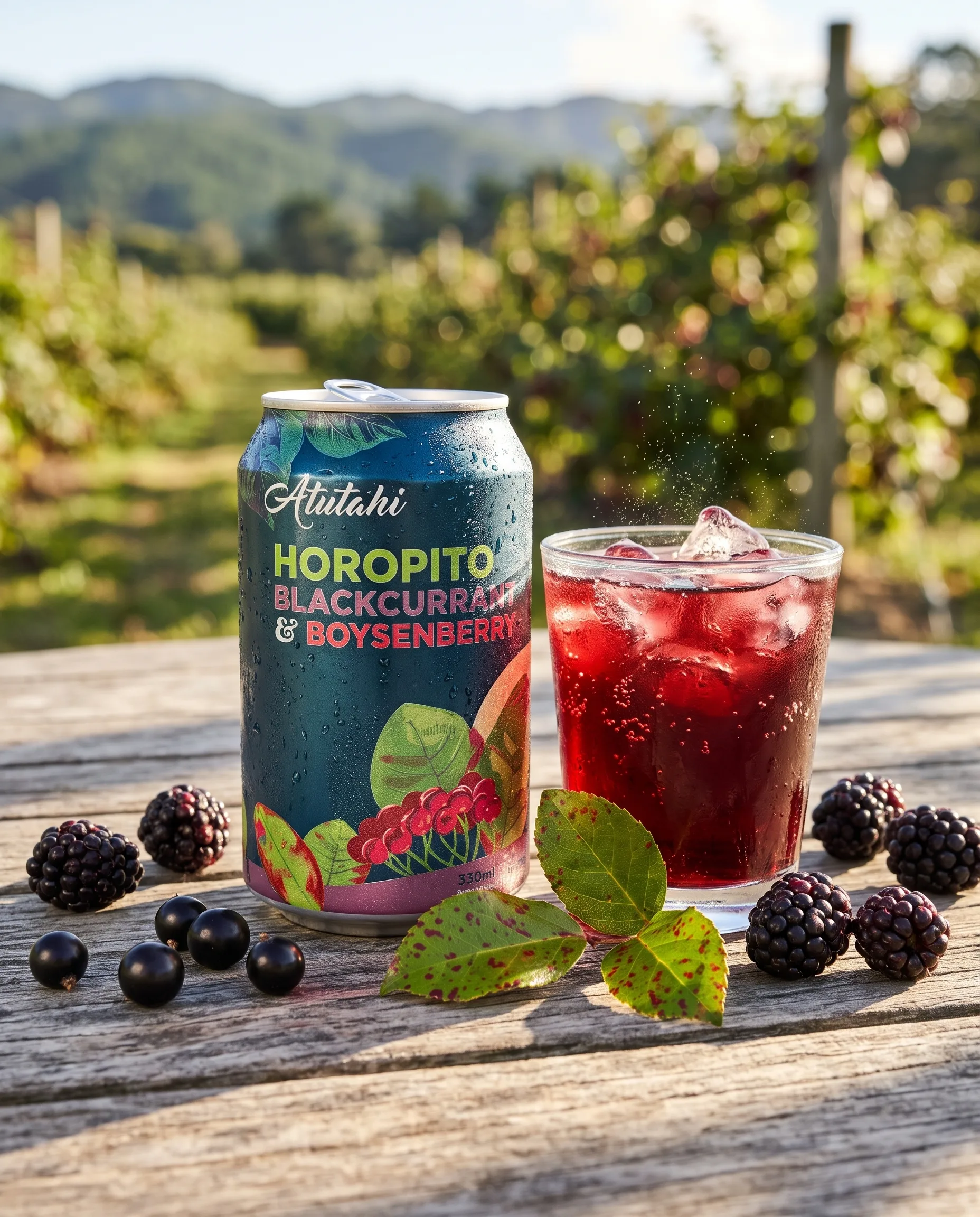
Our Horopito Blackcurrant & Boysenberry drink brings two local stories together. The blackcurrant and boysenberry concentrates are sourced from the Nelson and Tasman region. The berries give the drink its deep colour and sweet-tart flavour. Native horopito leaf adds a gentle, peppery finish. If you’re curious about that peppery native plant, our guide to horopito covers it in full.
Here’s what you can expect in every can or bottle. The drink is lightly sparkling, low in sugar and free from artificial colours and flavours. It’s a refreshing swap for fizzy soft drinks, especially on a hot summer’s day. Families love it too, as our post on sugar-conscious berry drinks for families explains.
You can choose the pack that suits you best:
- The Horopito Blackcurrant & Boysenberry 24-pack cans
- The Horopito Blackcurrant & Boysenberry 15-pack bottles
- A mixed Horopito Blackcurrant & Boysenberry and Kawakawa Lemon & Lime pack
- The Atutahi Mixed 15-pack if you’d like to try every flavour
Taste Nelson’s Favourite Berry for Yourself
Now that you know the story, why not taste it? Every sip of Atutahi Horopito Blackcurrant & Boysenberry connects you to Nelson’s sunny berry rows and to centuries of Māori plant knowledge.
Ready to try it? Shop the full Atutahi range online and have it delivered to your door. Prefer to buy in person? Find a shop near you on our stockists page. Looking for a thoughtful present? The Gift Rua pack includes the boysenberry drink alongside our artisan chutneys.
Got a question about our ingredients or a bulk order? Contact the Atutahi team. We’d love to hear from you. And don’t forget to join our community newsletter for new flavours, specials and stories from the whenua.
The Berry That Found Its Home in Aotearoa
So, are boysenberries from New Zealand? Not by birth, but very much by heart. The berry started as a forgotten experiment in California. It was rescued from a weedy paddock, made famous by a farm stand and then carried across the Pacific. Here, it found the sunshine, shelter and soil it needed to thrive.
Today, Nelson grows more boysenberries than anywhere else on earth, and Kiwis eat them with real pride. Whether you enjoy them in ice cream, jam or a chilled can of Atutahi Horopito Blackcurrant & Boysenberry, you’re tasting a little piece of Nelson’s story. Next time someone tells you boysenberries are a Kiwi fruit, you’ll know the whole tale.
Frequently Asked Questions
No, boysenberries are not native to New Zealand. They were bred in California in the 1920s by a grower named Rudolph Boysen and later grown for sale by Walter Knott. The first boysenberry plants reached New Zealand in 1938 and were grown at Masterton. Since then, New Zealand has become the world’s biggest grower, so many people assume the berry is a Kiwi original. It is really a Californian berry with a Kiwi home.
Most New Zealand boysenberries are grown in the Nelson and Tasman region at the top of the South Island. Nelson’s sunny, sheltered climate, dry summers and fertile soils suit the fussy berry perfectly. In fact, the region grows more than half of the world’s boysenberries. Smaller plantings and pick-your-own farms can also be found in places such as Waikato and the Bay of Plenty. Most of these sell fresh fruit in summer.
Yes. New Zealand is the world’s largest producer and exporter of boysenberries. Around 20 orchards across roughly 200 hectares grow about 2,700 tonnes a year, mostly in Nelson. More than half of the crop is exported, mainly as frozen berries or juice concentrate. Other growing regions include parts of the US West Coast and Chile, but they produce far less. Nelson leads the world by a long way.
Boysenberry season in New Zealand is short. In Nelson, picking usually runs from about mid-December to mid-January, so fresh berries are a true Christmas treat. The exact timing depends on the variety and the weather each year. Outside the season, you can still enjoy boysenberries frozen, as jam, in ice cream or in drinks like Atutahi Horopito Blackcurrant & Boysenberry. Frozen berries keep well for months.
A boysenberry is a hybrid berry with raspberry, blackberry, dewberry and loganberry in its family tree. It is grouped with blackberries because its core stays inside the fruit when picked. Compared with a blackberry, it is larger, softer, juicier and more maroon in colour, with a sweet-tart flavour that sits somewhere between a raspberry and a blackberry. Many people say it tastes like both at once.
Boysenberries are a nutritious fruit. Per 100 g, frozen unsweetened berries give you about 50 calories, 5.3 g of fibre and a good amount of folate. They are also rich in anthocyanins, the natural pigments behind their dark colour. Lab studies show strong antioxidant activity, but human research is still limited, so enjoy them as part of a balanced diet. They are not a cure for any illness.
Anathoth Farm Boysenberry Jam is one of the best-known boysenberry preserves in New Zealand and is sold in most major supermarkets. The Anathoth brand began in Nelson and is now made by Barker’s of Geraldine. You’ll also find boysenberry jams from smaller local makers at farmers’ markets and roadside berry farms, especially around Nelson during summer. Check labels for NZ-grown fruit.
Several NZ garden retailers sell boysenberry plants, usually in late winter and spring. Bunnings and Mitre 10 stock the thornless ‘Starlight’ variety in their edible plant ranges, and online nurseries such as The Plant Company list varieties like ‘Tasman’. Stock sells out fast, so check availability early. Choose a sunny spot and give the canes a trellis or wires. Water them well in summer.
Many NZ producers sell boysenberry drinks through their own online stores. Eden Orchards offers a Cherry & Boysenberry Juice, and Atutahi sells its Horopito Blackcurrant & Boysenberry sparkling drink in cans and bottles. Simply visit the brand’s website, choose your pack size, add it to your cart and check out. Your order is then shipped to your door within New Zealand. Delivery times vary by region, so check each brand’s shipping page.
You can buy boysenberry products online from NZ supermarkets such as New World and PAK’nSAVE for jams and frozen berries. For drinks, Atutahi.nz delivers its Nelson-made Horopito Blackcurrant & Boysenberry nationwide. Garden centres like Bunnings and Mitre 10 sell boysenberry plants. Buying from NZ-based stores supports local growers and keeps food miles low. Always check delivery areas before you order.