

A Common Bush-Walk Puzzle
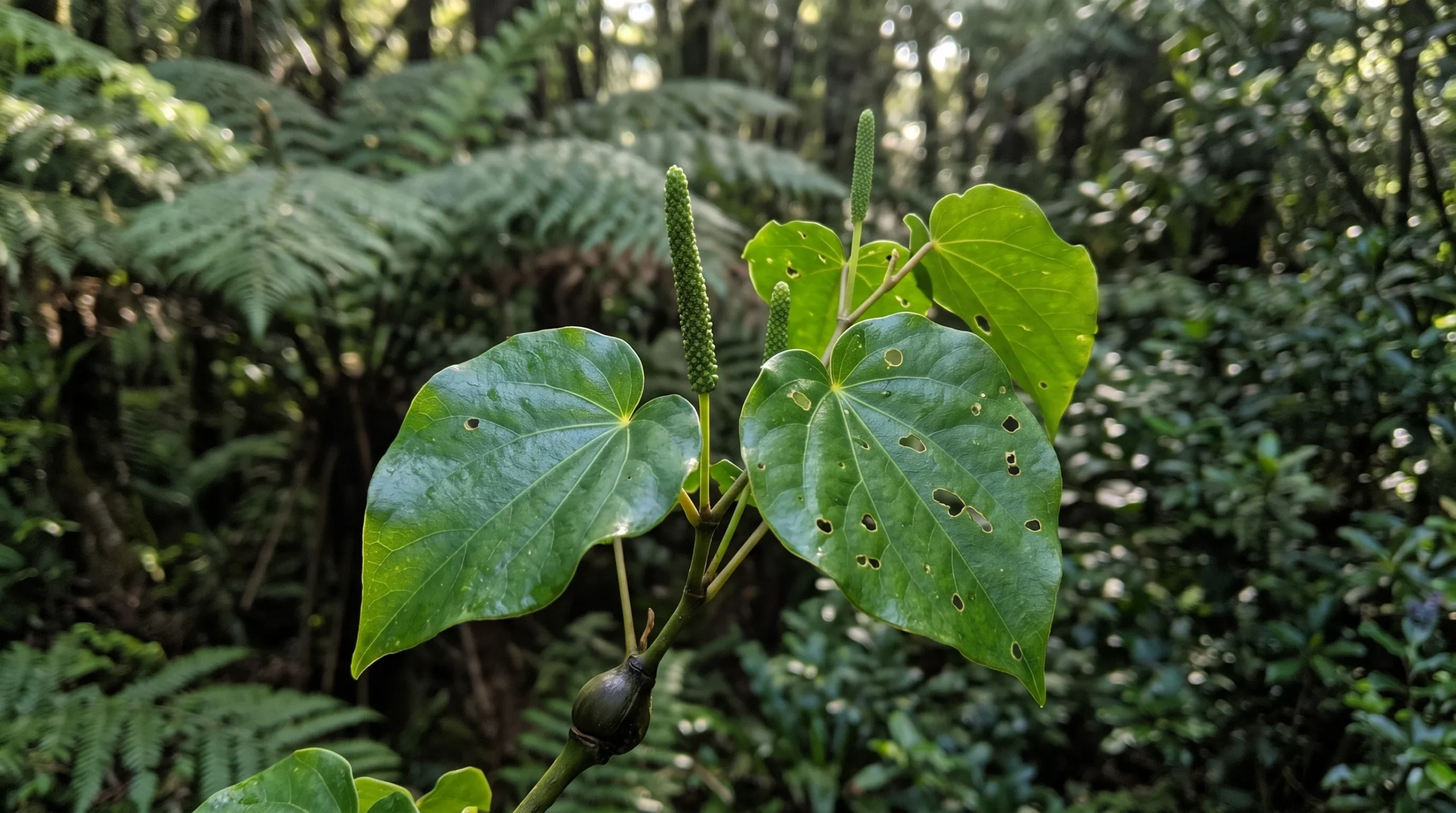
You are on a bush walk. You spot a plant with shiny, heart-shaped leaves full of little holes. Is that kawakawa? Many people stop right there, unsure. The leaves look a bit damaged, so you might even think the plant is sick.
Here is the honest truth. Lots of Kiwis have heard of kawakawa, drunk it in tea or tasted it in a drink, yet very few could pick it out in the bush. Most articles talk about what kawakawa does. Hardly any show you how to identify kawakawa with confidence. This guide fixes that.
Key Takeaways
- Kawakawa (Piper excelsum) is a native NZ shrub in the pepper family.
- Look for heart-shaped glossy leaves, knobbly jointed stems and upright flower spikes.
- Crush a leaf and it should smell warm and peppery.
- Holes in leaves come from the kawakawa looper caterpillar.
- Holey leaves are traditionally chosen as a sign of a healthy, potent plant.
- Check stems and smell to rule out look-alikes like pigeonwood and māhoe.
- Harvest gently, with permission, and never pick a plant you are unsure of.
- Enjoy kawakawa easily through Atutahi drinks, chutney and soap.
Kawakawa at a Glance
Kawakawa (Piper excelsum) is a native New Zealand shrub with glossy, heart-shaped leaves, knobbly jointed stems like bamboo, upright finger-like flower spikes and a peppery smell when you crush a leaf. It grows in shady coastal and lowland bush across the North Island and the top half of the South Island. The holes in its leaves are made by the kawakawa looper caterpillar. In Māori tradition, those holey leaves are often the ones chosen first, because they are thought to be the strongest.
What Is Kawakawa? A Quick Introduction
Kawakawa is a small native tree found only in Aotearoa New Zealand, and it belongs to the pepper family. Its scientific name is Piper excelsum. It is a cousin of the black pepper in your kitchen, which explains its warm, tingly taste.
For Māori, kawakawa is one of the most valued plants in rongoā (traditional healing). The leaves have been used in teas, poultices and baths for generations. Kawakawa also has a place in ceremony. Wreaths of leaves have been worn at tangihanga (funerals) as a sign of grief and respect. If you want the bigger picture of how plants like this fit into Māori healing, our guide to rongoā Māori plants for daily wellness is a great next read.
Knowing how to recognise kawakawa matters for two reasons. First, it helps you connect with the bush around you. Second, it keeps you safe. You should never pick or taste a plant unless you are completely sure what it is.
How to Identify Kawakawa: The Five Key Features
The easiest way to identify kawakawa is to check five things: leaf shape, stems, flower spikes, smell and where it grows. If a plant ticks all five boxes, you have almost certainly found it. Let us walk through each one.
1. Heart-Shaped, Glossy Leaves
Kawakawa leaves are shaped like a love heart, with a pointed tip and a rounded, notched base where the stalk joins. They are usually about the size of your palm, roughly 5 to 10 centimetres across. The surface is smooth and shiny, a bit like it has been polished.
Look closely and you will see strong veins fanning out from the base of the leaf, like the spokes of a wheel. The colour is often a rich, deep green in the shade. In sunnier spots, leaves can look more yellow-green. The leaves sit in pairs that swap sides along the stem, so the branch has a neat, zig-zag look.
2. Knobbly, Jointed Stems
Kawakawa stems have swollen joints, or “knuckles”, that make them look a little like bamboo. This is one of the best clues of all. Many shrubs have shiny leaves, but few have these clear, bumpy nodes along every branch.
Run your eyes along a stem. You will notice it bends slightly at each joint. The young stems are green, and older ones turn a darker, greyish-green. Once you have seen these knobbly stems, you will spot them again and again.
3. Upright Flower Spikes and Orange Fruit
Kawakawa flowers are not petals but thin, upright spikes that look like little green candles or fingers. They poke straight up from where the leaves meet the stem.
Kawakawa plants are either male or female. Male spikes are thinner and fade after they drop their pollen. Female spikes grow fatter and, in summer, turn into bright orange or yellow fruit packed with tiny seeds. Kererū (wood pigeons) and other birds love them. These fruit spikes are a very handy sign that you are looking at kawakawa.
4. A Peppery Smell When Crushed
Gently crush a small piece of a leaf and you should smell something warm and peppery. This comes from the plant’s natural oils. It is the same aroma that makes kawakawa so popular in drinks and food.
Only test a fallen leaf or a tiny edge. Do not strip a plant just to sniff it.
5. Where It Grows
Kawakawa likes shady, damp places in coastal and lowland forest. You will find it under the canopy of taller trees, along streams and on bush edges. It grows throughout the North Island and down the top half of the South Island, including Nelson and Tasman. It becomes rare further south, past about Banks Peninsula on the east coast.
It is a shrub or small tree, usually 2 to 6 metres tall. It often grows in thick groups, so where you see one, you will usually see more.
Quick Kawakawa Identification Checklist
| Feature | What to Look For | Why It Helps |
| Leaves | Heart-shaped, glossy, palm-sized, veins fanning from the base | The leaf shape is the first clue most people notice |
| Stems | Swollen, knobbly joints like bamboo | Very few native shrubs share this feature |
| Flowers | Thin, upright green spikes | Looks like tiny candles standing up |
| Fruit | Orange or yellow spikes in summer (female plants) | Easy to spot and unique to kawakawa |
| Smell | Warm and peppery when a leaf is crushed | Confirms the pepper-family link |
| Holes | Small round holes in many leaves | Caused by the kawakawa looper caterpillar |
| Habitat | Shady coastal and lowland bush | Matches where kawakawa naturally grows |
Why Do the Best Kawakawa Leaves Have Holes?
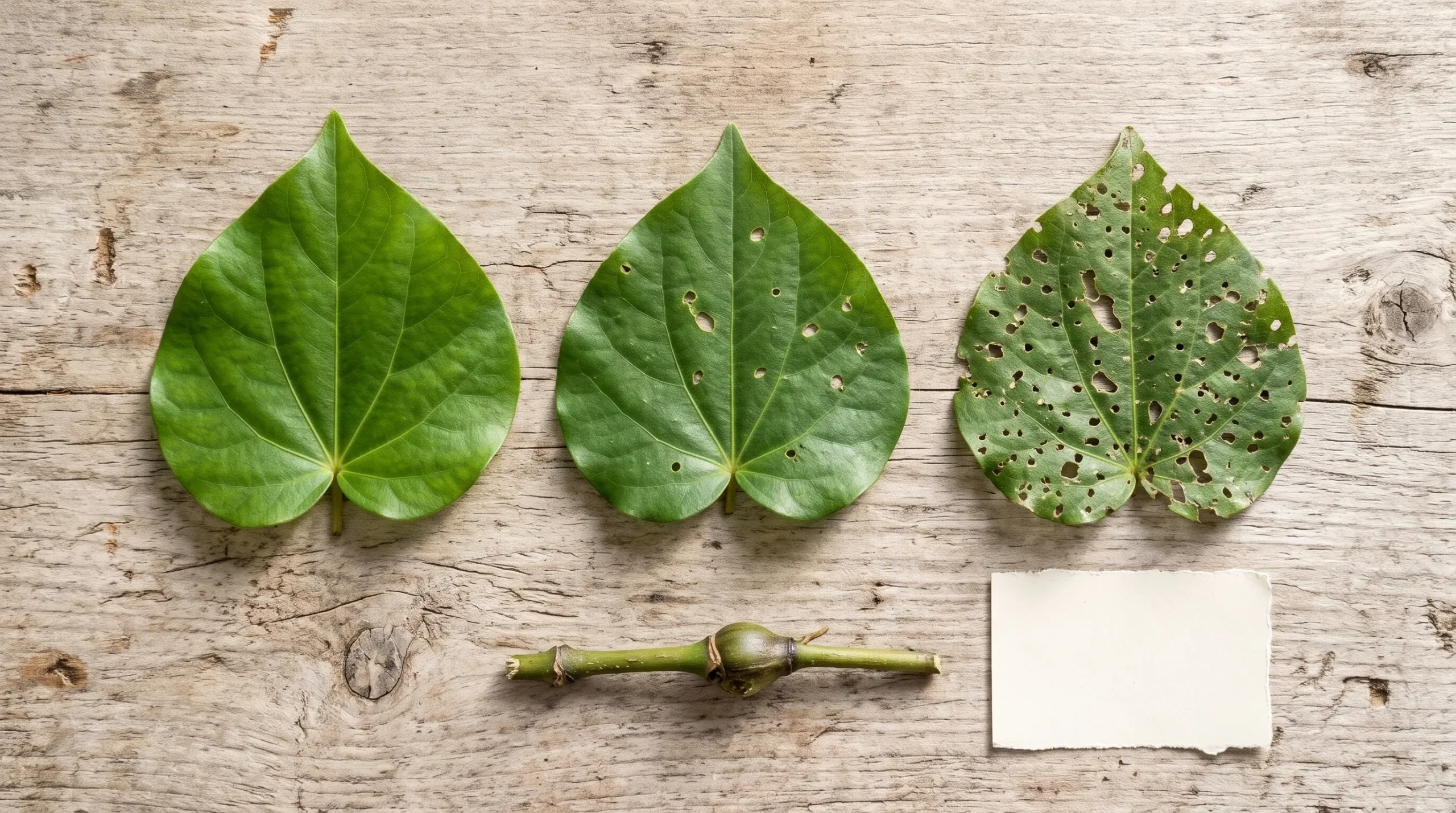
The holes in kawakawa leaves are made by the kawakawa looper caterpillar, and in Māori tradition those holey leaves are often picked first because they are believed to be the most potent. This is the question people ask most, so let us unpack it.
Meet the Kawakawa Looper Caterpillar
The kawakawa looper (Cleora scriptaria) is a small native caterpillar that feeds almost only on kawakawa. It grows into a grey-brown moth that blends in with tree bark. The caterpillar moves in a loop, arching its back as it walks, which is how it gets its name.
The caterpillars usually feed at night. During the day, they rest along the stems, looking just like little twigs. That is why you see the holes but rarely see the culprit. A plant full of holes is not sick. It is simply doing its job as a home and food source in the forest.
The Tradition of Choosing Holey Leaves
Many rongoā practitioners and Māori whānau prefer leaves with holes, as a sign the plant is healthy and full of goodness. One common idea is that the caterpillar “knows” which leaves are best. Another is that, when a plant is nibbled, it may produce more of its natural protective compounds.
It is worth being honest here. Science has not fully proven that holey leaves are stronger. What we do know is that this tradition has been passed down for generations and is still followed today. Choosing holey leaves is also a nice way to share. The caterpillar has had its meal, and you take a leaf that is already well used, leaving the perfect ones for the plant.
How to Harvest Kawakawa Respectfully
If you have permission and are sure of your plant, harvest gently and with respect. Here are a few simple guidelines many people follow.
Take only a few leaves from each plant, never stripping one bare. Pick from different plants instead of one. Many people choose leaves from the sunny side of the plant. Some also say a karakia (a prayer or words of thanks) before picking, to honour the plant. Always ask the landowner first, and never harvest in reserves or national parks without permission.
Kawakawa Look-Alikes: How Not to Get Confused
The best way to avoid mistakes is to always check the jointed stems and the peppery smell, because no common look-alike has both. A few native plants share glossy leaves, so it pays to know them.
Kawakawa vs Porokaiwhiri (Pigeonwood)
Pigeonwood has glossy leaves too, but they are long and oval with toothed edges, not heart-shaped. Its stems do not have the knobbly joints of kawakawa. Pigeonwood also has bright orange berries, which can confuse people in autumn. But its berries are round, not long spikes.
Kawakawa vs Māhoe (Whiteywood)
Māhoe leaves are oval with jagged, saw-like edges and look dull rather than shiny. Its bark is pale and whitish. The stems are smooth, with no joints. Once you compare the two side by side, the difference is clear.
Kawakawa vs Horopito
Horopito has small, wavy leaves that are often splashed with red, and it tastes very hot. It grows more in cooler, higher places. Horopito is another treasured rongoā plant, and you can learn how the two compare in a cup in our kawakawa vs horopito drinks guide.
Look-Alike Comparison Table
| Plant | Leaf Shape | Stems | Smell | Key Difference |
| Kawakawa | Heart-shaped, glossy, smooth edges | Jointed, knobbly | Peppery | Upright flower spikes |
| Porokaiwhiri (Pigeonwood) | Long oval, glossy, toothed edges | Smooth | Mild | Round orange berries |
| Māhoe (Whiteywood) | Oval, dull, saw-like edges | Smooth, pale bark | None | Purple berries on the stem |
| Horopito | Small, wavy, often red-blotched | Smooth | Hot, spicy | Grows in cooler, higher areas |
Safety note: If you are not 100% sure, do not pick it, eat it or brew it. Ask a local expert, a rongoā practitioner or use a trusted plant guide.
Key Benefits of Learning to Identify Kawakawa
Knowing how to identify kawakawa gives you a deeper link to the land, more confidence in the bush and a better understanding of what is in your cup. Here is why it is worth learning.
It builds connection. When you can name the plants around you, a bush walk feels like visiting old friends. It also builds respect, because you start to see why Māori have treasured this plant for so long.
It keeps you safe. Picking the wrong plant can make you unwell. Being able to check leaves, stems and smell helps you avoid mistakes.
It helps you choose better products. Once you know what real kawakawa looks like, you can appreciate products made with it. If you are curious about what this plant is traditionally known for, read our guide to kawakawa benefits for digestion and immunity or explore kawakawa tea and gut health.
Enjoy Kawakawa Without the Bush Walk
You do not need to forage to enjoy kawakawa, because Atutahi brings this native leaf to you in drinks, chutney and soap. Atutahi is a Māori-owned brand that works with the same native plants you have just learned to spot. Each product is made with care, guided by tikanga and a love of Aotearoa.
If you like the idea of a peppery, refreshing drink, try the Atutahi Kawakawa Lemon & Lime can or stock up with the Kawakawa Lemon & Lime 15-bottle pack. For your cheese board, the Kawakawa & Mango Chutney adds a gentle, warm kick. And for your skin, the Kawakawa Soap brings the fresh scent of the bush into your shower.
Want to know where the leaves come from? Read how Atutahi chooses ingredients with integrity and how botanicals go from leaf to label.
Ready to taste the bush? Browse the full Atutahi range, find a local stockist near you or get in touch with the Atutahi team with any questions.
Your Next Step: Seeing Kawakawa With New Eyes
Next time you walk through the bush, you will be able to spot kawakawa in seconds. Look for the heart-shaped leaves, follow the knobbly stems and breathe in that peppery smell. And when you see a leaf full of holes, you will know it is not damage. It is a sign of a healthy plant and a tradition that has lasted for generations.
Learning to identify kawakawa is a small step that brings you closer to Aotearoa’s living taonga. To keep exploring, read about 5 NZ native plants Māori have trusted for centuries or meet the Māori botanicals behind Atutahi. And when you are ready, let Atutahi bring the taste of the bush straight to your door.
Frequently Asked Questions
1. How can I identify kawakawa leaves in New Zealand gardens?
Look for glossy, heart-shaped leaves about the size of your palm, with veins fanning out from the base. Garden kawakawa is often grown in shady corners and may have fewer holes than wild plants. Check the stems for knobbly, bamboo-like joints and crush a leaf to smell its peppery scent. Upright green flower spikes, or orange fruit spikes in summer, confirm you have found kawakawa.
2. How to identify kawakawa in a native bush walk?
Head for shady, damp spots under taller trees, near streams or on bush edges in coastal and lowland forest. Kawakawa usually grows in groups as a shrub 2 to 6 metres tall. Spot the heart-shaped shiny leaves, often full of small holes, then check for jointed stems and upright flower spikes. Stay on the track, and only touch or sniff a fallen leaf so you leave the plant unharmed.
3. What are the key features to distinguish kawakawa from similar plants?
Kawakawa has three features most look-alikes lack together: heart-shaped glossy leaves with smooth edges, swollen jointed stems like bamboo, and a peppery smell when a leaf is crushed. It also has thin, upright flower spikes that turn orange on female plants in summer. Leaves riddled with small round holes from the kawakawa looper caterpillar are another strong clue that you have the right plant.
4. Key features to distinguish kawakawa from similar native plants
Compare leaves, stems and smell. Pigeonwood has long, oval, toothed leaves and round orange berries. Māhoe has dull, saw-edged oval leaves and pale bark. Horopito has small, wavy, red-blotched leaves with a hot taste. Only kawakawa combines smooth, heart-shaped glossy leaves, knobbly jointed stems, upright flower spikes and a warm peppery scent. If one feature is missing, look again before you pick.
5. Where can I find reliable guides or apps to identify kawakawa?
Good places to start include the New Zealand Plant Conservation Network website, which has photos and notes for native plants, and the Department of Conservation website. Field guides to New Zealand native trees and shrubs from your local library are also helpful. Local rongoā practitioners, botanical society groups and guided bush walks offer hands-on learning that no app or book can fully replace.
6. What does a kawakawa leaf look like?
A kawakawa leaf is shaped like a love heart, with a pointed tip and a rounded, notched base. It is smooth, glossy and usually 5 to 10 centimetres across. The colour is deep green in shade and more yellow-green in sun. Strong veins spread out from the base like wheel spokes. Many leaves have small round holes, made by the kawakawa looper caterpillar, which is a normal and healthy sign.
7. Which local nurseries sell kawakawa plants and provide identification tips?
Kawakawa is a popular native, so most native plant nurseries across New Zealand stock it, along with many community and marae-based nurseries and larger garden centres. Nursery staff can usually show you mature plants so you can learn the leaf shape, stems and fruit spikes. Ask whether the plant was grown from local seed, as this helps it suit your area’s soil and climate.
8. Are there any reliable apps for identifying kawakawa in New Zealand?
iNaturalist NZ is a well-used option. You upload a photo and local experts and the community help confirm what it is, which makes it more reliable than photo-only apps. General plant ID apps can be useful for a first guess, but they sometimes mix up native shrubs. Always double-check an app result by looking for kawakawa’s jointed stems and peppery smell before you trust it.
9. Are there online stores offering kawakawa seeds or plants with identification advice?
Many New Zealand native nurseries sell kawakawa plants online and deliver within the country, often with care and planting notes. Seeds are less common because kawakawa is easier to grow from young plants. When buying, look for sellers who give the scientific name, Piper excelsum, and clear photos. Avoid sending native plants or seeds overseas, as rules and biosecurity laws apply.
10. Where can I buy kawakawa plants for my garden?
You can buy kawakawa from native plant nurseries, garden centres and some community nurseries throughout New Zealand. Choose a shady, sheltered spot with moist, well-drained soil, as kawakawa dislikes frost and strong sun. If you would rather enjoy kawakawa without growing it, Atutahi offers kawakawa drinks, chutney and soap made with this native leaf, available online and through local stockists.