

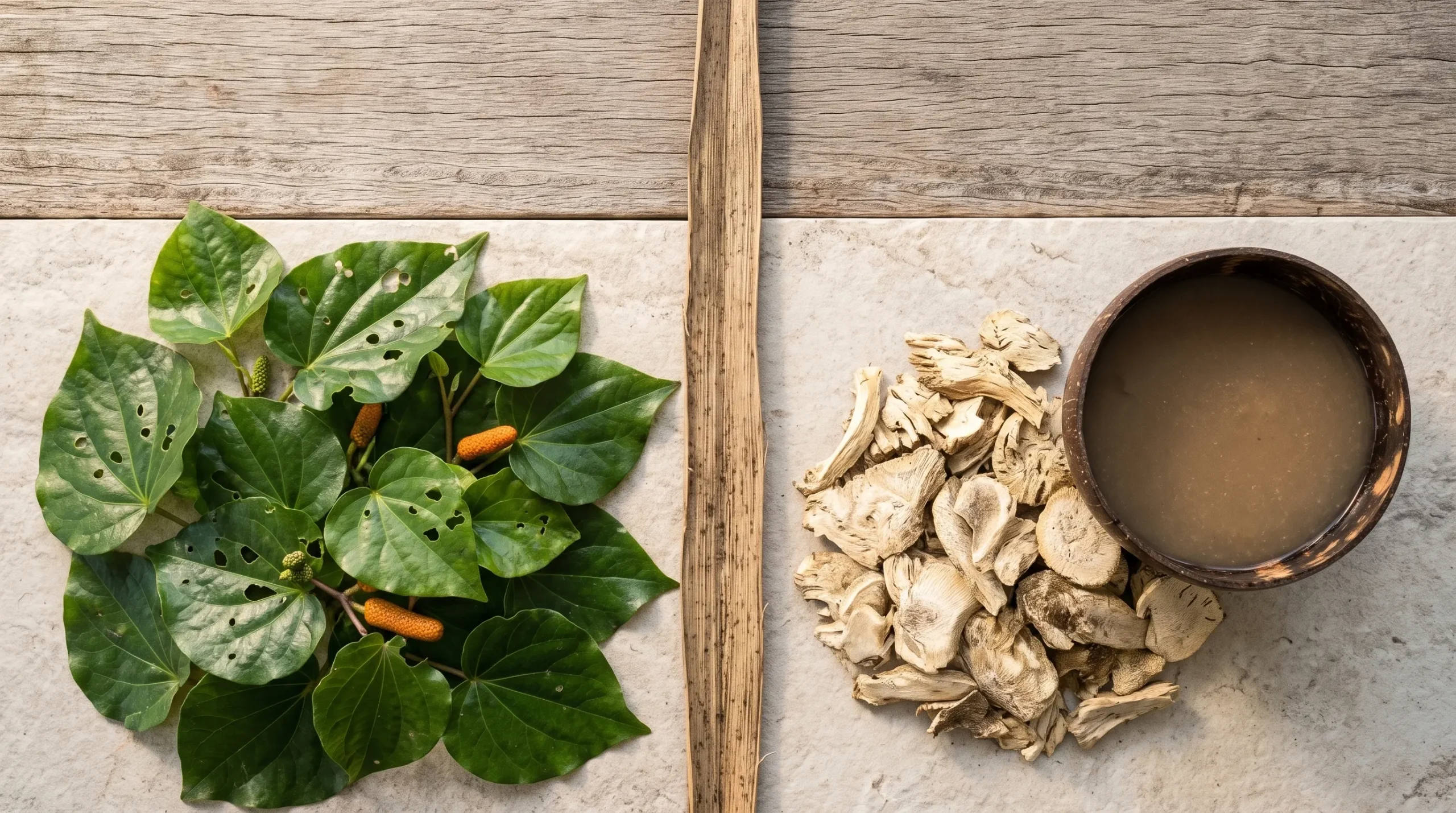
Same Family, Different Plants: Why Kiwis Mix Them Up
No, kawakawa is not the same as kava. They sound alike and they are cousins in the pepper family, but they are two different plants with different effects, uses and rules. It’s an easy mix-up, and you’re far from the only one who has made it.
Here’s the honest problem. Search for kawakawa vs kava and you’ll find blog posts, product labels and social media comments that treat the two as one plant. Some people expect kawakawa tea to relax them the way a bowl of kava does. Others worry a kawakawa drink might be restricted like kava. Neither is right, and that confusion makes it harder for you to choose what suits you.
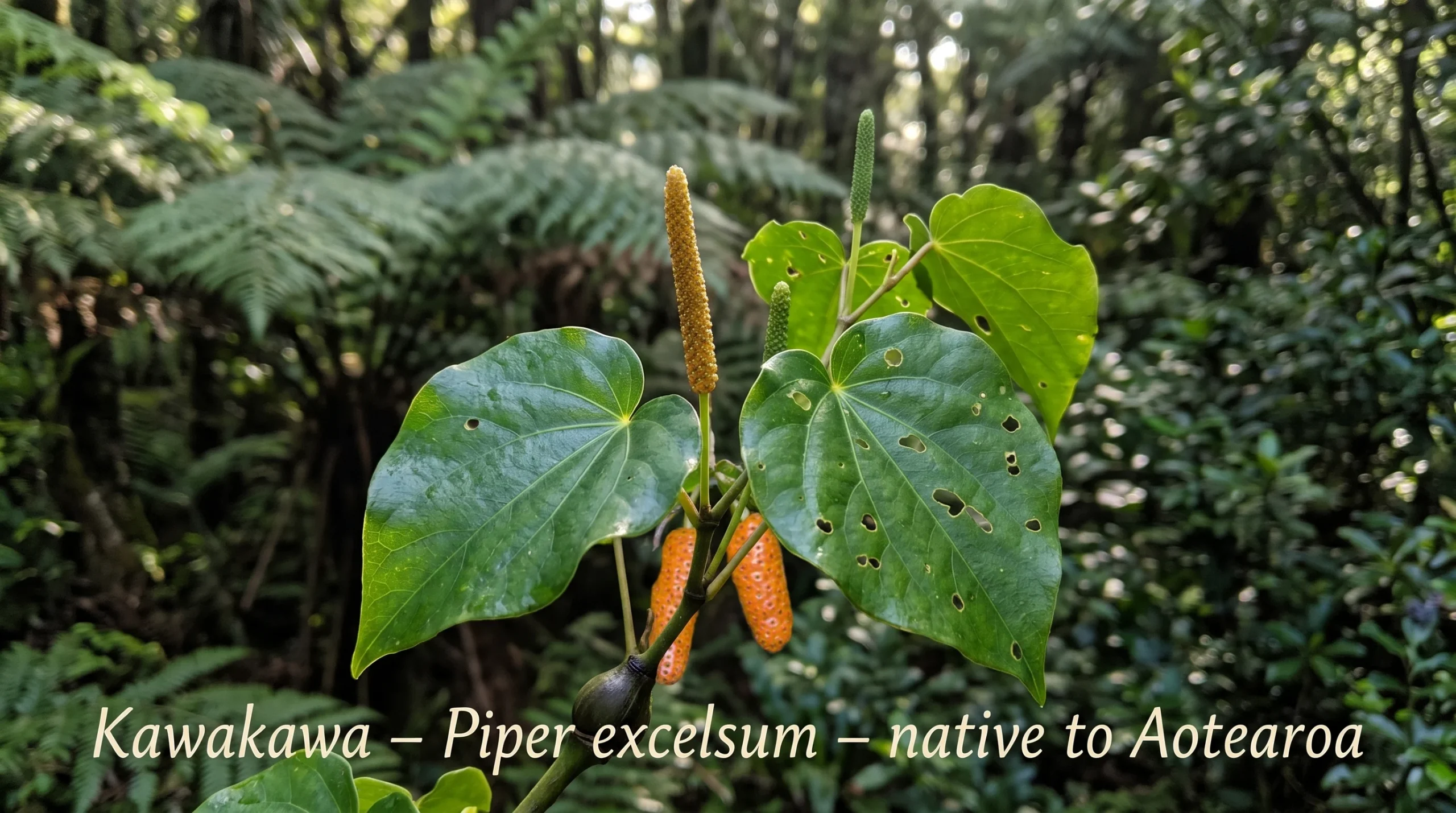
Kawakawa (Piper excelsum) is a native New Zealand shrub. Māori have used its leaves in rongoā (traditional healing) for generations, mostly as a tea and for the skin. It does not make you feel relaxed or “kava-ish”.
Kava (Piper methysticum) is a tropical Pacific plant. Its root is made into a drink that has a calming effect because of compounds called kavalactones. In New Zealand, kava is sold as food, but only as dried or raw root, or a drink made with cold water.
They share a family and a piece of history. That’s where the likeness ends.
Key Takeaways
- Kawakawa is not kava. They’re cousins in the pepper family, but different plants.
- Kawakawa (Piper excelsum) is native to NZ; its leaves are used in rongoā Māori.
- Kava (Piper methysticum) is a Pacific plant; its root makes a calming drink.
- Kava contains kavalactones; kawakawa doesn’t, so it won’t relax you like kava.
- Kava is regulated in NZ as root or cold-water drink only. Kawakawa has no special limits.
- Try kawakawa in Kawakawa Lemon & Lime or Kawakawa Soap.
What Are Kawakawa and Kava? A Simple Overview
Kawakawa and kava are both members of the Piper genus, the same group of plants that gives you black pepper. Think of them as cousins who grew up in very different places. One stayed in the warm tropics. The other is found only in Aotearoa.
What Is Kawakawa?
Kawakawa is a small, bushy tree that grows wild only in New Zealand. You’ll spot it in coastal bush and lowland forest, especially in the North Island and the top of the South Island. It has bright green, heart-shaped leaves that often have holes in them, chewed by the kawakawa looper caterpillar.
The leaves smell and taste peppery. Female plants grow orange fruit spikes in summer that are sweet when ripe. Botanists once called it Macropiper excelsum, so you may still see that older name in books.
What Is Kava?
Kava is a leafy shrub grown across the tropical Pacific, in places like Vanuatu, Fiji, Tonga and Samoa. The part people use is the root, not the leaves. The root is ground, mixed with water, and strained into a muddy, earthy drink.
Kava is famous for its calming, sociable effect. Many people also notice their lips and tongue go a little numb after a few sips.
Kawakawa vs Kava at a Glance
The fastest way to see the difference is side by side. This table sums up the main points before we dig into each one.
| Feature | Kawakawa | Kava |
| Scientific name | Piper excelsum (formerly Macropiper excelsum) | Piper methysticum |
| Plant family | Piperaceae (pepper family) | Piperaceae (pepper family) |
| Where it grows | Native and endemic to New Zealand | Tropical Pacific islands |
| Part used | Mostly leaves (also fruit) | Root |
| Key compounds | Peppery aromatic compounds, incl. myristicin | Kavalactones |
| Main effect | No sedating effect; gentle, warming herbal drink | Calming, relaxing; numbs the mouth |
| Traditional use | Rongoā Māori: tea, skin care, wounds, ceremony | Pacific ceremony, hospitality, social gatherings |
| Taste | Peppery, fresh, slightly minty | Earthy, bitter, muddy |
| NZ legal status | Freely used in food, drinks and skincare | Sold as food only as dried/raw root or cold-water drink |
Botanical Family: Cousins in the Pepper Family
Kawakawa and kava belong to the same family, Piperaceae, and the same genus, Piper. That’s why their leaves look a bit alike. Both have broad, heart-shaped leaves with strong veins that fan out from the stem.
But being related doesn’t make them the same. Lemons and oranges are cousins too, and you wouldn’t swap one for the other in every recipe. Kawakawa and kava have different chemistry, so they act very differently in your body.
How to Tell Them Apart in Real Life
In New Zealand, the plant you see in the bush is almost always kawakawa. Kava needs year-round warmth and doesn’t grow well in our climate, so you’re very unlikely to find it outdoors here.
Kawakawa is easy to recognise once you know what to look for: glossy heart-shaped leaves, a peppery smell when crushed, and those little caterpillar holes. If you want a step-by-step guide, read our post on how to identify kawakawa before you go foraging.
Effects: What Each Plant Actually Does
This is the biggest difference between kawakawa and kava, and the one that matters most to you. One is a gentle everyday herb. The other is a drink people take on purpose to feel calm and relaxed.
Kawakawa: A Gentle Herbal Helper
Kawakawa does not contain kavalactones, so it won’t give you a kava-style “buzz”. A cup of kawakawa tea won’t make you drowsy or numb your mouth. Instead, it offers a warm, peppery flavour and has long been valued in rongoā Māori for tummy troubles and skin care.
Most of what we know about kawakawa comes from traditional use and early lab studies. Researchers are interested in its natural compounds, but there’s not much human research yet. So it’s fair to enjoy kawakawa as a traditional herb rather than a medicine. You can read more in our guide to kawakawa tea benefits for gut health.
Kava: A Calming Pacific Drink
Kava’s calming effect comes from kavalactones in the root. People say it helps them unwind, feel social and settle a busy mind. The effect is noticeable, which is exactly why kava is treated with more care.
Because kava acts on your body this way, you shouldn’t drink it before driving or mix it with alcohol. Heavy, long-term use has been linked to dry, scaly skin, and concentrated kava extracts have raised concerns about liver health. If you’re pregnant, breastfeeding or on medication, talk to your doctor first.
Traditional Uses: Rongoā Māori and Pacific Ceremony
Both plants carry deep cultural meaning, but they play different roles. Knowing their stories helps you respect where each one comes from.
Kawakawa in Rongoā Māori
Kawakawa is one of the most important plants in rongoā Māori. According to Te Papa, Māori used it inside the body for stomach and kidney complaints, and on the skin for cuts, boils, stings and aches, including toothache. Leaves were chewed, brewed into tea or warmed and placed on sore spots.
It has a ceremonial side too. Kawakawa leaves are worn as wreaths at tangihanga (funerals) as a sign of mourning. Even the caterpillar holes have meaning, as many healers prefer the holey leaves. To meet kawakawa’s plant whānau, see our guide to rongoā Māori plants for daily wellness.
Kava Across the Pacific
Kava sits at the heart of Pacific ceremony and hospitality. In Fiji, Tonga, Samoa, Vanuatu and beyond, it’s shared to welcome guests, mark big moments, settle disputes and bring people together. Sharing a bowl is about respect and connection.
A Name That Carries a Memory
The name “kawakawa” may be a memory of kava itself. Kava expert Dr Vincent Lebot suggests that the first Polynesian settlers likely brought kava with them but found New Zealand too cold to grow it. So they gave the name to a local relative that looked similar.
There’s a lovely link in the language, too. In te reo Māori, kawa can mean ceremonial protocol, which echoes the formal way kava is shared in the islands. The two plants are different, but their names tell a shared Pacific story.
Legality and Safety in New Zealand
Kawakawa is freely used in New Zealand foods, drinks and skincare. Kava is legal too, but only in certain forms. Here’s what that means for you.
Is Kawakawa Legal?
Yes, kawakawa is a native plant with no special restrictions on its use in food or skincare. You’ll find it in teas, drinks, balms and soaps across the country. Just forage responsibly, take only what you need, and ask permission on private or Māori land.
Like any herb, it’s best enjoyed in normal amounts. Kawakawa contains myristicin (also found in nutmeg), and traditional advice is to avoid strong kawakawa remedies during pregnancy. If you’re unsure, check with a health professional. Our article on whether herbal drinks are safe every day explains how to enjoy herbal drinks sensibly.
Is Kava Legal in New Zealand?
Yes, kava is legal in New Zealand, but it’s regulated as a food under Standard 2.6.3 of the Food Standards Code. According to the Ministry for Primary Industries (MPI), kava can only be sold as dried or raw root, or as a drink made by mixing the root with cold water. No organic solvents, food additives or processing aids are allowed.
In 2022, Australia tightened its kava rules. New Zealand chose not to adopt those changes, partly out of respect for kava’s cultural importance to Pasifika communities. So the earlier standard still applies here.
Why Atutahi Chose Kawakawa: The Key Benefits
Atutahi uses kawakawa because it belongs to this land and has been trusted by Māori for generations. As a Māori-owned brand, we wanted to share a plant with real roots in Aotearoa, not borrow one from somewhere else.
Kawakawa also fits everyday life. It’s gentle, it doesn’t change how you feel or think, and you can enjoy it at work, at home or with the whānau. Its peppery, fresh flavour pairs beautifully with citrus. Here’s how we put it to work.
Kawakawa Lemon & Lime Drink
Our Kawakawa Lemon & Lime brings kawakawa’s peppery warmth together with bright, zesty citrus. It’s a refreshing way to enjoy a traditional native herb without brewing your own tea. You can also buy it in a 15-bottle pack for the fridge.
Unlike kava, there’s no sleepy feeling and no numb lips. It’s simply a tasty, plant-powered drink you can reach for any time of day.
Kawakawa Soap
Our Kawakawa Soap is inspired by kawakawa’s long history in Māori skin care. For generations, warmed leaves and kawakawa balms have been used to soothe the skin. Our soap brings that tradition into your daily wash.
Kava, by contrast, isn’t traditionally used on the skin at all. If you want to learn more, read about the perks of kawakawa soap for your skin.
Ready to Try Kawakawa the Atutahi Way?
Now that you know the difference, why not taste it for yourself? Kawakawa is a true taonga of Aotearoa, and Atutahi makes it easy to enjoy every day.
Start with a chilled Kawakawa Lemon & Lime, or treat your skin to a bar of Kawakawa Soap. Prefer to shop in person? Check our stockists. Got a question about our ingredients? Get in touch with the Atutahi team. We’re always happy to kōrero.
Kawakawa vs Kava
Kawakawa and kava share a family, a sound and a slice of Pacific history, but they are not the same. Kava is a tropical root drink with a calming effect and clear rules around how it’s sold. Kawakawa is New Zealand’s own peppery leaf, gentle enough for everyday use and woven deep into rongoā Māori.
So next time someone asks you about kawakawa vs kava, you’ll know the answer. And if you’d like to see what kawakawa tastes like, Atutahi has a drink and a soap waiting for you.
Frequently Asked Questions
1. Is kawakawa the same as kava?
No. Kawakawa (Piper excelsum) and kava (Piper methysticum) are related plants in the pepper family, but they are different species. Kawakawa grows only in New Zealand and its leaves are used in rongoā Māori. Kava grows in the tropical Pacific and its root is made into a calming drink. Kawakawa does not contain kavalactones, so it won’t affect your mood or body the way a bowl of kava does.
2. What are the main differences between kawakawa and kava in terms of health benefits?
Kawakawa is valued in rongoā Māori as a gentle herb, traditionally used for stomach troubles, aches and skin care like cuts and stings. Kava is mainly known for its calming, relaxing effect from kavalactones in the root. Kawakawa is used as an everyday tea or topical herb, while kava is a drink taken to unwind. Human research on both plants is still limited, so it’s best to enjoy them sensibly.
3. Comparison of effects: kawakawa versus kava
Kava has a clear effect. Kavalactones in the root can make you feel calm, sociable and relaxed, and they often numb the lips and tongue. Kawakawa has no sedating effect. A kawakawa tea or drink tastes peppery and fresh, but it won’t make you drowsy or change how you feel. That’s why kawakawa suits any time of day, while kava is usually kept for relaxing at the end of a long day.
4. Where can I buy kawakawa and kava products online in New Zealand?
You can buy kawakawa products online from Atutahi, including the Kawakawa Lemon & Lime drink and Kawakawa Soap, or find them through Atutahi’s stockists. For kava, look for New Zealand retailers selling dried kava root or powder that meets Food Standards Code Standard 2.6.3. Always buy from sellers who list where their kava comes from and how it is tested, so you know exactly what you’re drinking.
5. Kawakawa benefits compared to kava benefits
Kawakawa’s benefits come from its long use in rongoā Māori, as a tea for digestion and a soothing herb for the skin. It’s gentle and suits daily use. Kava’s main benefit is relaxation, which is why it’s used at Pacific ceremonies and social gatherings. If you want an everyday native herbal drink, kawakawa is the better fit. If you want something to help you unwind, most people turn to kava.
6. How do kawakawa and kava compare in traditional Māori and Pacific Island uses?
Māori use kawakawa as a healing plant, brewing the leaves into tea, applying them to wounds and aches, and wearing them as wreaths at tangihanga. Across Fiji, Tonga, Samoa and Vanuatu, kava is shared in ceremonies to welcome guests, mark big events and build connection. The name kawakawa may even echo kava, which early Polynesian settlers likely brought with them but couldn’t grow here.
7. Is kawakawa safer than kava for daily use?
For most people, kawakawa is the gentler choice for daily use because it has no sedating effect and is used like an everyday herbal tea. Kava can impair driving, shouldn’t be mixed with alcohol, and heavy use has been linked to skin and liver concerns. Kawakawa contains myristicin, so pregnant women should avoid strong remedies. If you’re unsure, check with a health professional first.
8. Which is better for relaxation: kawakawa tea or kava root?
Kava root is the stronger option if relaxation is your main goal, because its kavalactones have a calming effect. Kawakawa tea doesn’t have that effect, but many people find the ritual of sipping a warm, peppery tea a calm part of their day. If you want a gentle, everyday drink, choose kawakawa. If you want a noticeable calming effect, kava is the plant most people tend to reach for.
9. Is kava legal in New Zealand?
Yes. Kava is legal in New Zealand and is regulated as a food under Standard 2.6.3 of the Food Standards Code. MPI says it can be sold only as dried or raw kava root, or as a drink made by mixing the root with cold water. Additives, processing aids and organic solvents aren’t allowed. New Zealand did not adopt Australia’s tighter 2022 rules, partly out of respect for Pasifika culture and tradition.
10. Can you get high from kawakawa?
No. Kawakawa won’t make you high or give you a kava-like buzz. It doesn’t contain kavalactones, the compounds that give kava its calming effect. A kawakawa tea, drink or balm offers a peppery, herbal experience and nothing more than that, whichever form you choose. That’s one reason kawakawa is popular in everyday products like Atutahi’s Kawakawa Lemon & Lime drink and Kawakawa Soap.