
The Fridge Full of Empty Promises
You’re standing in front of the drinks fridge, and every can is shouting at you. “Zero sugar.” “Light.” “Guilt-free.” Your hand hovers, and you genuinely have no idea which one is telling the truth.
Here’s the honest bit: plenty of drinks that call themselves “low calorie” don’t fully earn the badge. Some swap sugar for a long list of sweeteners you can’t pronounce. Others hide the calories inside a vague “natural flavour” that isn’t especially natural at all. And a few drinks that look wholesome, like fruit juice, are quietly among the worst offenders on the shelf.
A drink only earns the “low calorie” label if it’s genuinely low in added sugar and has a short, honest ingredient panel, not just a diet claim on the front. Soft drinks and sports drinks are the biggest sugar hits. Diet sodas cut calories but lean on sweeteners. Juice and coconut water look healthier than they are. Kombucha is a lottery depending on the brand. And lightly brewed native botanical drinks, made from real leaves rather than lab flavouring, tend to land in a genuinely low-sugar middle ground worth trying.
This guide breaks down what “low calorie” really means on an NZ label, compares the main drink categories on real calories, sugar, and ingredients (with named products and sourced figures, not guesses), and shows you where native botanical drinks fit into the picture.
Key Takeaways
- Low calorie doesn’t automatically mean healthy — check the sugar and the ingredient list, not just the number on the front.
- Regular soft drinks and sports drinks are the biggest everyday sugar contributors in NZ.
- Diet and zero-sugar drinks cut calories using sweeteners, which some Kiwis prefer to limit.
- Coconut water and fruit juice both carry more natural sugar than most people expect.
- Named zero-sugar options like Almighty Sparkling Water, Remedy Sodaly, and Zeffer 0% each land in a different calorie band — check the can, not the category.
- Native botanical drinks brewed from real leaves, like Atutahi’s, use a light natural syrup rather than a heavy sugar hit or a sweetener list.
What “Low Calorie” Actually Means on an NZ Label
A drink is generally treated as low calorie in New Zealand if it sits under roughly 40 calories per 100ml, though plenty of “diet” or “zero” products go much lower than that, sometimes down to 0–5 calories. Calories are only half the story, though. Two cans can both say “low calorie” on the front and be worlds apart once you flip them over.
The bit that catches people out is that “low calorie” doesn’t always mean “healthy.” A diet soda might carry zero sugar and still be built around a stack of artificial sweeteners and preservatives that do nothing useful for your body. A lightly brewed botanical drink, on the other hand, might carry a small, honest dose of natural sugar while still giving you real plant compounds your body can actually use. That trade-off is worth understanding before you fill the trolley, and it’s exactly why it pays to know how to read a drink label properly rather than trusting the front-of-pack claim.
Which Low-Calorie Drinks in NZ Are Actually Worth Buying?
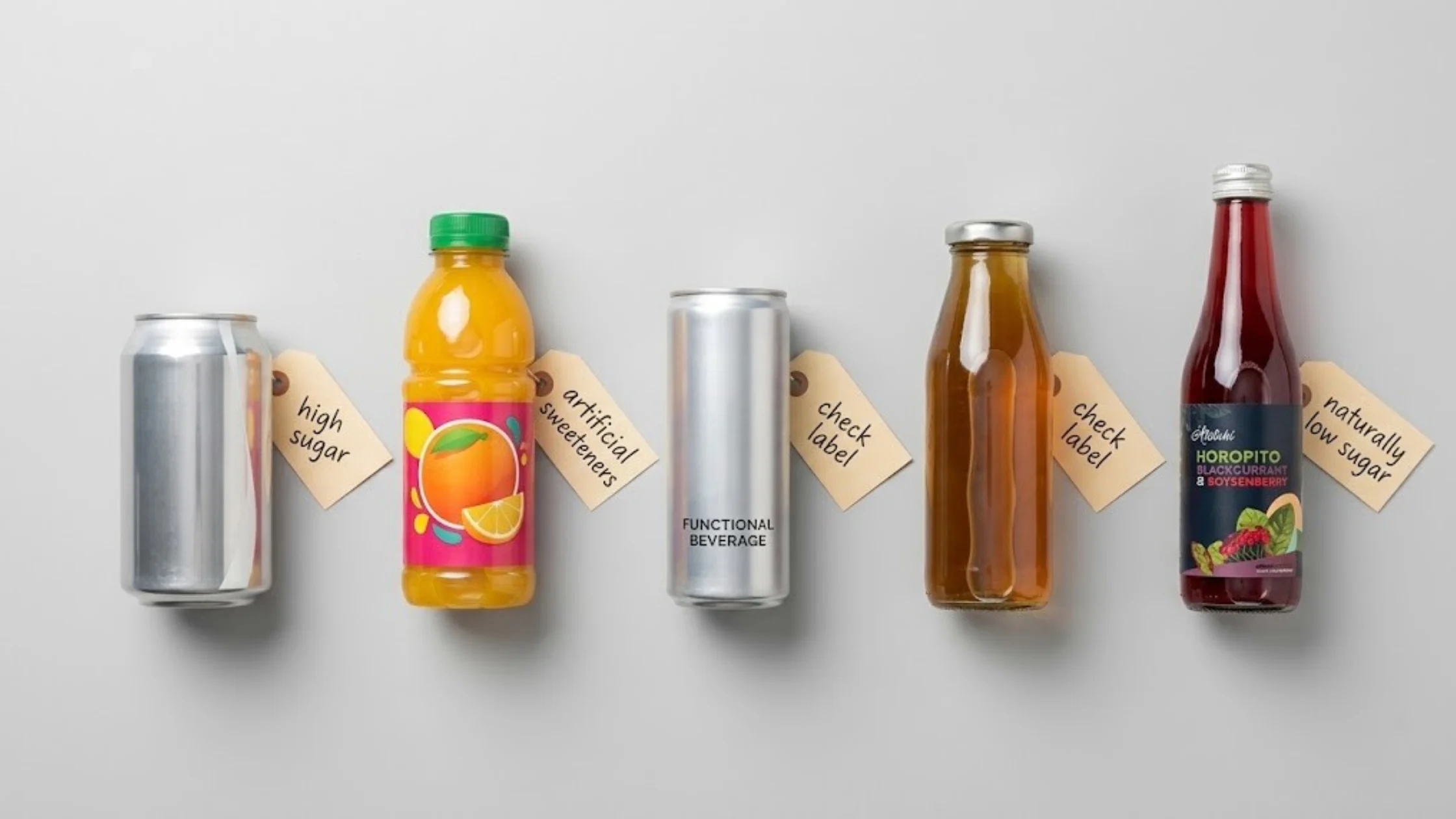
Worth buying means low added sugar and a genuine ingredient panel, not just a “diet” label stuck on the front. Three things to check every time: the sugar-per-100ml figure, whether the sweetness comes from real fruit or plant syrup rather than a sweetener list, and whether the brand names its actual ingredients instead of hiding behind the word “flavour.” On that measure, naturally light drinks like sparkling water and lightly brewed botanical sodas tend to earn the label more often than diet soft drinks, with Atutahi’s Horopito, Blackcurrant & Boysenberry using a light natural syrup rather than a heavy sugar or sweetener base.
How the Main Low-Calorie Drink Categories Stack Up
Regular Soft Drinks and Sports Drinks
Full-sugar soft drinks are the easiest category to rule out. A standard 330ml can of soda typically carries around 140 calories and 35g or more of sugar, which works out to close to nine teaspoons in a single can. Sports drinks aren’t much better. They’re built to refuel athletes mid-match, not to live in your fridge as an everyday drink, so they carry a similar sugar load even though the packaging often looks sporty and virtuous.
Have one of these daily and that’s an extra 900 to 1,000 calories a week from liquid alone, with nothing nutritious to show for it.
Zero-Sugar Sodas, RTDs and Alcohol-Free Cans
This is where the category gets genuinely interesting, and where “zero sugar” stops meaning one single number. Almighty Sparkling Water sits at essentially zero calories because it’s just sparkling water and natural fruit essence, nothing else. Remedy Sodaly, an apple-cider-vinegar-based soda widely stocked in NZ supermarkets, states 8 calories per 250ml can. Finery 0% Cocktails, a sugar-free canned cocktail range, lands around 7 calories per 250ml serve. Pals 0%, a fruity alcohol-free RTD, reports around 5 calories per 100ml depending on flavour. Zeffer 0% Crisp Apple Cider is the outlier at 39 calories per 330ml, because it’s built on real apple sugars rather than a stripped-back formula, so it’s genuinely low compared with alcoholic cider, just not as low as the others on this list.
The catch with most of these is what replaces the sugar. Sweeteners such as stevia, erythritol, or sucralose bring the sweetness without the energy, but a growing number of Kiwis are choosing to limit them because of how they can affect sweet cravings or leave an aftertaste over time. They aren’t dangerous in normal amounts, but they aren’t “clean label” either, and some ingredient panels run to a dozen items you wouldn’t recognise in your own kitchen. If the “sugar-free” versus “low-sugar” wording on the can has ever confused you, this breakdown of sugar-free vs low-sugar drinks clears up exactly what each claim legally means.
Zero-Sugar Energy Drinks
Nearly the entire canned-energy category sold in NZ has gone sugar-free, and the calorie counts genuinely vary by brand rather than sitting at a flat zero. Ghost Energy RTD’s 250ml can sits around 8 calories. Alani Energy’s 355ml can reports 13 calories alongside 110mg of caffeine. Ryse Fuel’s 473ml can states zero calories and 200mg of natural caffeine. These are formulated for a caffeine hit rather than everyday hydration, so they’re a different job to a botanical soda, but they’re proof that “zero sugar” energy drinks aren’t automatically zero calorie, either. Always check the specific can. If you’re trying to cut back on canned energy drinks altogether, it’s worth reading why more Kiwis are choosing botanical drinks over energy drinks as a gentler alternative.
Coconut Water and Fruit Juice
These sit in the “sounds healthy, isn’t always” category. A 250ml serve of coconut water usually carries 40 to 60 calories and around 8 to 10g of natural sugar, which is a fair trade for the electrolytes. Fruit juice can quietly carry more sugar than a can of fizzy drink once you account for a full glass. Even without a gram of added sugar, the natural fructose in concentrated juice adds up fast, and none of the fibre from the original fruit survives the juicing process to slow that sugar down.
Kombucha and Fermented Drinks
Kombucha has earned a reputation as the “healthy fizzy drink,” and a well-made batch genuinely can be low in sugar, often around 20 to 30 calories per 250ml, because fermentation eats up much of the original sugar. The trouble is consistency. Commercial brands vary enormously, and some add fruit juice or syrup back in after fermentation, pushing the sugar count right back toward soft-drink territory. Read the label every time, even with a brand you already trust. If you’re weighing kombucha up against a plainer option, this comparison of sparkling water versus functional drinks is a useful next read.
Native Botanical Beverages
This is where things get interesting if you want flavour without the sugar spike. Native botanical drinks are brewed from plants that have been part of rongoā Māori (traditional Māori healing practice) for generations, things like kawakawa, horopito, and kumarahou. Rather than being flavoured with syrup or lab-made essence, they’re actually brewed with the real leaf, then lightly sweetened, which gives you a genuinely low-sugar drink with a flavour that comes from the plant itself.
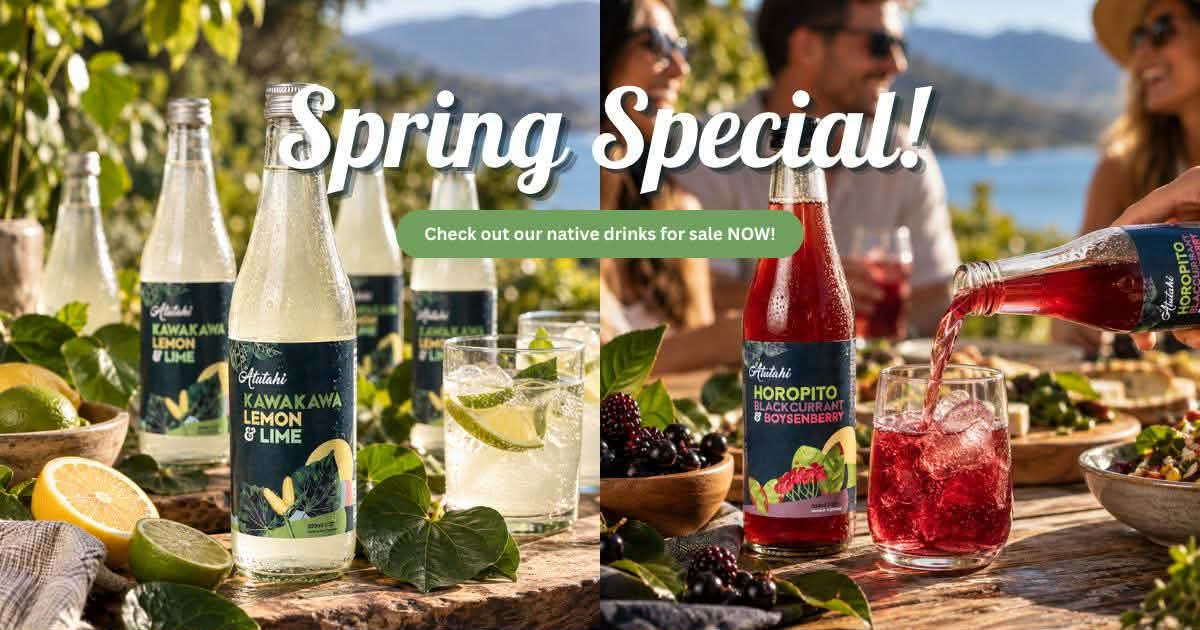
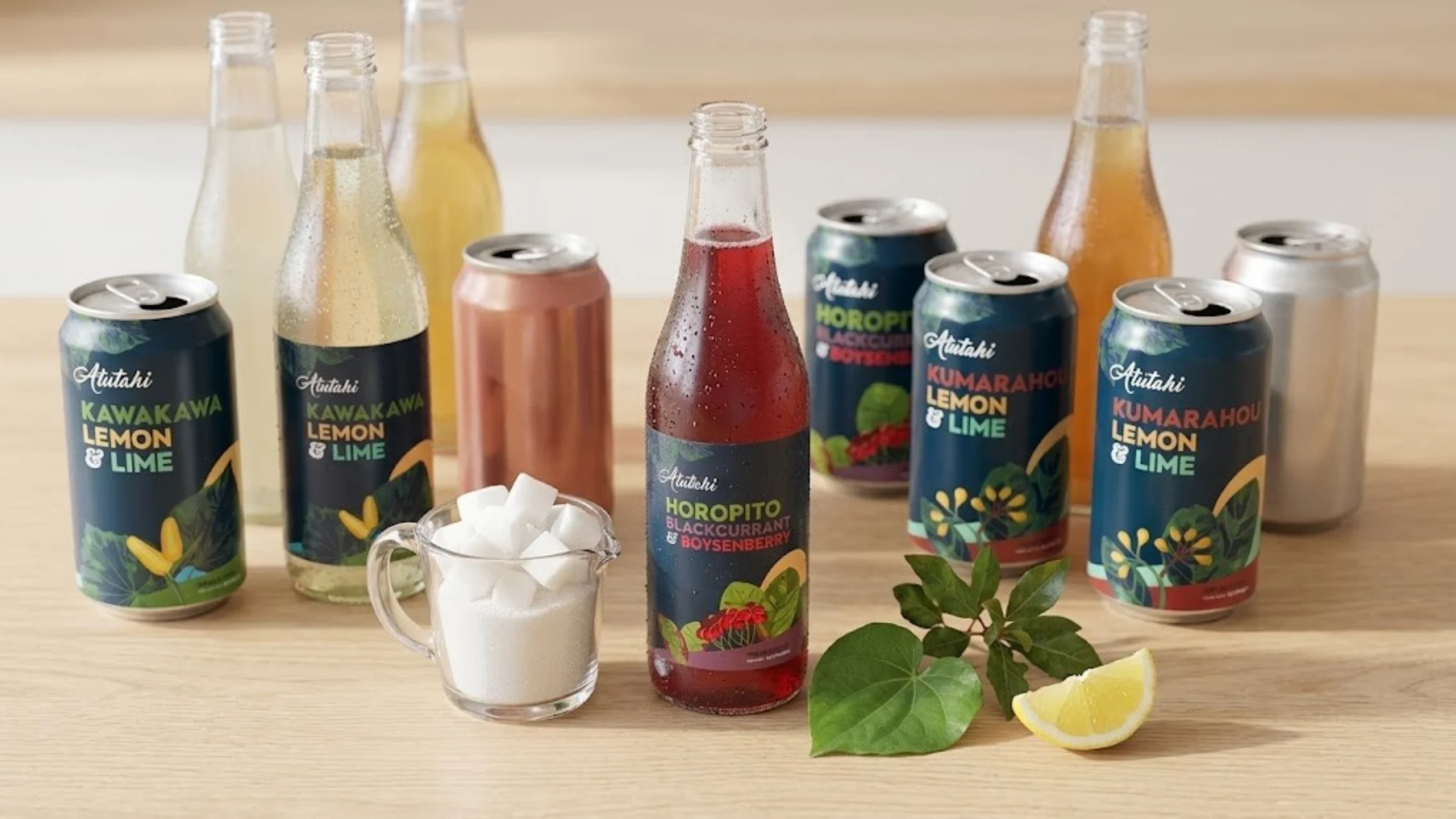
Atutahi’s Horopito, Blackcurrant & Boysenberry uses hand-harvested horopito leaf balanced against real Tasman Bay berry, sweetened with a light natural syrup rather than a heavy dose of cane sugar. The Kawakawa Lemon & Lime 15-pack leans on the same approach with a crisper citrus finish, and it’s become one of the go-to cooling summer drinks for exactly that reason. If you’d rather sample all three flavours, including Kumarahou Lemon & Lime, before committing to a full case, the Mixed 15-Pack is the easiest way in. Atutahi doesn’t publish a single stripped-back “diet” number for marketing’s sake, so check the nutrition panel on the actual bottle in front of you for the exact current figure, but the sugar load sits well under a standard soft drink because the sweetness comes from real fruit and a light syrup rather than a sweetener stack — see this low-sugar drinks that actually taste good breakdown for a closer look at how that balance is struck.
Comparing the Categories at a Glance
| Drink Type | Typical Calories | Typical Sugar | Main Ingredients | Worth Buying Daily? |
| Regular soft drink (330ml) | 140–190 | 35–45g | Sugar, colours, phosphoric acid | No |
| Sports drink (500ml) | 120–150 | 30–35g | Sugar, electrolytes, colours | Only during exercise |
| Almighty Sparkling Water (330ml) | ~0 | 0g | Sparkling water, natural essence | Yes, everyday |
| Remedy Sodaly (250ml) | 8 | Under 1g | Apple cider vinegar, natural sweeteners | Yes, occasional treat |
| Finery 0% Cocktails (250ml) | ~7 | 0g | Botanicals, natural sweeteners | Occasionally, social |
| Zeffer 0% Crisp Apple Cider (330ml) | 39 | Contains natural apple sugars | De-alcoholised cider, apple juice | Sometimes |
| Coconut water (250ml) | 40–70 | 8–12g | Natural coconut sugars | Sometimes |
| Fruit juice (250ml) | 150–220 | 30–45g | Fruit sugars, no fibre | Rarely |
| Kombucha (250ml) | 20–90 (varies) | 2–20g (check label) | Tea, live cultures, sugar | Sometimes |
| Native botanical drink, e.g. Atutahi (330ml) | Check current label | Light natural syrup, well under soft-drink levels | Brewed native leaf, real fruit, light syrup | Yes, as a daily swap |
Figures for named third-party products are drawn from brand-stated nutrition information current at the time of writing; figures for generic categories are approximate industry averages. Always check the nutrition panel on the specific bottle or can in front of you, since recipes and pack sizes change.
Key Benefits of Choosing Native Botanical Beverages
Choosing a native botanical drink over a standard soft drink or diet soda gives you a few real advantages worth knowing about. First, you get genuine flavour that comes from the plant itself rather than a copy built in a lab, so the taste feels rounder and less artificially sharp. Second, plants like kawakawa and horopito carry a long history of traditional use in supporting digestion and respiratory comfort, a benefit you won’t find printed on a can of fizzy drink — you can read more on the health benefits of kawakawa and kumarahou if you’re curious about the traditional Māori uses behind the flavour. Third, because the sugar comes from a light natural syrup rather than a heavy dose of cane sugar or a sweetener list, you tend to avoid the sharp spike and crash that often follows a sugary drink, while still enjoying something that tastes like a genuine treat.
It also matters where your money goes. Supporting a small, Māori-owned Nelson brand that hand-harvests its ingredients and brews in small batches, like Atutahi, means you’re backing sustainable, ethically sourced products rather than a mass-produced formula shipped in from overseas.
Ready to Make the Swap?
If you’ve spent years bouncing between sugary soft drinks and artificially sweetened diet versions, it might be time to try a genuinely different option. Native botanical drinks give you the low-sugar profile you’re after without asking you to drink something that tastes like a chemistry set. Browse the full range of native drinks, grab the Mixed 15-Pack to find your favourite flavour first, or find a nearby stockist through the stockists page. Prefer a chat first? Get in touch with the Atutahi team for a recommendation based on what you usually reach for, or subscribe on the site for early access to seasonal small-batch runs.
Choosing What Actually Works for You
There’s no single “best” low-calorie drink for everyone, but there’s a clear pattern once you line the categories up side by side. The drinks with the shortest, most honest ingredient lists tend to be the ones your body will thank you for later, whether that’s a plain sparkling water, a genuinely low-sugar alcohol-free can, or a native botanical drink brewed from real leaf. Next time you’re standing in front of that fridge, you’ll know exactly what to check on the label, and which bottle is actually worth putting in your basket. For the bigger picture beyond just calories, what makes a drink healthy in New Zealand is a good next stop.
Frequently Asked Questions
Popular picks in NZ include sparkling water brands like Almighty, zero-sugar sodas such as Remedy Sodaly, alcohol-free cans like Pals 0% and Finery 0% Cocktails, and native botanical drinks such as Atutahi’s kawakawa and horopito range. Each sits in a different calorie band, so check the specific can rather than assuming the whole category is equally light.
Diet and zero-sugar sodas, unsweetened sparkling water, and native botanical drinks brewed with a light natural syrup are the most common low-sugar picks in NZ. Kombucha can also be low sugar, but it varies enormously by brand, so it’s worth checking the nutrition panel rather than assuming.
Most supermarkets, dairies, and specialty health stores across New Zealand stock a low-calorie drinks range. For native botanical options specifically, Atutahi lists its Nelson and nationwide stockists on its stockists page, or you can order online for direct delivery anywhere in NZ.
Zero-calorie sparkling water is widely available in Auckland supermarkets, including Countdown, New World, and Pak’nSave, as well as online retailers. Look for plain or naturally flavoured sparkling water with no added sugar or sweetener on the ingredient panel.
A growing number of NZ brands make low-calorie drinks, including alcohol-free specialists like Almighty and Zeffer, functional soda makers, and native botanical brands such as Atutahi, which is Māori-owned and based in Nelson. Each brand takes a different approach to cutting calories, so comparing ingredient lists is worthwhile.
Prices vary by retailer and promotion, so the most accurate comparison is checking current supermarket shelf prices or apps directly. As a general pattern, mainstream diet soft drinks are usually the cheapest per can, while functional and botanical drinks sit at a premium reflecting smaller-batch production and natural ingredients.
Yes, light beers, low-alcohol wines, and some spirit-and-soda combinations are marketed as lower calorie in NZ, though “low alcohol” and “low calorie” are separate claims worth checking individually. Alcohol itself carries calories regardless of sugar content, so a low-sugar alcoholic drink isn’t automatically low calorie.
Diluting juice with sparkling water, choosing whole fruit over juice, or switching to a lightly brewed native botanical drink are all lower-sugar alternatives available in NZ. Plain or naturally flavoured sparkling water is also a solid swap if you mainly want the fizz and refreshment factor.
Zero-sugar energy drinks from brands like Ghost, Alani, and Ryse Fuel are widely stocked in NZ, with calorie counts typically ranging from zero to around 15 per can depending on the brand and size. Always check the caffeine content too, since it varies more than the calorie count does.
Many NZ drink brands, including Atutahi, ship nationwide through their own online stores, alongside specialty retailers stocking a wider mix of sugar-free and low-calorie options. Ordering online is often the easiest way to try a mixed pack before committing to a full case of one flavour.