
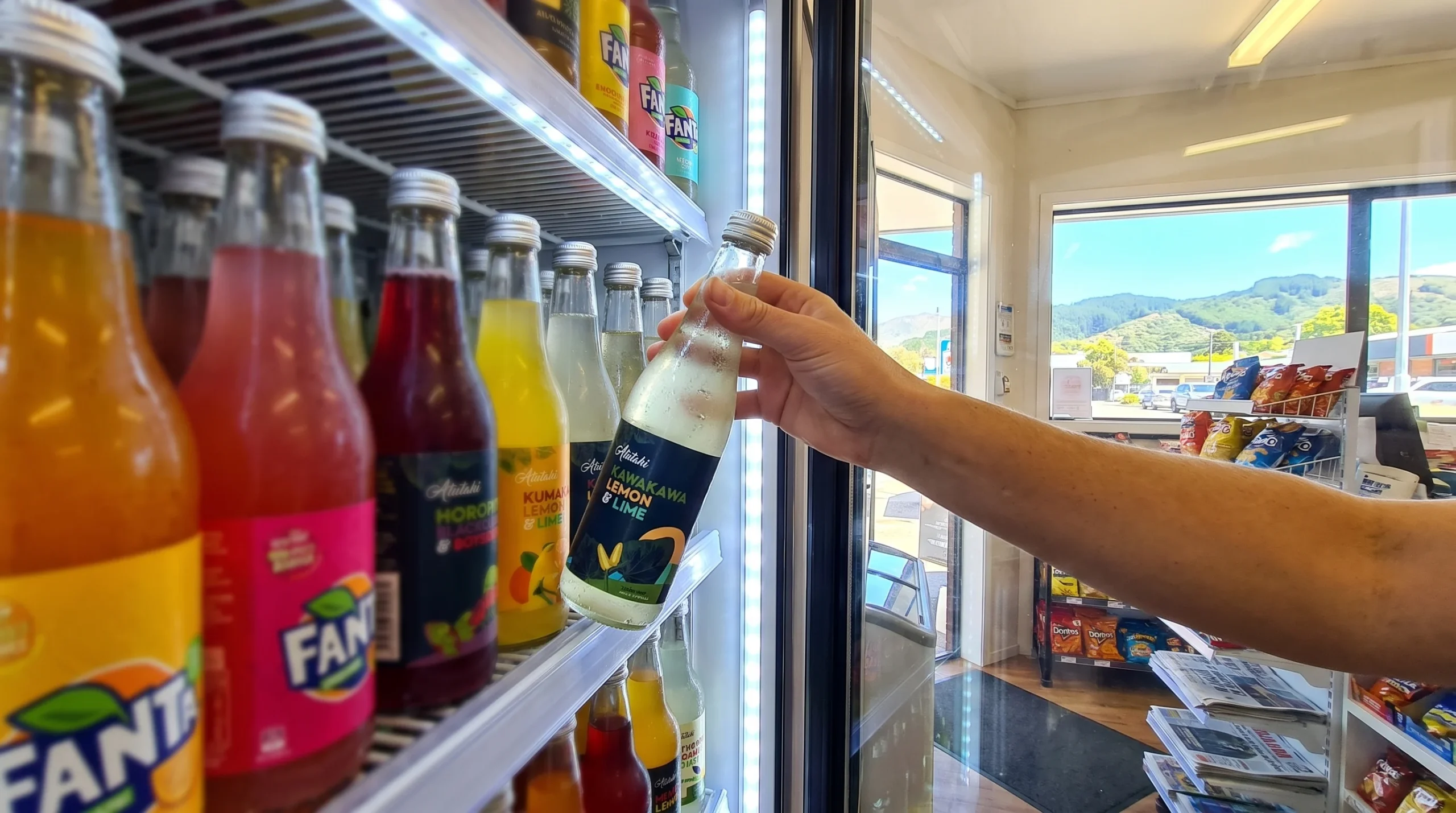
You’re standing at the fridge, thirsty, and every bottle is telling you it’s good for you. “Natural.” “Refreshing.” “Made with real fruit.” The trouble is, most of those words don’t tell you what’s inside. Some drinks sold as a healthy choice carry more sugar than a can of cola. In a hurry, the clever label usually wins.
This guide shows you what makes a drink healthy in New Zealand, which label claims are backed by food law, and how to judge any bottle in under a minute.
- Water comes first. Health New Zealand still says plain water is the best everyday drink.
- Check sugar per 100ml. A drink can only be called “low sugar” in NZ if it has 2.5g of sugar or less per 100ml.
- Read the ingredients. If you can’t picture most of them, put the bottle back.
- Look for a real reason to drink it. Flavour from real plants and fruit beats colours and flavourings.
- Health Stars help, but they’re optional. Most packaged products in NZ still don’t show them.
- Drink with the seasons. Go light in spring and summer, warming in autumn and winter.
Key Takeaways
- Water is still the best everyday drink in New Zealand.
- Check sugars per 100ml: 2.5g or less is the legal “low sugar” line.
- “No added sugar” doesn’t mean low sugar; juice can still be sweet.
- Health Stars are voluntary, so read the nutrition panel too.
- Short, readable ingredient lists beat long lists of codes.
- Native botanicals like kawakawa, kūmarahou and horopito add real, traditional ingredients.
- Match your drink to the season: light and hydrating in spring and summer, warming in autumn and winter.
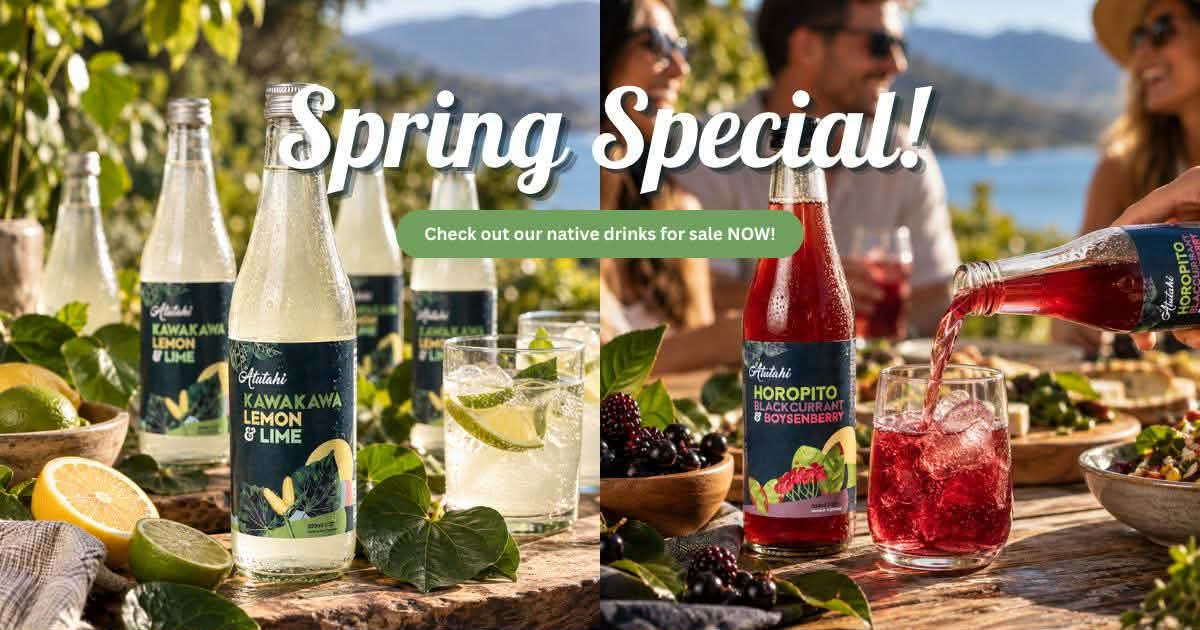
- Try the Horopito, Blackcurrant & Boysenberry or the Mixed 15 Pack to taste the difference.
The Fridge Door Problem: Why Choosing a Drink Feels So Hard
The drinks aisle is built to sell, not to teach. Bright colours, pictures of fruit and words like “natural” do most of the talking. Meanwhile, the facts sit in small print on the back.
That matters because drinks are one of the easiest places for sugar to sneak into your day. A single 330ml can of regular cola has about 35g of sugar, which is roughly seven teaspoons (ABC Nutrition). The World Health Organization suggests keeping “free sugars” to around six teaspoons a day for adults. So one can can use up your whole day’s allowance before lunch.
“Free sugars” also include the sugar in fruit juice, honey and syrups, not only white sugar (Heart Foundation NZ). That surprises a lot of people. A glass of juice feels healthy, but your body still counts that sugar.
Healthy Drinks NZ Explained: What the Term Really Means
A healthy drink is one that hydrates you without piling on sugar or additives, and ideally gives you something extra. In New Zealand that “something extra” might be real fruit, a native plant with a long history of use, or simply a flavour that stops you reaching for a fizzy drink. What counts as a good pick also shifts with the seasons, which we cover further down.
The word “healthy” has no legal definition on a drink label, so you need your own checks. The terms that are defined, like “low sugar” and “no added sugar”, are set by one rulebook that covers both Australia and New Zealand: the Food Standards Code, run by Food Standards Australia New Zealand (FSANZ).
What Actually Makes a Drink Healthy in NZ?
A genuinely healthy drink is judged on added sugar, ingredient honesty and real benefit, not just on being “low calorie”. At Atutahi, we judge every drink, including our own, against three checks. Each one is based on NZ food law or Health New Zealand guidance.
Atutahi’s Three-Check Test
Check 1: Sugar. Does the drink have 2.5g of sugar or less per 100ml? That’s the legal line for a “low sugar” claim under the FSANZ Food Standards Code (FSANZ). If a drink is over that, it should earn its place some other way. Most sugary fizzy drinks don’t.
Check 2: Ingredients you can read. Are the main ingredients real foods and plants? Or is the list mostly colour codes, acids, sweeteners and “flavour”? We look for drinks with no artificial colours, no artificial flavours and no added preservatives.
Check 3: A real reason to drink it. Does the drink do more than taste sweet? That could be fruit, a native botanical used in rongoā Māori, or a flavour that helps you swap away from sugary drinks for good.
A drink that passes all three is a strong everyday choice. One that passes none is a sometimes treat at best.
Sugar: The First Number to Check
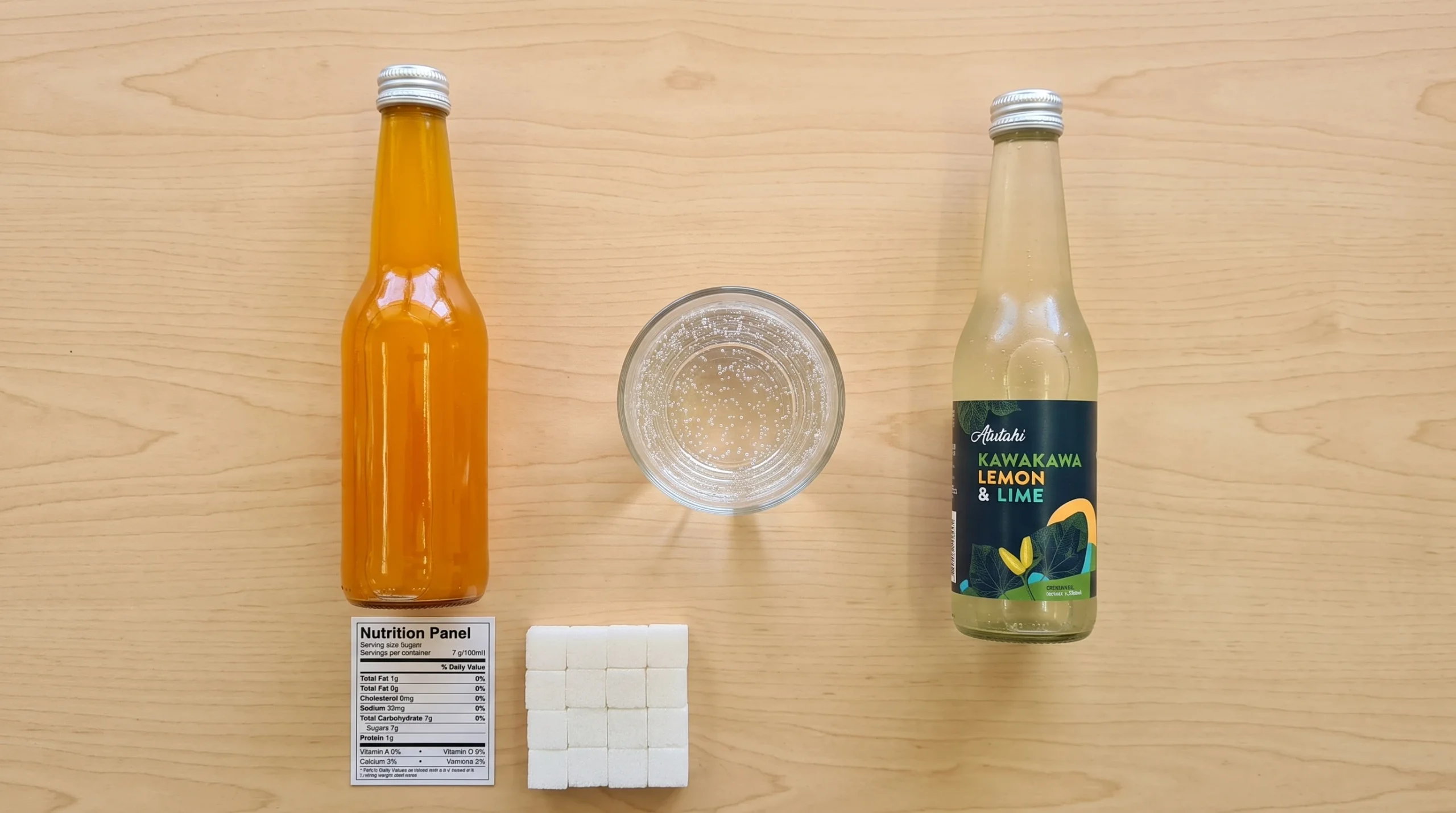
Always look at “sugars per 100ml” on the nutrition panel, not “per serve”. Serving sizes aren’t standard in New Zealand, so brands can pick a small serve to make the numbers look better. The per-100ml column lets you compare any two drinks fairly.
Here’s a simple way to read it:
| Sugars per 100ml | What it means | Teaspoons in a 330ml bottle |
| 2.5g or less | Meets the NZ “low sugar” claim rule | About 1.5 or fewer |
| 2.6g to 7.5g | Moderate: fine now and then | About 2 to 5 |
| Over 7.5g | High: a treat, not an everyday drink | More than 5 |
Teaspoons are based on 1 teaspoon = 5g of sugar, the measure used in the New Zealand Food Composition Tables.
If you want to go deeper, our guide on how to read drink labels walks through every line of the panel.
“Low Sugar” vs “No Added Sugar”: What the Label Is Allowed to Say
These two claims sound alike but mean very different things. “Low sugar” is about how much sugar is in the drink: 2.5g or less per 100ml. “No added sugar” is about what went into it. The drink can’t contain any added sugar, including honey or concentrated juice, and FSANZ has also capped it at 7.5g of total sugars per 100ml for liquids (FSANZ P1062).
So a “no added sugar” juice can still be quite sweet. If you’d like the full story on this, see our breakdown of sugar-free vs low sugar drinks.
What About Health Star Ratings?
Health Stars are useful, but you can’t rely on them yet. The system rates packaged food and drinks from half a star to five stars. It’s still voluntary in New Zealand, and only about 36% of eligible products show a rating. Food ministers set a target of 70% and it was missed, so in February 2026 most of them voted to start work on making the stars compulsory (Consumer NZ).
Until then, brands can show stars only on their best-scoring products, so the nutrition panel is still your most honest guide.
Ingredients You Can Actually Read
Short, readable ingredient lists are a good sign. If a lemon-lime drink is made with real lemons and limes, it will say so. If it’s made with “flavour”, “colour (150d)” and a row of numbers, that tells you a different story.
Watch for three things:
- Hidden sugars. Sugar has many names on a label, like glucose syrup, dextrose, fruit juice concentrate and cane sugar. The higher up the list, the more there is.
- “Natural flavour”. This sounds reassuring, but it can mean a heavily processed extract. Our guide on what natural flavours really are explains what sits behind that phrase.
- Preservatives and colours. They’re approved as safe, but a drink that doesn’t need them is usually closer to real food. Here’s why more Kiwis are choosing preservative-free drinks.
Ingredient honesty is a big part of what we value at Atutahi.
We Read the Labels So You Don’t Have To: 3 NZ Supermarket Drinks, Scored
Here’s what happened when we took three everyday drinks off a supermarket shelf and scored them against our three checks. We picked one fizzy drink, one juice and one “zero sugar” flavoured water, because those are the three most common swaps people make.
| Drink (as bought) | Sugars per 100ml | Sugar per bottle | Readable ingredients? | Real reason to drink it? | Score |
| Regular cola, 330ml can | about 10.6g | about 35g, around 8.75 tsp | No. Mostly sugar, colour and acid codes | No | 0 / 3 |
| 100% apple juice, 250ml | about 10.4g | about 26g, around 6.5 tsp | Yes. One ingredient | Some. Fruit, but all free sugar | 1 / 3 |
| Zero sugar flavoured sparkling water, 330ml | 0g | 0g | Partly. Sweetener and “natural flavour” | No | 1 / 3 |
What We Learned
The juice surprised us most. It feels like the healthy pick, but its sugar per 100ml sits right alongside the cola’s, and the WHO counts all of it as free sugar.
The zero sugar water passed on sugar but little else. It’s a far better swap than cola, but its flavour comes from sweeteners and flavourings, not real food.
The cola failed every check, with about seven teaspoons of sugar in one small can.
Where Native Botanicals Fit In
Native plants give a drink flavour and a story that a flavour code can’t. For generations, Māori have used plants from the ngahere (forest) as part of rongoā Māori, the traditional Māori healing system. Some of those same plants are now finding their way into drinks.
These plants are traditional ingredients, not medicines. A drink made with them isn’t a treatment for anything. But they bring real, grown-in-Aotearoa ingredients to your glass.
Kawakawa
Kawakawa is the heart-shaped leaf you’ll see all over the New Zealand bush. It has a gentle, peppery taste and has traditionally been used for the puku (tummy). Learn more in our guide to kawakawa tea and gut health.
Kūmarahou
Kūmarahou is known as “gumdigger’s soap” because its flowers lather in water. It was traditionally brewed into a strong tea during the colder months. Our kūmarahou respiratory support guide explains what’s known and what isn’t.
Horopito
Horopito is New Zealand’s native pepper tree. It has a warm, spicy bite that pairs well with dark berries. Read more about horopito and its traditional uses.
A drink that uses these plants for real, rather than just putting a leaf on the label, passes our third check. You can read more about what makes a drink genuinely functional here.
Healthy Drinks for Every NZ Season
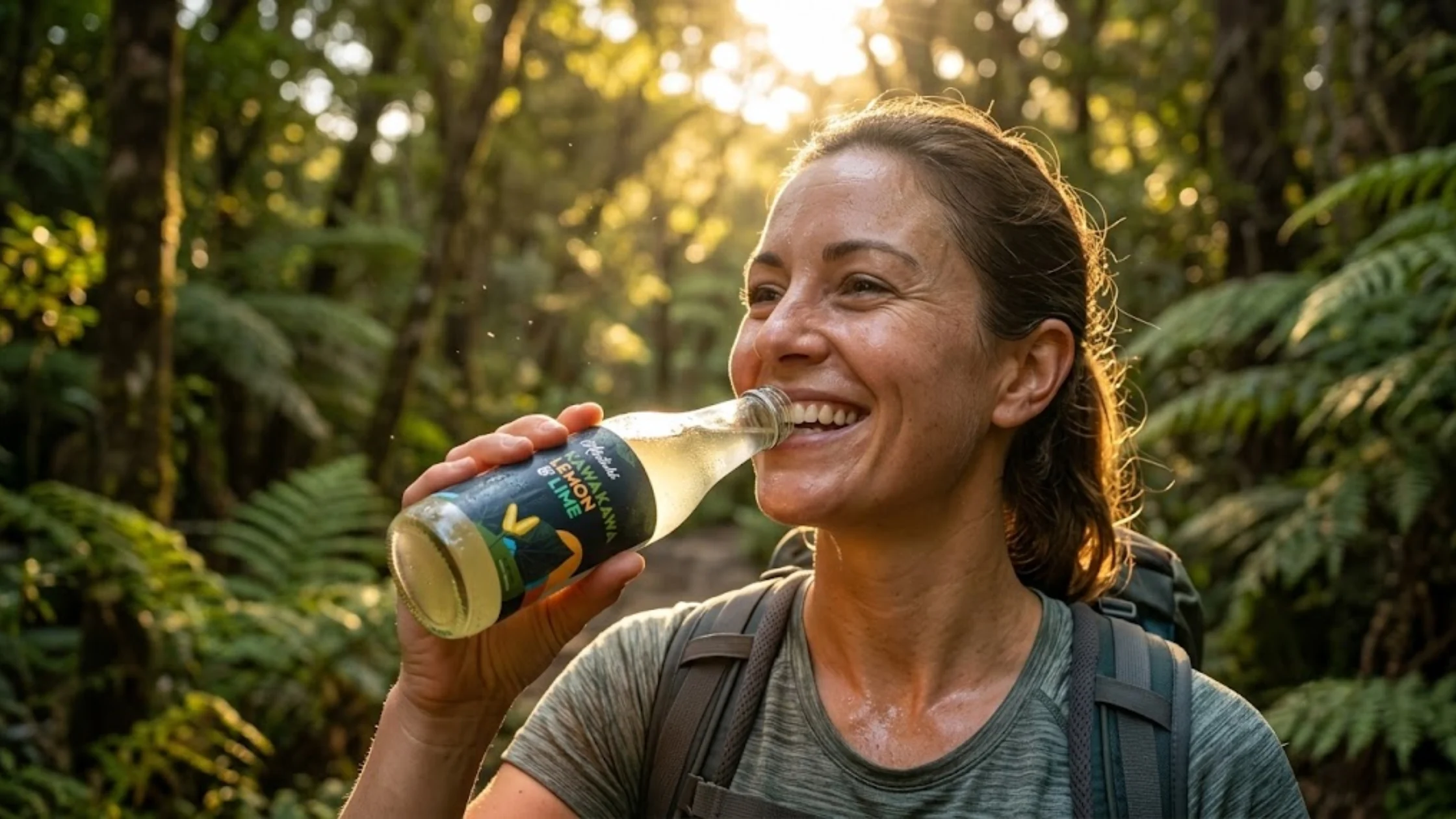
The best drink for you changes with the weather, even though the three checks stay the same. Your body wants different things on a hot Nelson summer afternoon than on a frosty Tasman morning. Sugar, ingredients and a real reason to drink still matter all year. What shifts is whether you want something cool and light, or warm and grounding.
| Season | What your body wants | Drinks to reach for |
| Spring (Sep–Nov) | Lighter, fresher sips after winter | Warm lemon water, light herbal teas, kawakawa blends |
| Summer (Dec–Feb) | Hydration without a sugar crash | Water, sparkling water with fruit, chilled low-sugar botanicals |
| Autumn (Mar–May) | Warmth as the days cool | Lightly spiced herbal drinks, kūmarahou blends |
| Winter (Jun–Aug) | Comfort and recovery | Hot herbal infusions, horopito-based drinks |
Spring and Summer: Light and Hydrating
Spring is the time to ease off heavy winter drinks. A warm lemon water first thing, or a light kawakawa blend mid-morning, feels right as the days stretch out. Summer is all about hydration. Sugary cordials and fizzy drinks can leave you thirsty again fast, so alternate water with a low-sugar drink you actually enjoy. Our guide to late-summer hydration has more ideas.
Autumn and Winter: Warming and Grounding
As the weather cools, native botanicals come into their own. Kūmarahou was traditionally brewed during the colder months, and horopito’s peppery warmth suits winter well. In autumn, the Horopito, Blackcurrant & Boysenberry makes a smart swap for fizzy drinks or high-sugar juice. It shines at an autumn dinner party too. Serve it chilled in wine glasses with a little ice as an alcohol-free option alongside warm platters. Our autumn entertaining guide has pairing ideas, and the low-sugar lunchbox guide covers work and school days. When winter arrives, read about horopito for Māori winter wellness.
Key Benefits of Choosing a Better Drink
Small daily swaps add up fast. Swap one 330ml can of cola a day for a low-sugar option and you cut about 35g of sugar a day, or roughly 35 teaspoons over a working week.
| What you gain | Why it matters |
| Steadier energy | Less sugar means fewer quick highs and afternoon crashes. |
| Happier teeth | Sugary and acidic drinks are a major cause of tooth decay. |
| Fewer additives | Real ingredients mean less guesswork about what you’re drinking. |
| A drink you actually enjoy | Real flavour makes it easier to stick with the swap. |
| Support for local makers | Choosing healthy drinks made in NZ keeps money and jobs in communities like Nelson Tasman. |
Ready to Stock a Better Fridge?
Atutahi drinks are brewed in small batches in Nelson, using native plants and real fruit. They’re made with no artificial colours, flavours or preservatives. We built them for people who want more than sweetness from a drink, with deep respect for rongoā Māori behind every bottle. You can read our story to see where it all began.
Here’s where to start:
- Try the award-winning Horopito, Blackcurrant & Boysenberry, a Silver winner at the 2024 NZ Artisan Awards, for a rich, berry-forward drink with a peppery finish.
- Pick up Kawakawa Lemon & Lime for a crisp, citrusy everyday option.
- Can’t decide? The Atutahi Mixed 15 Pack lets you taste all three flavours.
Browse the full Atutahi drinks range, find a stockist near you around Nelson Tasman and beyond, or get in touch with our team if you have a question about ingredients.
Choosing Healthy Drinks in NZ, One Label at a Time
A healthy drink in New Zealand isn’t the one with the loudest label. It’s the one that passes a few simple checks. Look at sugar per 100ml first. Then read the ingredients. Then ask whether the drink gives you anything real beyond sweetness.
You don’t need to give up flavour to drink better. Next time you’re at the fridge door, flip the bottle, give it thirty seconds, and choose the one you’d happily drink every day.
Frequently Asked Questions
Plain water is the healthiest everyday drink in New Zealand, and Health New Zealand recommends it as your first choice. After water, look for unflavoured milk, unsweetened tea, or drinks with 2.5g of sugar or less per 100ml. Drinks made with real fruit or native botanicals and no artificial colours or flavours are a better treat than regular fizzy drinks, juice or energy drinks.
The World Health Organization suggests adults keep free sugars to about six teaspoons a day, which is roughly 25g. One 330ml can of regular cola has about 35g, so it goes over that limit on its own. As a rule of thumb, drinks with more than 7.5g of sugar per 100ml are high in sugar, while drinks with 2.5g or less count as low sugar under NZ labelling rules. Check the panel every time.
In New Zealand, a drink can only be labelled “low sugar” if it contains 2.5g of sugar or less per 100ml. This rule comes from Schedule 4 of the Australia New Zealand Food Standards Code, which FSANZ looks after. It applies to all sugars in the drink, including sugar from fruit. That makes it one of the most useful claims to look for when you’re comparing drinks quickly at the shop.
No, they mean different things. “No added sugar” means nothing like sugar, honey or concentrated juice was added. Under NZ rules the drink also can’t have more than 7.5g of sugar per 100ml. It can still contain natural sugars from fruit, so it isn’t sugar-free. Always check the sugars per 100ml on the nutrition panel rather than trusting the words on the front of the bottle.
Fruit juice has some vitamins, but it’s also high in sugar, often around 10g per 100ml, which is similar to regular soft drinks. The World Health Organization counts juice sugar as “free sugar”, the kind we should limit. Whole fruit is a better choice because the fibre fills you up and slows the sugar down. If you do drink juice, keep it to a small glass now and then, or water it down.
Not yet. Health Star Ratings are still voluntary in New Zealand, and only about 36% of eligible products show one. In February 2026, most Australian and New Zealand food ministers voted to start work on making them compulsory, and FSANZ will consult the public before a final decision. For now, a missing star rating doesn’t mean a drink is healthy or unhealthy, so read the label.
Zero sugar drinks are a better swap than sugary soft drinks because they don’t add sugar to your day. However, they usually get their sweetness from artificial or intense sweeteners and their taste from flavourings. They’re still acidic, which can affect your teeth. They’re fine now and then, but water or a low-sugar drink made with real ingredients is a better everyday habit.
Functional drinks are drinks made to do more than quench your thirst. They might include fruit, herbs, native botanicals or other ingredients chosen for flavour and traditional use. In New Zealand, some brands use plants like kawakawa, kūmarahou and horopito from rongoā Māori. A good functional drink should still be low in sugar and have a short, readable ingredient list. Otherwise it’s just a soft drink.
In spring, go for lighter sips like warm lemon water or kawakawa blends as you ease out of winter. In summer, focus on hydration with water, sparkling water and fruit, or chilled low-sugar botanical drinks. In autumn and winter, warming drinks suit best, such as herbal infusions or blends made with native plants like kūmarahou and horopito. The same sugar and label checks apply all year.
You can buy Atutahi drinks online at atutahi.nz for delivery across New Zealand, or find them at local stockists around Nelson Tasman and further afield. Atutahi drinks are made in small batches in Nelson using native plants like kawakawa, kūmarahou and horopito, with no artificial colours, flavours or preservatives. Check the stockists page to find the shop or café closest to you.