

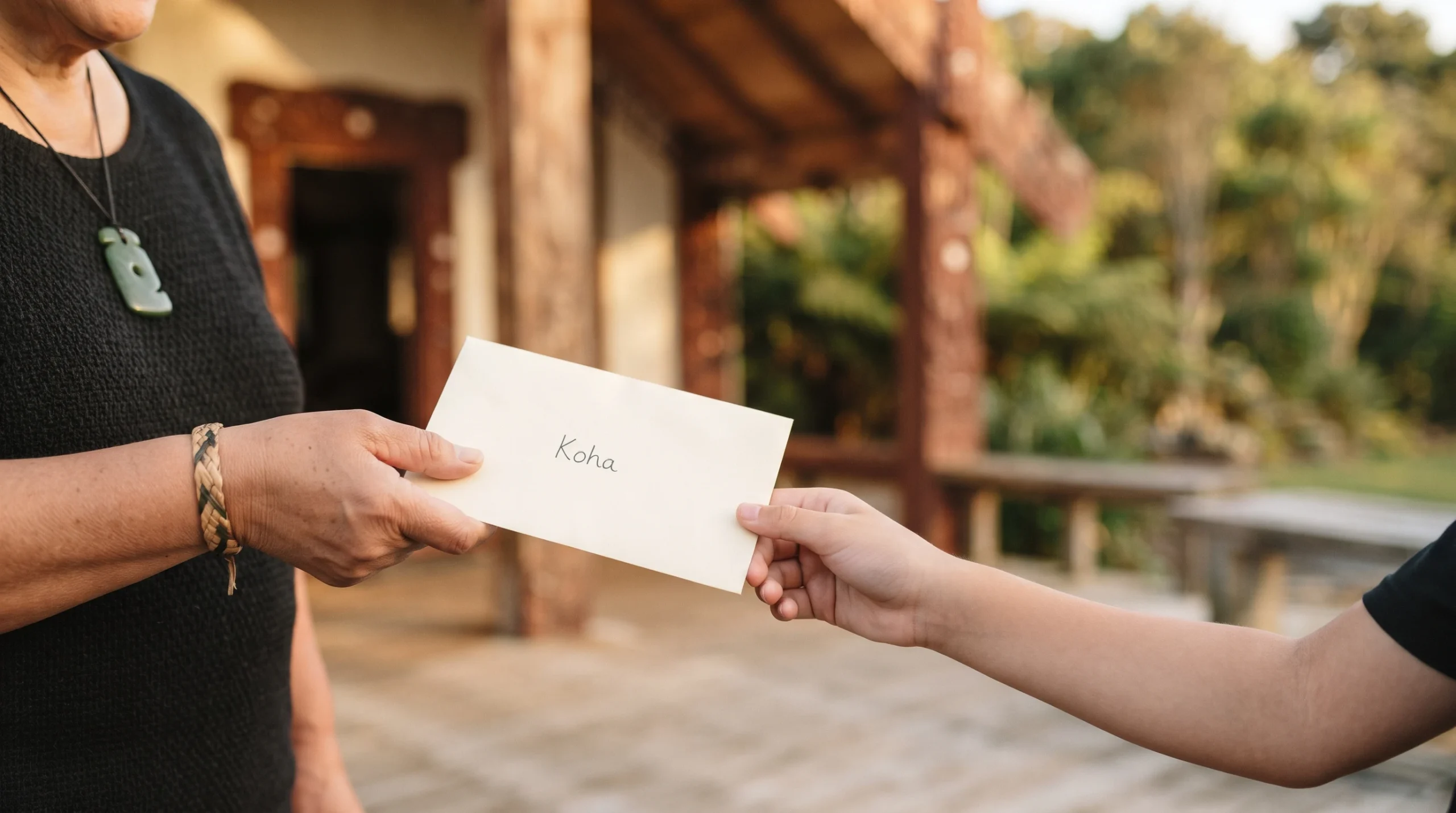
QUICK ANSWER
What is koha? Koha is a Māori custom of giving a gift, offering or contribution, most often from visitors (manuhiri) to their hosts (tangata whenua). Today it’s usually money in an envelope, but kai and practical help count too. There’s no set amount. Give what reflects the occasion, the hospitality you receive and what you can afford.
KEY TAKEAWAYS
- Koha is a Māori custom meaning gift, offering, donation or contribution. It’s given freely and carries an expectation of reciprocity over time.
- On a marae, the last speaker for the visitors usually places the koha on the ground during the pōwhiri, and someone from the hosts picks it up.
- Koha today is most often money in an envelope, but kai (food) and practical help, such as working in the kitchen, are also accepted forms of koha.
- At a hui, koha helps the marae cover the real costs of hosting: power, food, cleaning and volunteer time. At a tangi, it supports the grieving whānau (whānau pani).
- There is no fixed amount. A common guide is to at least cover what you’ve received in food and accommodation, then add to it based on your relationship and the importance of the occasion.
- When a group visits together, it usually pools its koha into one gift presented on behalf of everyone.
You’ve been invited to a hui on a marae. Maybe it’s a work wānanga, a whānau celebration, or you’re going to a tangi to pay your respects. Then someone mentions koha, and the questions start. Do you bring cash? How much? Who do you hand it to, and when?
If you’ve ever stood in the car park quietly working out what goes in the envelope, you’re far from alone. This guide answers what is koha, when it’s given, and how to judge what’s appropriate, with practical koha etiquette for hui and tangi. At Atutahi, our products are made in Nelson with native botanicals from Te Waipounamu, crafted with tikanga and karakia. Giving with intention sits at the heart of what we do, and koha is where that idea is at its most practical.
What Is Koha?
Koha is a Māori custom of giving a gift, offering, donation or contribution, usually from visitors to the people hosting them. It’s freely given rather than charged, and it helps maintain the relationship between the giver and the receiver.
Te Aka Māori Dictionary defines koha as a gift, present, offering, donation or contribution, especially one that maintains social relationships and carries a sense of reciprocity. In other words, koha isn’t a one-way transaction. It’s part of an ongoing exchange of care between people and groups.
We cover the deeper philosophy of Māori gift-giving in our post on why every gift should tell a story. This guide stays practical: the when, the how and the how much.
What does koha mean in everyday NZ English?
In wider New Zealand use, “koha” has also come to mean something close to “donation”. You’ll often see it at community events as a request for a gold coin donation ($1 or $2). That’s a legitimate everyday usage, but it’s a much lighter version of the custom you’ll take part in on a marae.
Why koha matters
The koha reflects the mana of both the giver and the receiver. It shows what the giver can offer and how highly they regard the hosts. Because of that, misunderstanding koha can cause genuine offence. Treating it as a fee, giving carelessly, or not giving at all can all land badly.
Koha is closely tied to manaakitanga, the value of caring for and uplifting others. If you’d like to explore that value further, read our guide to the meaning of manaakitanga in Māori gifting.
When Is Koha Given?
Koha is usually given whenever you’re hosted as manuhiri (visitors), especially on a marae. The most common occasions are pōwhiri, hui, wānanga, noho marae (overnight stays), tangihanga (funerals) and unveilings.
Organisations such as Fire and Emergency NZ list pōwhiri, hui, wānanga, tangihanga, unveilings and other cultural ceremonies such as blessings as times when koha may be given. Many universities and councils have formal koha policies because it is so often expected when visiting a marae.
Koha is generally not expected when you’re simply an attendee at a regular meeting that happens to be held at a marae, or in informal day-to-day contact. When in doubt, ask the organiser. That’s always better than guessing.
How Is Koha Given at a Hui?
At a formal hui, koha is usually presented during the pōwhiri by the last speaker for the visitors. They place it on the ground, often in an envelope, and someone from the tangata whenua picks it up once the speaker is seated.
This custom of placing koha on the ground between hosts and visitors may date back to when koha was bulky food and goods rather than money. Here’s how good koha etiquette at a hui usually works:
- Collect as a group beforehand. If you’re arriving as a group, pool your contributions into one envelope before you go onto the marae.
- Agree who presents it. Normally the final kaikōrero (speaker) for the manuhiri lays the koha down after their speech.
- Write a note if appropriate. Some groups include a card with the group’s name so the hosts know who gave it. Follow your group’s lead.
- Don’t hand it over mid-pōwhiri yourself. Let the designated speaker present it. Individual extras can be given quietly later.
- Check the kawa. Each marae sets its own protocols, so ask the organiser or a contact at the marae if you’re unsure.
For less formal hui, it’s often fine to hand the koha envelope quietly to the person running the hui. Again, ask first.
Koha for noho marae (staying overnight)
If you’re staying overnight, it’s good practice to contact the marae chair beforehand to agree on an appropriate koha that covers the costs of your stay. Some marae suggest an amount to guide visitors who are unfamiliar with the custom. Even so, it remains a freely given gift rather than a charge.
Koha at a Tangi: How Is It Different?
At a tangi, koha is a gift of support for the grieving whānau (whānau pani), not a payment for hospitality. It helps with the substantial costs of hosting mourners, sometimes over several days.
Tangihanga take precedence over almost every other kind of hui, and the whānau pani may feed and house large numbers of people at short notice. Koha helps share that load. Tikanga Māori scholar Dr Hirini Moko Mead has also described “private koha” at tangi: a gift given quietly, with no expectation that it be returned.
At a tangi, keep things simple and respectful:
- Arrive with your group if you can, and be welcomed on together.
- Let your group’s speaker present the collective koha during the pōwhiri.
- If you’re giving personally, a discreet envelope to a whānau member or the kitchen is usually appropriate.
- Offer your hands. Helping in the kitchen or with dishes is valued, and often noticed.
Cash or Kai: What Should You Give?
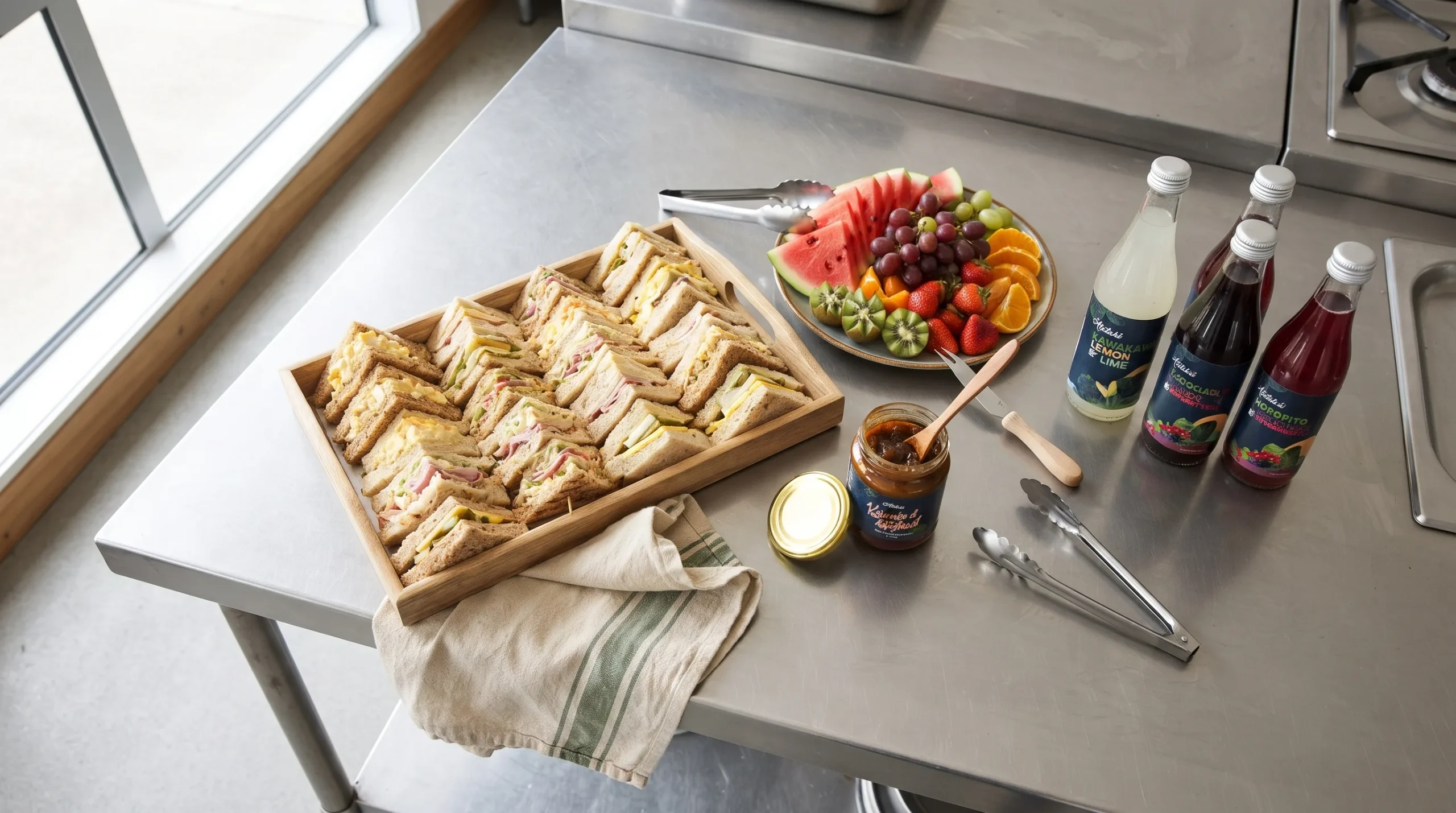
Today, most koha is money, but kai and practical help are also genuine forms of koha. There’s no rule that koha must be cash.
Historically, koha took the form of food and precious objects such as pounamu ornaments. Te Ara notes that money is now the usual form. But as Māori leaders have pointed out, koha can also be given as kai or by lending a hand at the hui.
Here’s how the main forms compare:
| Form of koha | When it suits | How to give it | Things to keep in mind |
| Money (envelope) | Formal pōwhiri, hui, wānanga, noho marae, tangi | Pooled by the group and laid down by the last speaker, or given quietly to the organiser | The most practical help for costs like power, cleaning and catering |
| Kai (food) | Tangi, community hui, whānau gatherings | Taken to the kitchen (wharekai), not presented on the marae ātea | Check first what’s needed so you don’t double up. Bring ready-to-share food |
| Practical help | Any hui or tangi, especially multi-day ones | Ask the kitchen or organiser where you can help | Dishes, setting up and cleaning are often as valued as money |
| Taonga or gift | Visiting someone’s home, thank-yous, special relationships | Given in person with a few words of thanks | Choose something meaningful rather than something expensive |
A useful rule: money is usually for the marae, kai is for the kitchen, and your time is for everyone.
A note on gifting kai
When you take kai to a hui or tangi, think about what genuinely helps. Food that’s ready to put out, shareable and easy to store is usually best. The tradition of sharing food at communal gatherings runs deep, as we explore in the art of Māori entertaining and sharing kai.
How Much Koha Should You Give?
There is no fixed amount of koha. What’s appropriate depends on the occasion, the hospitality you receive, your relationship with the hosts and what you can afford.
Researchers from the Māori research institute Te Atawhai o Te Ao, speaking to 1News, describe koha as a gift offered out of respect or gratitude, where what you give isn’t stipulated. They suggest either reflecting the value of the goods and services you’ve received, or thinking about how much gratitude and respect you hold and choosing something of value that matches it.
Factors that shape the amount
- What you’ve received. Meals, a bed for the night, use of the wharenui. At minimum, aim to cover the real cost of your stay.
- The size of your group. More people means more food, power and cleaning for the hosts.
- The importance of the occasion. A tangi for a respected kaumātua, or a significant ceremony, generally calls for more.
- Who you represent. Organisations visiting on business are usually expected to give a larger koha than individuals.
- Your own means. Koha is about intention. A modest gift given with genuine respect is never wrong.
Published examples from organisations
To give a sense of scale, the Far North District Council’s 2019 koha guideline gave worked examples: $200 for a four-hour hui with lunch attended by councillors and staff, and $300 when councillors and staff paid respects at a respected kaumātua’s tangi. These are organisational figures, not personal ones, and they’re best treated as a reference point rather than a rule.
Common koha mistakes to avoid
- Treating koha like a ticket price. It’s a gift of respect, not a fee.
- Giving far below what you’ve used. Hosts have had to absorb large bills when visitors misunderstood koha.
- Giving individually during a group pōwhiri. Pool it and let your speaker present it.
- Giving something inappropriate for the occasion. The 1News interviewees gave the example that a $20 gift card would be a faux pas as koha for receiving moko kauae or other facial moko.
How Atutahi Thinks About Koha
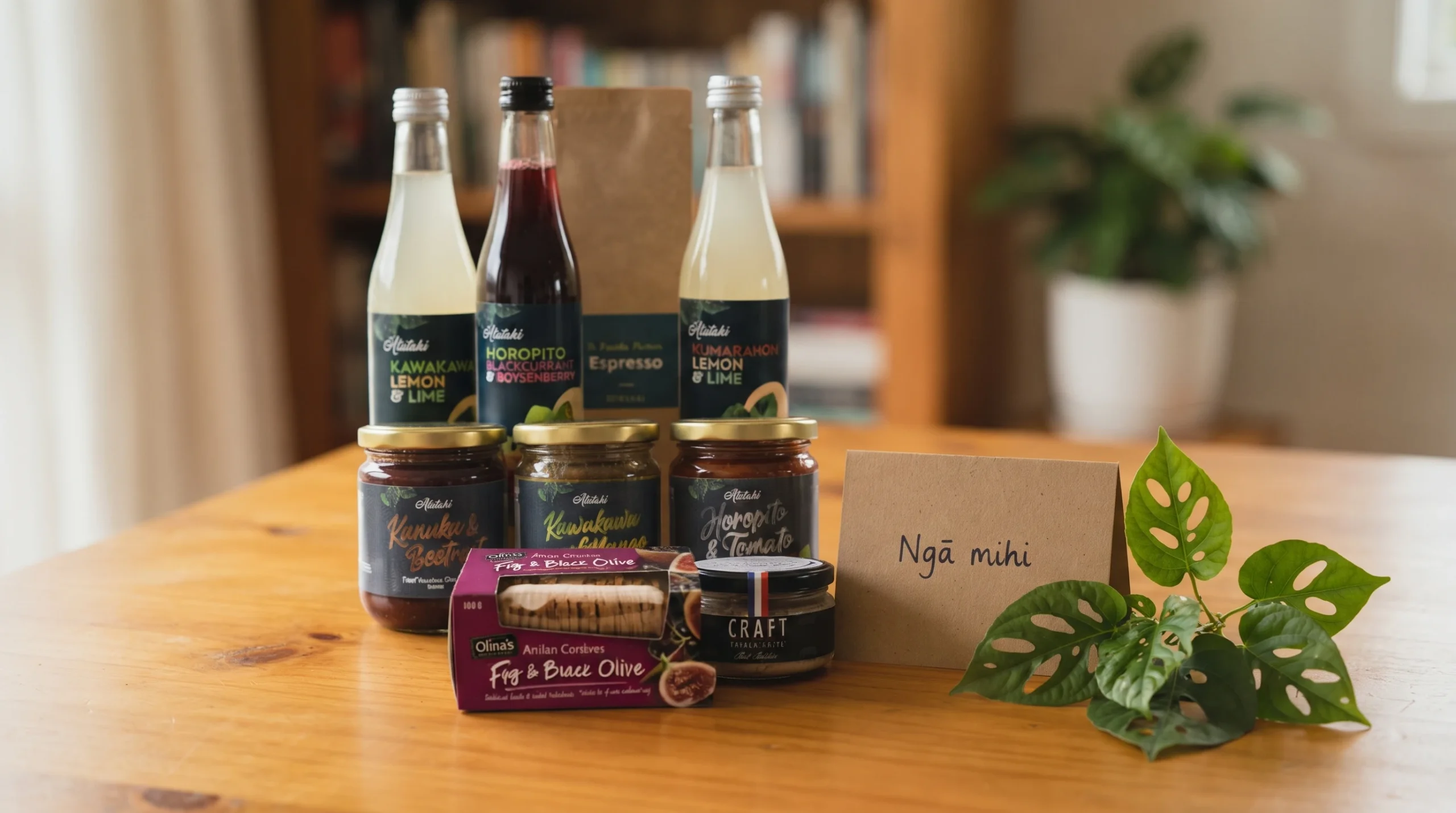
In our experience at Atutahi, koha works best when you think of it as “What can I bring to this relationship?” rather than “What do I owe?” That way of thinking guides how we make our drinks and chutneys: hand-harvested botanicals from Te Waipounamu, prepared with tikanga and karakia.
It’s also why our gift packs are named Tahi, Rua, Toru and Whā. You can read about what those te reo Māori names mean on our blog. A gift pack isn’t a substitute for koha on a marae, where money and help are usually what’s needed. But for the everyday moments koha also covers, such as thanking a host, visiting someone’s home or sending a taste of home to whānau far away, a thoughtful gift can carry the same spirit.
These points hold however the custom varies from place to place:
- Koha is a gift from visitors to hosts that acknowledges hospitality and strengthens the relationship.
- Koha is never a charge for services. Where a marae suggests an amount, it’s guidance, not a price.
- Cash is the most common form of koha today. Kai and practical help are also accepted forms.
- At a hui, koha helps cover hosting costs. At a tangi, it supports the grieving whānau.
- Each marae sets its own kawa, so the respectful approach is always to ask.
Giving Koha With Confidence
So, what is koha? It’s a freely given gift that honours the people who host you, grounded in reciprocity and manaakitanga. Give as a group where you can, let your speaker present it, offer kai and help as well as money, and judge the amount by the hospitality you’ve received and the weight of the occasion. When in doubt, ask. Your hosts will appreciate the care.
And when the moment calls for a gift to say thank you, welcome or kia kaha, browse our Māori-inspired gift packs of native botanical drinks and chutneys, or explore the full range at Atutahi.
Frequently Asked Questions
Koha isn’t a legal requirement, but it’s strongly expected when you’re formally hosted as manuhiri on a marae, especially for a pōwhiri, hui or overnight stay. Not giving koha can be seen as disrespectful to the hosts and the work they’ve put in. If you’re unsure whether koha is expected at a particular event, ask the organiser beforehand.
Keep it simple. Many people write “Koha” on the front, with the name of the group or individual giving it so the hosts know who to acknowledge. Inside, include the money and, if you like, a short card of thanks. When giving as a group, put everything into one envelope for your speaker to present.
Some marae and organisations now accept koha by bank transfer, particularly for large groups or organisational visits. Ask the marae or organiser for their preference before the event. A physical envelope is still the usual way when koha is presented during a pōwhiri, because laying it down is part of the ceremony itself.
Koha can be given at whānau celebrations such as weddings, 21sts and birthdays, especially when they’re held on a marae. In these settings koha often helps cover catering and venue costs, alongside or instead of a gift. Follow the invitation’s lead. Some families ask for koha in place of presents.
It depends on whether the koha is a genuine gift. Koha freely given by guests is generally treated differently from a set “koha” charged per attendee, which may attract GST because it acts like a fee. Marae and organisations should check with Inland Revenue or an accountant for their specific situation.
In everyday NZ English, “koha” is often used to mean donation, such as a gold coin at a community event. In te ao Māori, koha carries more weight. It’s tied to reciprocity, mana and an ongoing relationship between giver and receiver, rather than a one-off contribution to a cause.
Yes. Koha is a custom for anyone hosted on a marae, whatever their background. Visitors who are new to marae often find it helpful to go with someone experienced, or to contact the marae beforehand. Some marae suggest an amount to help visitors unfamiliar with the custom.
Koha presented during a pōwhiri is received by the tangata whenua, the hosts of the marae. It’s picked up by a member of the host side after the visitors’ speaker sits down. Koha given on a marae is generally for the needs of that marae, such as running costs, kai and upkeep.
Yes, if you missed the moment or want to add to your group’s koha. Give it quietly to the organiser, a member of the whānau or the marae committee. Some people also send koha afterwards as thanks once they understand the full cost of hosting, especially after a multi-day hui.
When a community event, class or performance says “koha” or “entry by koha”, it usually means there’s no fixed ticket price and you’re invited to give what you can. A gold coin is common for small community events, while workshops or performances may suggest a guideline amount.