

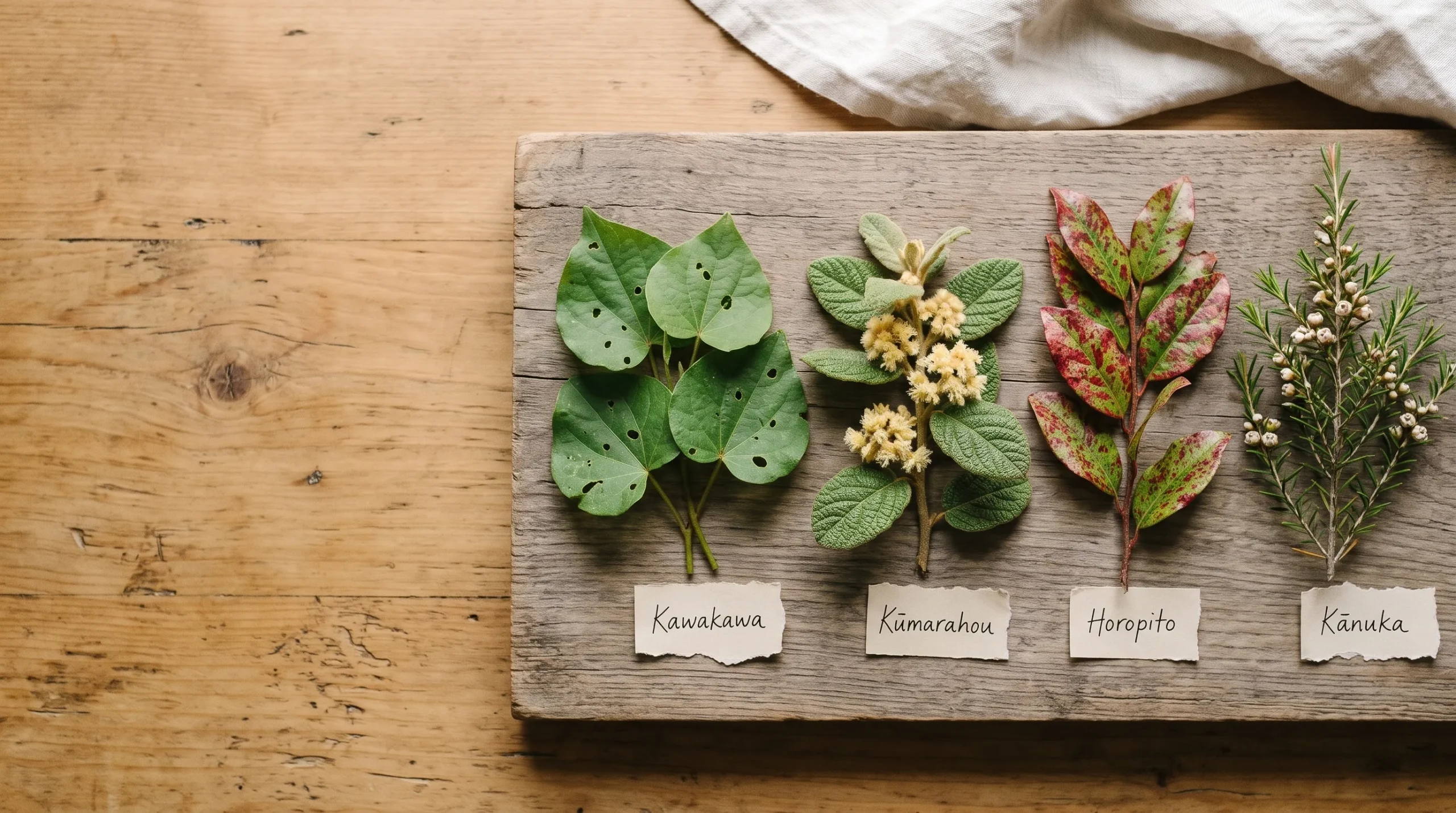
Sound It Out: Why These Names Trip Us Up
You’ve probably seen kūmarahou on a label and quietly wondered how to say it. Maybe you’ve gone for “koo-MAR-a-how” and hoped nobody noticed. That’s a really common moment, and it happens because te reo Māori follows its own sound rules, which are different from English.
This guide shows you how to pronounce kumarahou, kawakawa, horopito and kānuka the right way. It’s a simple pronunciation guide for four native plants used in Atutahi’s drinks, chutneys and soap. You’ll get easy phonetic spellings, a short lesson on te reo vowels, and a clear explanation of what macrons (those little lines over some vowels) actually do.
- Kūmarahou: KOO-mah-rah-hoe (long “koo” at the start, and “hou” sounds like “hoe”, not “how”)
- Kawakawa: KAH-wah-KAH-wah (four even beats, “ah” every time)
- Horopito: HAW-raw-pee-taw (light, tapped “r”, soft “t”)
- Kānuka: KAAH-noo-kah (stretch the first “aah”)
- The golden rule: every vowel in te reo makes one steady sound, and a macron means “hold it longer”.
Key Takeaways
- Kūmarahou = KOO-mah-rah-hoe. The ending sounds like “hoe”, not “how”.
- Kawakawa = KAH-wah-KAH-wah. Four even “ah” beats.
- Horopito = HAW-raw-pee-taw. Tapped “r”, soft “t”.
- Kānuka = KAAH-noo-kah. Stretch the first vowel.
- A macron means hold the vowel longer, and it can change a word’s meaning.
- Te reo vowels always make the same sound, so learning five sounds unlocks most words.
- Try them all in Atutahi’s drinks, chutneys and soap.
Why Saying Native Plant Names Correctly Matters
Saying a plant’s name properly is a small act of respect that goes a long way. Te reo Māori is a taonga, a treasure, and these names carry history, place and meaning. When you say them well, you honour the people who named these plants and have looked after them for generations.
It also makes life easier. When you know how to say a word, you remember it better and you feel more confident asking about it in a shop, a café or a garden centre. If you’ve ever avoided saying a word out loud because you weren’t sure, this guide is for you.
At Atutahi, these plants are the heart of everything we make. If you’d like the bigger picture first, have a look at our guide to the Māori botanicals behind Atutahi, then come back here to practise the names.
The Building Blocks: How Te Reo Sounds Work
Once you learn the five vowel sounds, you can say almost any te reo word. The good news is that te reo is very regular. Unlike English, where “ough” can sound five different ways, each Māori vowel keeps the same sound wherever it appears.
The Five Vowel Sounds
Here’s the simple version. Think of these sounds and you’ll be most of the way there:
| Vowel | Short sound (no macron) | Long sound (with macron) | Example from this guide |
| a | “ah” as in aloud | “aah” as in car (held longer) | kānuka |
| e | “eh” as in egg | “ehh” as in led (held longer) | (not used here) |
| i | “ee” as in eat | “eee” as in peep (held longer) | horopito |
| o | “aw” as in pork, without the “r” | “aww” held longer | horopito |
| u | “oo” as in to | “ooo” as in loot (held longer) | kūmarahou |
Tip: if you’re used to a New Zealand or British accent, the “o” sound is close to the “or” in “door”, just without the “r” at the end.
A Few Consonants That Behave Differently
Most te reo consonants sound like English ones, but two are worth a closer look. The “r” is a quick, light tap of the tongue behind your top teeth. It sits somewhere between an English “r”, “l” and “d”. Don’t roll it hard and don’t growl it like an American “r”.
The “t” is softer than in English when it comes before “a”, “e” or “o”. In horopito, the final “to” is gentle, almost like “taw” with a hint of “d”.
What a Macron Actually Does
A macron is the little line over a vowel, and it tells you to hold that sound for longer. In te reo it’s called a tohutō. It isn’t decoration. A long vowel can completely change what a word means. For example, wahine means “woman”, but wāhine means “women”.
That’s why you’ll see Atutahi write kūmarahou and kānuka with macrons. The line on the “ū” and the “ā” is part of the correct spelling, and it shows you exactly where to stretch the sound. Te Taura Whiri i te Reo Māori, the Māori Language Commission, encourages everyone writing in te reo to use macrons.
You might also see some names written with double vowels instead, like “kaanuka”. Some iwi, especially in Waikato, prefer this style. Both show a long vowel. What matters most is that you lengthen the sound when you say it.
How to Pronounce Kumarahou (Kūmarahou)
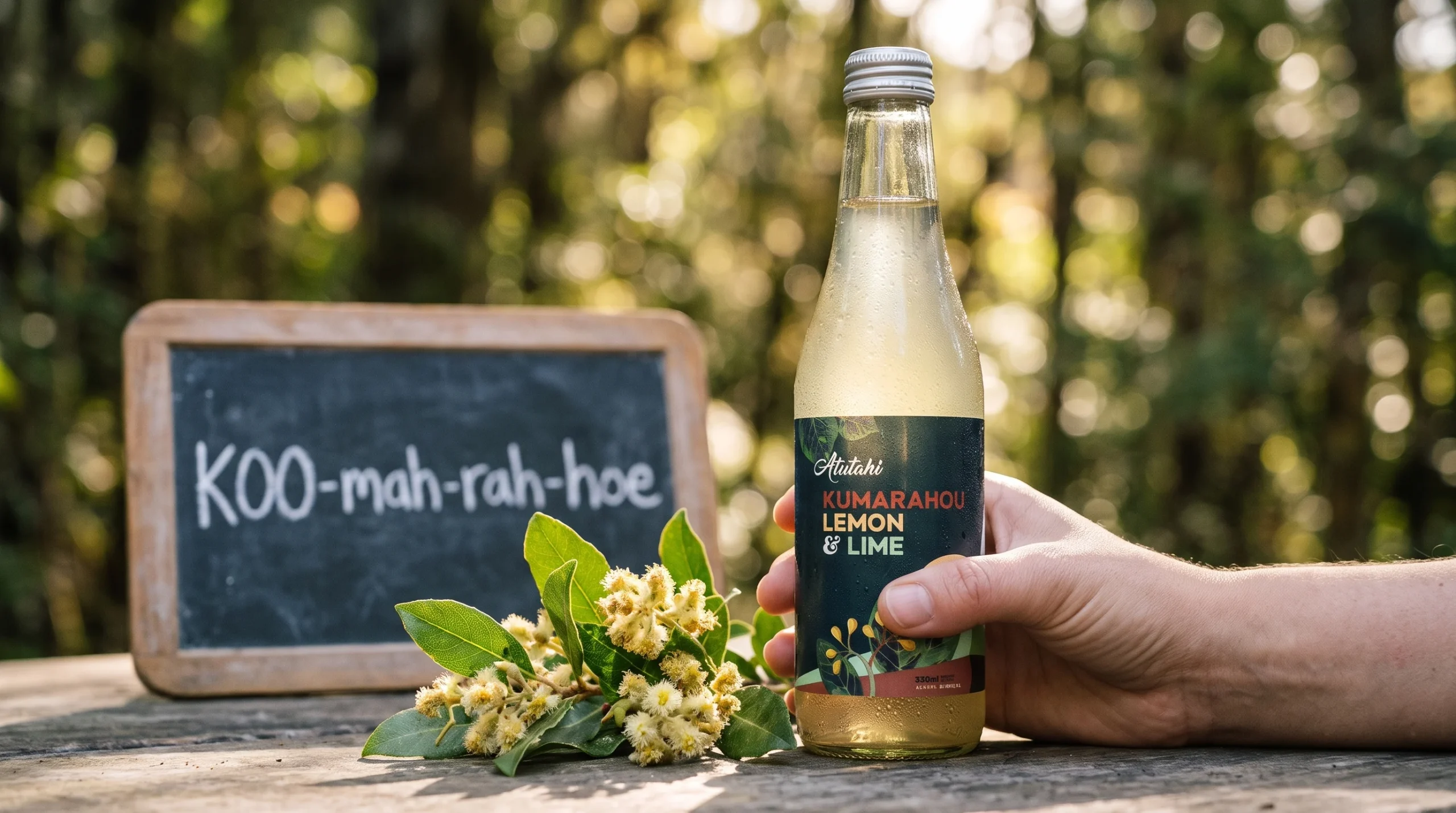
Say it like this: KOO-mah-rah-hoe. Start with a long “koo”, because of the macron on the “ū”. Then add three quick, even sounds: “mah”, “rah”, “hoe”. The last part, “hou”, blends an “o” into an “oo”, so it lands close to the English word “hoe”. It never rhymes with “cow”.
Breaking Kūmarahou Down
Here’s the word split into its sounds, so you can practise one piece at a time:
- kū – “koo”, held a little longer
- ma – “mah”, short and light
- ra – “rah”, with that soft tapped “r”
- hou – “hoe”, the “o” sliding gently into “oo”
The most common mistake is saying “koo-MAR-a-how”. That puts a heavy stress in the middle and turns the ending into “how”. Try keeping the first syllable strongest and the rest smooth and even instead.
The Meaning Behind the Name
Kūmarahou’s name is linked to the kūmara, the sweet potato. Each spring, usually around September and October, this North Island shrub bursts into clusters of creamy-yellow flowers. For Māori, those blossoms were a natural calendar. They signalled that it was time to plant kūmara.
Kūmarahou has other names too, including gumdigger’s soap. Gum diggers in Northland found that rubbing the flowers with a little water made a soapy lather. It has also long been valued in rongoā Māori, traditional Māori healing, where the leaves were made into a bitter tea. You can read more in our story of kūmarahou from traditional to modern wellness and our look at kūmarahou and respiratory support.
Here’s a fun fact that shows why spelling matters. When early botanists gave the plant its scientific name, they wrote down what they heard as “kumeraho”. That accidental spelling turned out to mean something quite rude in te reo! New Zealand botanists have since proposed changing the scientific name to Pomaderris kumarahou to fix the mistake. It’s a great reminder that getting the sounds right really does matter.
If you’d like to taste it, our Kūmarahou Lemon & Lime pairs the plant’s earthy notes with fresh citrus.
How to Say Kawakawa
Say it like this: KAH-wah-KAH-wah. It’s four short, even beats, with an “ah” sound every time. There are no macrons, so no vowels need stretching. The “w” sounds just like an English “w”.
Breaking Kawakawa Down
Kawakawa is simply “kawa” said twice. Repeating part of a word is common in te reo, and it often adds emphasis or intensity. So you only need to learn “KAH-wah” and then say it again.
People sometimes squash the vowels into “kuh-wuh-kuh-wuh” or rush it into two beats. Slow down and keep every “a” open and clear, like the “a” in “aloud”.
The Meaning Behind the Name
“Kawa” can describe a sharp, bitter or pungent taste, and kawakawa leaves are famously peppery. Doubling the word fits a plant whose leaves bite your tongue. It’s worth knowing that kawa also means marae protocol in another context, so the same sounds can carry different meanings.
Kawakawa is one of the best-known plants in rongoā Māori. Its heart-shaped leaves, often full of little holes from the kawakawa looper caterpillar, have been used for teas and balms for generations. If you’re keen to spot it in the bush, our guide on how to identify kawakawa will help. For its traditional uses, read our article on kawakawa for digestion and immunity.
You’ll find kawakawa across the Atutahi range, from Kawakawa Lemon & Lime to Kawakawa & Mango Chutney and our gentle Kawakawa Soap.
How to Say Horopito
Say it like this: HAW-raw-pee-taw. Each “o” is the “aw” sound from “pork”, and the “i” is a clear “ee”. Put a little more weight on the first syllable, and keep both “r” sounds as quick, light taps.
Breaking Horopito Down
- ho – “haw”
- ro – “raw”, with a tapped “r”
- pi – “pee”
- to – “taw”, with a soft “t”
The usual slip is “hor-oh-PEE-toe”. That ending sounds like your big toe, which isn’t quite right. Remember that the Māori “o” is rounder and shorter, closer to “aw” than “oh”.
The Meaning Behind the Name
Horopito is often called New Zealand’s “bush pepper” or “pepper tree”, and one bite of a leaf tells you why. Its leaves are speckled with red and have a warm, spicy heat. It grows in native forest and has a long history in rongoā Māori.
The name itself doesn’t break neatly into a simple English translation, so we won’t pretend it does. What’s clear is how loved this plant has been, especially in cooler months. Learn more in our guide to horopito as a traditional remedy, or find out why it pairs so well in our Horopito, Blackcurrant & Boysenberry drink and Horopito & Tomato Chutney.
How to Say Kānuka
Say it like this: KAAH-noo-kah. The macron on the “ā” means you stretch the first sound, like the “a” in “car” held a bit longer. Then add a quick “noo” and a light “kah”.
Breaking Kānuka Down
The main mistake with kānuka is moving the stress to the middle. Many people say “kuh-NOO-kuh”, which shortens the first vowel and loses the macron completely. Lead with that long “kaah”, and the rest falls into place.
The Meaning Behind the Name
Kānuka is a close cousin of mānuka, and the two are often mixed up. Both are tall shrubs or small trees with tiny leaves and white flowers. Notice that both names have a long first vowel, mānuka and kānuka, so the same stretch-the-first-sound tip works for both.
Kānuka tends to have softer leaves and smaller flowers that grow in clusters. If you’d like to tell them apart in the wild, our kānuka vs mānuka guide breaks it down. At Atutahi, kānuka brings a gentle, aromatic note to our Kānuka & Beetroot Chutney.
Quick Pronunciation Cheat Sheet
Save or screenshot this table for the next time you’re reading a label or ordering at a café.
| Plant | Syllables | Say it like | Avoid saying | What the name tells you |
| Kūmarahou | kū-ma-ra-hou | KOO-mah-rah-hoe | koo-MAR-a-how | Flowers signalled kūmara planting time |
| Kawakawa | ka-wa-ka-wa | KAH-wah-KAH-wah | kuh-wuh-kuh-wuh | “Kawa” describes a sharp, bitter taste |
| Horopito | ho-ro-pi-to | HAW-raw-pee-taw | hor-oh-PEE-toe | Known as NZ’s peppery “bush pepper” |
| Kānuka | kā-nu-ka | KAAH-noo-kah | kuh-NOO-kuh | Close relative of mānuka |
Bonus: our name, Atutahi, is said AH-too-tah-hee. Four even sounds, with an “ee” at the end.
Key Benefits of Learning to Say These Names Well
Getting these four names right gives you more than just good pronunciation. Here’s what you gain when you take a minute to practise.
You show respect. Saying a te reo word with care honours the language and the people who named these plants. It’s a simple, everyday way to support te reo Māori.
You feel more confident. No more pointing at a bottle or mumbling the name. You can ask about kūmarahou or kānuka out loud, at a market or with friends, and feel good doing it.
You remember more. When you understand the sounds and the meaning, the names stick. Knowing that kūmarahou flowers at kūmara planting time makes the word easier to recall.
You unlock other words. The same five vowels and macron rule work across te reo. Once you’ve got these four, words like mānuka, harakeke and rongoā get much easier too.
If you’d like to keep learning, our article on the symbolism of native botanicals in Māori culture is a lovely next read.
Ready to Taste the Names You’ve Just Learned?
Now that you can say them, why not try them? Every Atutahi product is made with these native plants, and saying the names out loud while you sip or spread is half the fun.
A great place to start is the Atutahi Mixed 15 Pack, which brings kawakawa, kūmarahou and horopito together in one box. Prefer to give one away? Our Rua gift pack pairs drinks with chutneys, which makes it a thoughtful present for someone learning te reo.
You can browse the full Atutahi range, find a stockist near you, or get in touch with the Atutahi team if you have questions about our ingredients. We’d love to hear from you.
Saying It With Confidence: Your Next Step
You now know how to pronounce kumarahou, kawakawa, horopito and kānuka, and why each name matters. The secret is simple. Learn the five vowel sounds, stretch any vowel with a macron, and keep your “r” light. Practise each word slowly a few times, then say it at normal speed.
Don’t worry about being perfect straight away. Giving it a go with care is what counts, and every time you say these names, you help keep te reo Māori alive in everyday life. Next time you open a bottle of Atutahi, say the name out loud. It might just become your favourite word.
Frequently Asked Questions
Say it as KOO-mah-rah-hoe. Start with a long “koo” because the “u” carries a macron, then add three light, even sounds: “mah”, “rah” and “hoe”. The final “hou” blends an “o” into an “oo”, so it sounds close to the English word “hoe”, not “how”. Keep the “r” as a quick tongue tap rather than a hard English “r”. Saying it slowly a few times, then at normal speed, helps it feel natural.
The easiest phonetic spelling is KOO-mah-rah-hoe. Split into te reo syllables, it’s kū-ma-ra-hou. The “kū” is long, “ma” and “ra” are short with an “ah” sound, and “hou” glides from “o” to “oo”. Written correctly in te reo, the word is kūmarahou, with a macron over the first “u”. That little line is your cue to hold the opening sound a touch longer than the rest of the word.
The macron over the “ū” shows that the vowel is long, so you hold the “oo” sound for longer. In te reo Māori, a macron is part of correct spelling, not decoration, because long and short vowels can change a word’s meaning. Te Taura Whiri i te Reo Māori, the Māori Language Commission, encourages macron use. You’ll often see “kumarahou” without it online, but kūmarahou is the proper written form.
Kūmarahou is linked to the kūmara, or sweet potato. Each spring, around September and October, the shrub produces clusters of creamy-yellow flowers. For Māori, this blooming was a natural sign that it was time to plant kūmara. The plant is also known as gumdigger’s soap, because rubbing its flowers with water creates a soapy lather, a handy trick used on the old Northland gumfields.
Say it as KAH-wah-KAH-wah. It’s the word “kawa” said twice, with four short, even beats and an open “ah” sound on every “a”. There are no macrons, so no sound needs stretching. The “w” sounds just like an English “w”. Avoid squashing the vowels into “kuh-wuh” or rushing it into two syllables. Keep each “a” clear and open, like the “a” in “aloud”, and give every beat equal time.
Say it as HAW-raw-pee-taw, with a little more weight on the first syllable. Each “o” is a short “aw” sound, like “pork” without the “r”, and the “i” is a clear “ee”. Keep both “r” sounds as light taps of the tongue and soften the final “t”. A common mistake is “hor-oh-PEE-toe”, which stresses the wrong part and makes the end sound like “toe”. Lead with “HAW” and keep the rest light.
Say it as KAAH-noo-kah. The macron over the first “a” tells you to stretch that sound, like the “a” in “car” held a bit longer. Then add a quick “noo” and a light “kah”. Many people say “kuh-NOO-kuh”, which moves the stress to the middle and drops the long vowel. Leading with a long “kaah” fixes this straight away. The same stretch-it tip works for mānuka, its close cousin.
Te reo has five vowels: a, e, i, o and u. Short “a” sounds like the “a” in “aloud”, “e” like “egg”, “i” like “eat”, “o” like “pork” without the “r”, and “u” like “to”. Each vowel can also be long, shown with a macron, which means you hold the same sound for longer. Unlike English, these sounds stay the same in every word, which makes te reo much easier to read aloud.
The te reo “r” is a quick, light tap of the tip of your tongue just behind your top teeth. It sounds somewhere between an English “r”, “l” and “d”. It isn’t rolled for a long time like a Spanish “rr”, and it isn’t a hard, growly English or American “r”. In words like kūmarahou and horopito, a soft tap keeps the word flowing smoothly and sounding natural. Practise with “ra” a few times first.
Making a mistake while genuinely trying is not disrespectful. What matters most is the effort and care you bring. Te reo Māori is a taonga, and learning to say names correctly is a way of showing respect for the language and the people who named these plants. Practise the vowel sounds, listen to fluent speakers when you can, and keep going. Most people appreciate anyone who gives it a real go.